
Attrezzature Ausiliarie

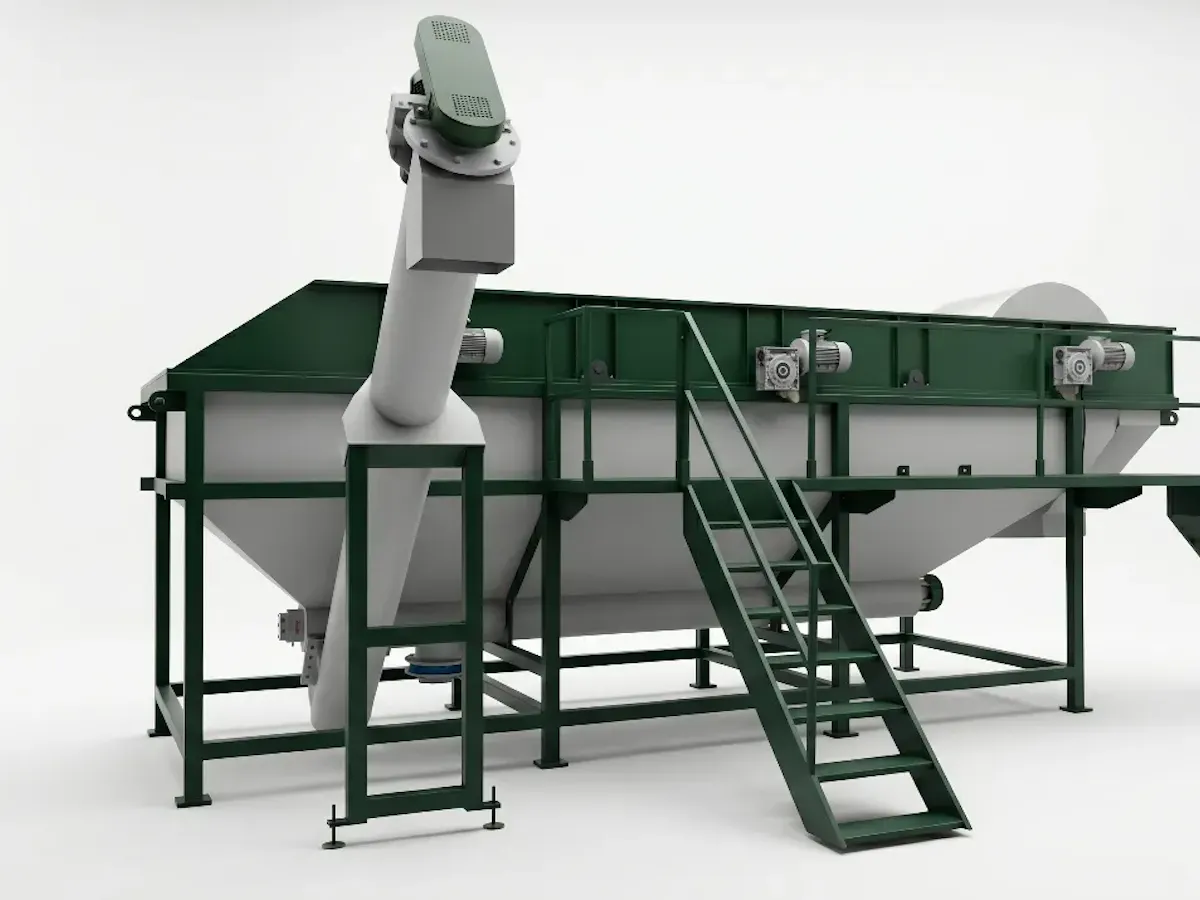
Vasca di Separazione per Galleggiamento per PET, PE/PP e Scaglie di Plastica Mista

Una vasca di separazione per galleggiamento (o vasca flottante) divide le scaglie di plastica mista per gravità specifica in un bagno d acqua controllato. Rumtoo progetta la vasca sulla base della vostra alimentazione reale (bottiglie PET, flaconi HDPE, tappi PP, film, PVC), della purezza target e del tasso di riutilizzo dell acqua.

Scroll
Plastic floating separation tank for PET, PE and PP flakes

Come Scegliere la Vasca di Separazione Ideale

Tank volume alone never predicts real-world purity. The machine must be matched to the feed density spread, flake size, contamination load and water-reuse target — here is the selection path that actually works.

1

Mappare le densità e il punto di taglio target

Elencate ogni polimero: PE 0.91-0.94, PP 0.85-0.91, PET 1.38-1.40. Se lo scarto è inferiore a 0.02 g/cm³, Rumtoo aggiunge stadi di idrociclone o elettrostatici.

2

Scegliere lunghezza vasca e tempo di permanenza

Un tempo di permanenza di 60–120 secondi è ideale. Rumtoo dimensiona la vasca in modo che le scaglie viaggino a 0.05–0.10 m/s.

3

Dimensionare il loop di riutilizzo acqua e fanghi

Rumtoo specifica una vasca di sedimentazione e loop DAF affinché il 70–85% dell acqua venga riutilizzata e il fango scaricato come panetto secco.

4

Integrare separatore di etichette e lavaggio a caldo

La vasca opera con carico stabile grazie all integrazione con le fasi precedenti, proteggendo la linea da incrostazioni di carta.

Cosa Serve ai Compratori da una Vasca di Galleggiamento

The business reason to install a sink float tank is not the technology — it is a measurable jump in PE/PP and PET purity, a lower reject rate at the extruder, and a closed water loop that avoids wastewater permits and 30–50 m³/day of fresh water consumption.

Separazione di Densità di Alta Purezza

Purezza tipica del 98–99% per passaggio. Design a doppia vasca con aggiustamento salino permettono il 99.5%+ per rPET alimentare.

70–85% di Riutilizzo dell Acqua

Il consumo di acqua di reintegro scende a 3–5 m³ per tonnellata, risparmiando migliaia di euro l anno in costi idrici.

Rimuove Carta, Film e Residui Metallici

È la fase chiave che elimina PVC e carta prima dell estrusione. Gli intervalli di cambio filtro dell estrusore solitamente triplicano.

Capacità da 500 a 5000 kg/h

Rumtoo scala la lunghezza e la velocità dello skimmer. Una linea da 5000 kg/h occupa circa 18 metri con un basso volume di fanghi.

Common Sink Float Problems and Real Fixes

Most poor-separation reports trace back to five production conditions — not the tank itself. This table shows what actually goes wrong in running lines and how Rumtoo corrects it during commissioning.

Problem

PET pellets float instead of sink — extruder rejects rPET for PVC contamination.

Rumtoo Solution

Rumtoo adds a short de-foaming baffle and lowers paddle speed; most "PET floating" cases are actually entrained air in thin bottle-wall flakes. Persistent cases get a brine dosing line that lifts water density to 1.05 g/cm³ for a guaranteed PET-PS separation.

Problem

Water turns gray, filters clog within two shifts and discharge fails limits.

Rumtoo Solution

Rumtoo sizes the sedimentation tank, bag filter and DAF loop so fine label, paper and glue particles are removed continuously. Sludge is de-watered to 60–70% solids in a screw press instead of being pumped out as liquid.

Problem

Paddle agitators foul with film and rope — tank shuts down twice a week for cleanout.

Rumtoo Solution

Rumtoo specifies an upstream trommel and film-rope separator so ribbons and long strands never reach the tank. Paddle geometry is adapted (cut-blade vs flat paddle) to the dominant flake shape in your feed.

Problem

Winter start-up produces black sludge and foul odor from caustic carry-over.

Rumtoo Solution

Rumtoo isolates the hot-wash caustic loop from the sink float bath with a rinse buffer tank and specifies a weekly tank drain/scrub SOP. A pH and turbidity sensor warns before biological growth crosses odor thresholds.

Riferimento Macchina e Principio di Separazione per Densità

Le scaglie miste entrano in un bagno d acqua dove agitatori a pale e un flusso trasversale trasportano le frazioni a bassa densità (PE/PP, 0.90–0.94 g/cm³) verso uno skimmer superiore, mentre le scaglie ad alta densità (PET, PVC, metalli) affondano e vengono scaricate da una coclea sul fondo della vasca.

Stainless steel sink float tank with paddle agitator and skimmer

Vista Macchina: agitatore a pale, skimmer a stramazzo e coclea di fondo

Il corpo della vasca è costruito in acciaio inossidabile 304 o 316L per resistere al lavaggio caustico. Gli agitatori mantengono il bagno in movimento per evitare l agglomerazione; uno skimmer di superficie rimuove la frazione flottante; una coclea di fondo estrae le scaglie pesanti con una perdita d acqua minima.

  • Agitatori a pale a velocità variabile regolati sulla dimensione delle scaglie
  • Altezza dello stramazzo regolabile per un controllo preciso del punto di taglio
  • Design a doppio stadio disponibile per purificazione secondaria di alta precisione
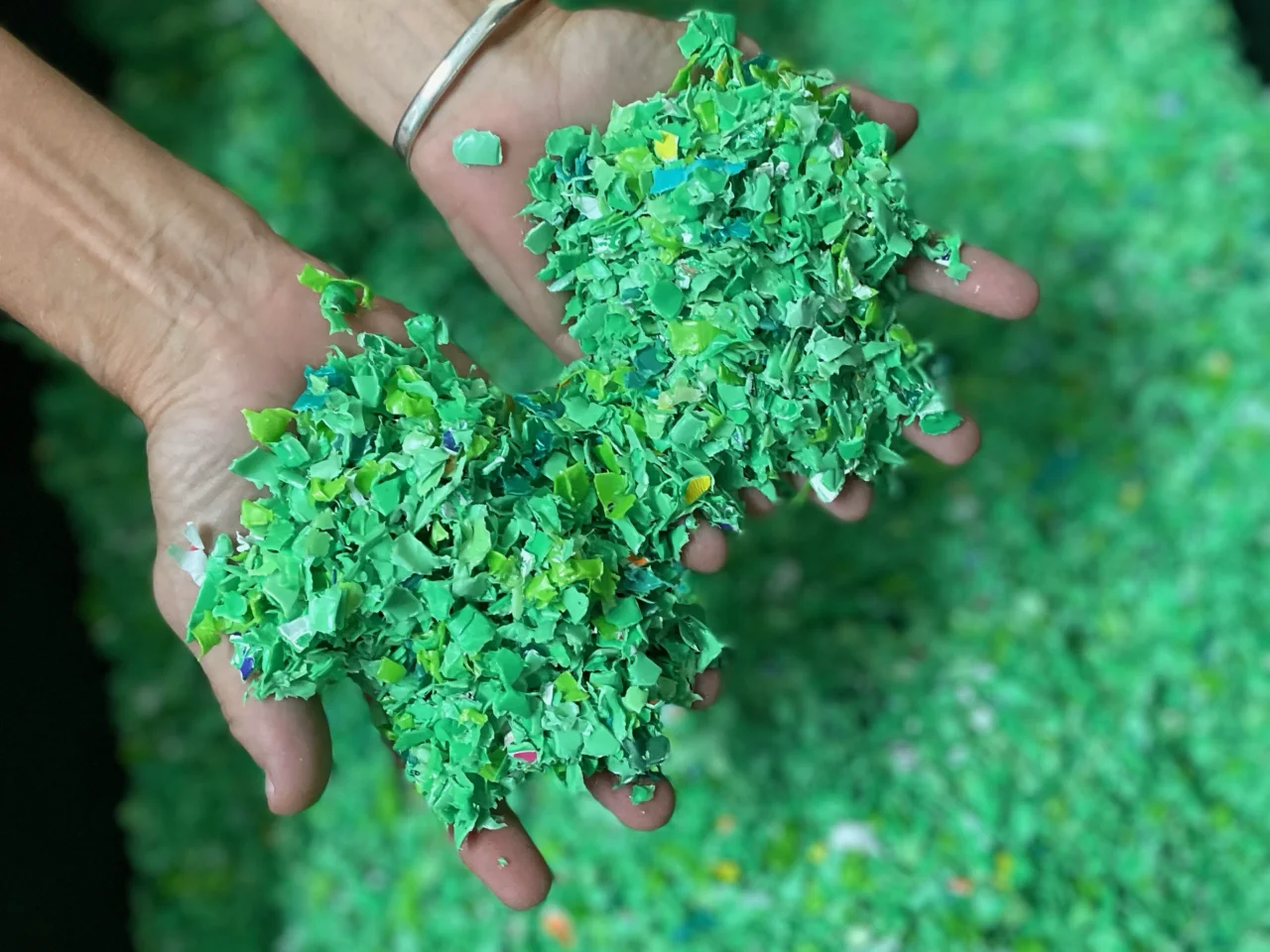
Vista Processo: galleggiamento PE/PP, affondamento PET/PVC in linea di lavaggio

In una linea di bottiglie PET, la vasca si trova dopo il separatore di etichette. I tappi in HDPE/PP galleggiano; PET, PVC e metalli affondano. In una linea di PEHD/PP rigido avviene l inverso. In entrambi i casi, la vasca rimuove il polimero errato prima del lavaggio a caldo per proteggere l estrusore e lo scambiatore.

  • Separa PET/PVC/metallo dal PE/PP con una purezza del 98–99% in un passaggio
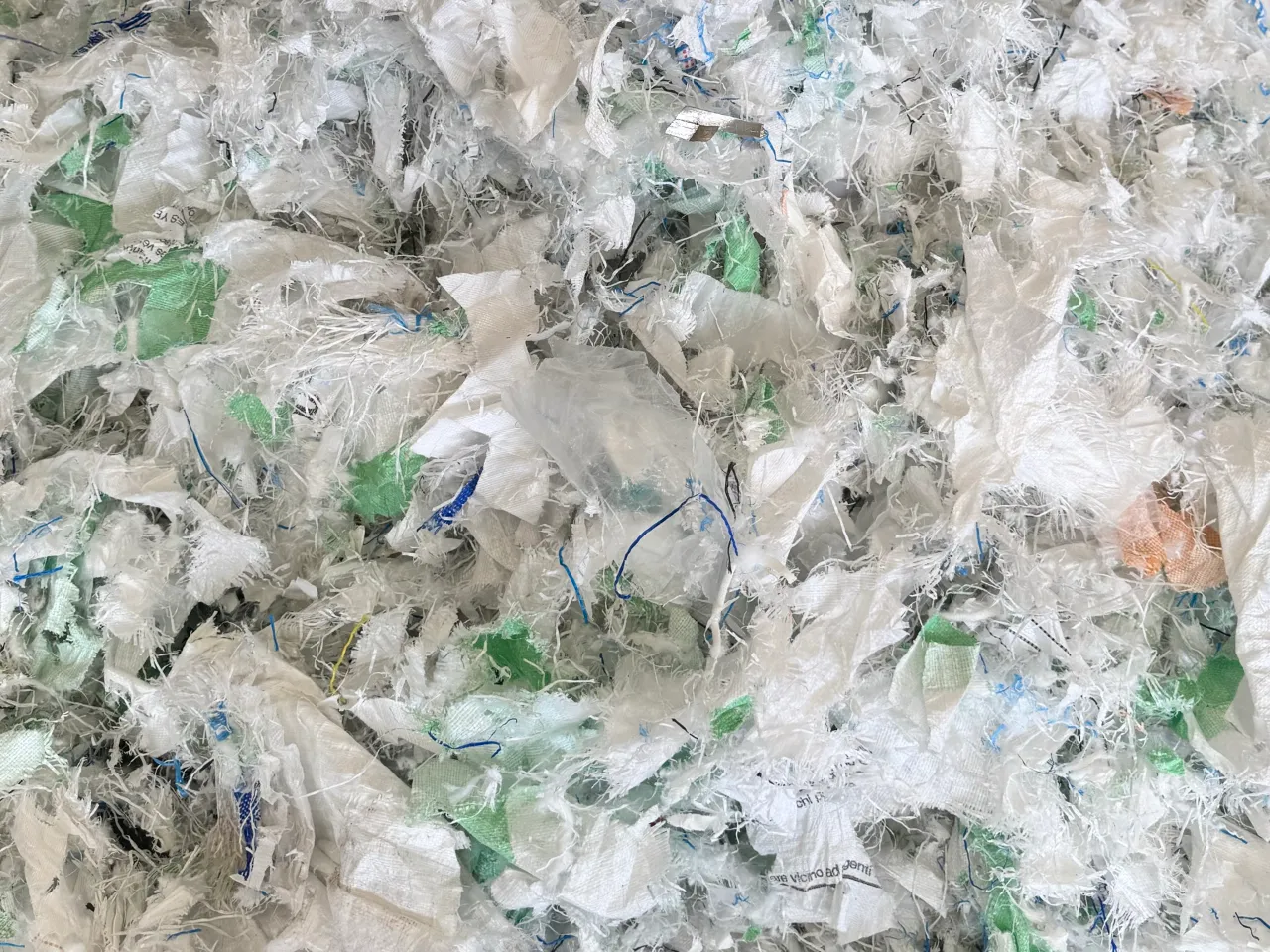
  • Rimuove carta e residui di film che galleggiano dopo il pre-lavaggio
  • Circuito idraulico che alimenta il loop di filtrazione per il 70–85% di riutilizzo
Recycled PE and PP plastic flakes after sink float separation

Sink Float Separation Tank in Operation

Watch how the paddle agitator, weir skimmer and sinking screw conveyor separate mixed plastic flakes into pure PE/PP floating fraction and PET/PVC sinking fraction in a controlled water bath.

Typical Sink Float Tank Use Cases

A sink float tank earns its place in any plastic washing line where the target and contaminant polymers differ by at least 0.05 g/cm³ and the feed is already wet from pre-wash.

  • PET Bottle-to-Bottle Washing Lines

    Removes HDPE caps, PP rings, paper label fragments and PLA sleeves from PET flakes before hot wash. Critical stage for lines targeting food-grade rPET approval from EFSA, FDA or similar regulators.

  • HDPE Milk/Detergent Jug Recycling

    Separates PP caps, PET tamper bands, metal fines and dirt from HDPE flakes produced from milk, detergent and motor-oil bottles. Prepares HDPE flakes for pipe, crate and packaging compounders.

  • PP Rigid Packaging and Caps Regrind

    Splits PP from residual PET, PVC tamper bands and PS labels coming off food tubs, buckets and cap regrind so compounders receive a single-polymer feedstock.

  • Mixed Post-Consumer Plastic Sorting

    Acts as the first bulk density stage for mixed post-consumer curbside input, routing a clean PE/PP float fraction to pelletizing while high-density material is sent to NIR, electrostatic or manual picking.

  • Agricultural Film and Big-Bag Reclaim

    Paired with a pre-wash, the tank floats LDPE film fragments while soil fines, stones and metal wear particles sink — reducing extruder melt filter changes by 2–3×.

  • WEEE and Automotive Plastic Regrind

    Used as a rough density splitter ahead of electrostatic separation to remove metals, glass fragments and rubber from ABS/PS/HIPS-dominant WEEE and automotive shredder residue feeds.

Reference Configurations

These are sizing references. Actual purity, water reuse and sludge volume depend on feed composition, contamination level and the filtration loop selected — Rumtoo confirms the final specification after reviewing your material data.

ModelThroughputTank VolumePowerKey Features
RT-SF500300–500 kg/h2.5 m³3 kWCompact single-stage tank, 304 stainless, for small PET or HDPE lines
RT-SF1000800–1200 kg/h5 m³5.5 kWPaddle agitator + weir skimmer, bag filter loop, suits standard PET bottle washing lines
RT-SF20001500–2500 kg/h9 m³7.5 kWTwin-tank with brine adjustment, DAF loop, 70–80% water reuse
RT-SF50003500–5000 kg/h18 m³15 kWBottle-to-bottle grade twin-tank, 316L, DAF + screw press, 80–85% water reuse

Typical water make-up with a full reuse loop is 3–5 m³ per ton of clean flake. Energy consumption is 20–35 kWh per ton including agitators, pumps and filtration. Rumtoo sizes the unit after reviewing your feed analysis, contamination level and local water and discharge cost.

Sink Float Tank Checklist Before RFQ

Bring these data points to the RFQ and Rumtoo can size the tank, water-reuse loop and commissioning protocol in the first reply — avoiding weeks of back-and-forth.

  1. Polymer Mix and Density Spread

    List every polymer in the feed with its approximate share — PET, HDPE, PP, PVC, PS, PA, metals — so Rumtoo can confirm the cut-point target and decide whether plain water, salt brine, or a two-stage tank is required.

  2. Feed Flake Size and Shape

    Share the flake size distribution (typical working range is 6–30 mm), shape (flake vs film vs granule) and fines content below 4 mm. Particle size controls paddle speed and retention time.

  3. Contamination Load (Paper, Film, Fines, Sand, Metal)

    Specify the expected contamination per ton — paper label, PE/PP film, paper pulp, sand and metal fines. This determines filtration, sludge press sizing and tank cleaning frequency.

  4. Target Throughput and Shift Pattern

    Provide target kg/h, planned shift hours and scheduled cleaning windows. Rumtoo builds around a realistic effective uptime, not name-plate capacity.

  5. Water Source, Reuse Target and Discharge Limits

    Share local water cost, discharge cost and effluent limits (COD, TSS, pH). The water-reuse loop is sized for the economic break-even between make-up water cost and capex.

  6. Downstream Stages (Hot Wash, Friction, NIR, Electrostatic)

    Describe the full line — what comes before and after the tank. Rumtoo adjusts the cut-point, skimmer angle and discharge method so the tank integrates with existing hot-wash, friction and polishing stages.

Sink Float Tank vs Alternative Separation Methods

A sink float tank is the right answer when the density gap is clear and the feed is already wet. This table shows where it wins and where a hydrocyclone, electrostatic separator or NIR sorter fits better.

Decision CriteriaHydrocycloneNIR Optical SorterElectrostatic SeparatorRumtoo Sink Float Tank
PE/PP vs PET bulk separationGood, but high capexWorks if colors differNeeds pre-dryingProven at 98–99% in one pass
Food-grade bottle-to-bottle rPETWorks as polishing stageWorks upstream of washFinal PVC-ppm stageEssential bulk stage, add electrostatic for <50 ppm
Handles paper, label and film finesPoorNot designed for thisBlocks the fieldRemoves them continuously
Water consumptionVery high, high pressureNoneNone3–5 m³/ton with reuse loop
Energy per ton40–60 kWh + pump pressure10–15 kWh30–50 kWh20–35 kWh including filtration
Capex vs operating costHigh capex, high opexVery high capex, low opexMedium capex, low opexLow-medium capex, low opex

Domande Frequenti

Può separare il PET dal PVC?

Non da sola, poiché le densità si sovrappongono (1.35–1.45 g/cm³). La vasca rimuove PE/PP, ma per il grado alimentare <50 ppm PVC, Rumtoo aggiunge separazione elettrostatica o ottica.

È necessaria acqua calda nella vasca?

La separazione avviene a 25–40 °C. Rumtoo spesso recupera il calore dal lavaggio a caldo a valle tramite uno scambiatore per ottimizzare l energia.

Pronti a Dimensionare una Vasca di Galleggiamento per la Vostra Linea?

Inviate a Rumtoo un analisi del flusso. Risponderemo con un modello ROI e piano di messa in servizio in 24 ore.

Richiedi Proposta Vasca di Galleggiamento
Risposta di un esperto entro 24 ore. Preventivo senza impegno.