Ligne de Granulation pour Plastique Rigide
Pour HDPE, PP, ABS, PS et broyats rigides mixtes nécessitant une alimentation stable, une filtration de fonte adaptée, du dégazage et une qualité de granulés constante pour réutilisation ou revente.

Hub de Recyclage et Granulation
Comparez nos lignes de granulation avec compacteur, lignes pour plastiques rigides, granulation sous eau, et systèmes d’extrusion double vis avant de passer à une proposition dédiée.
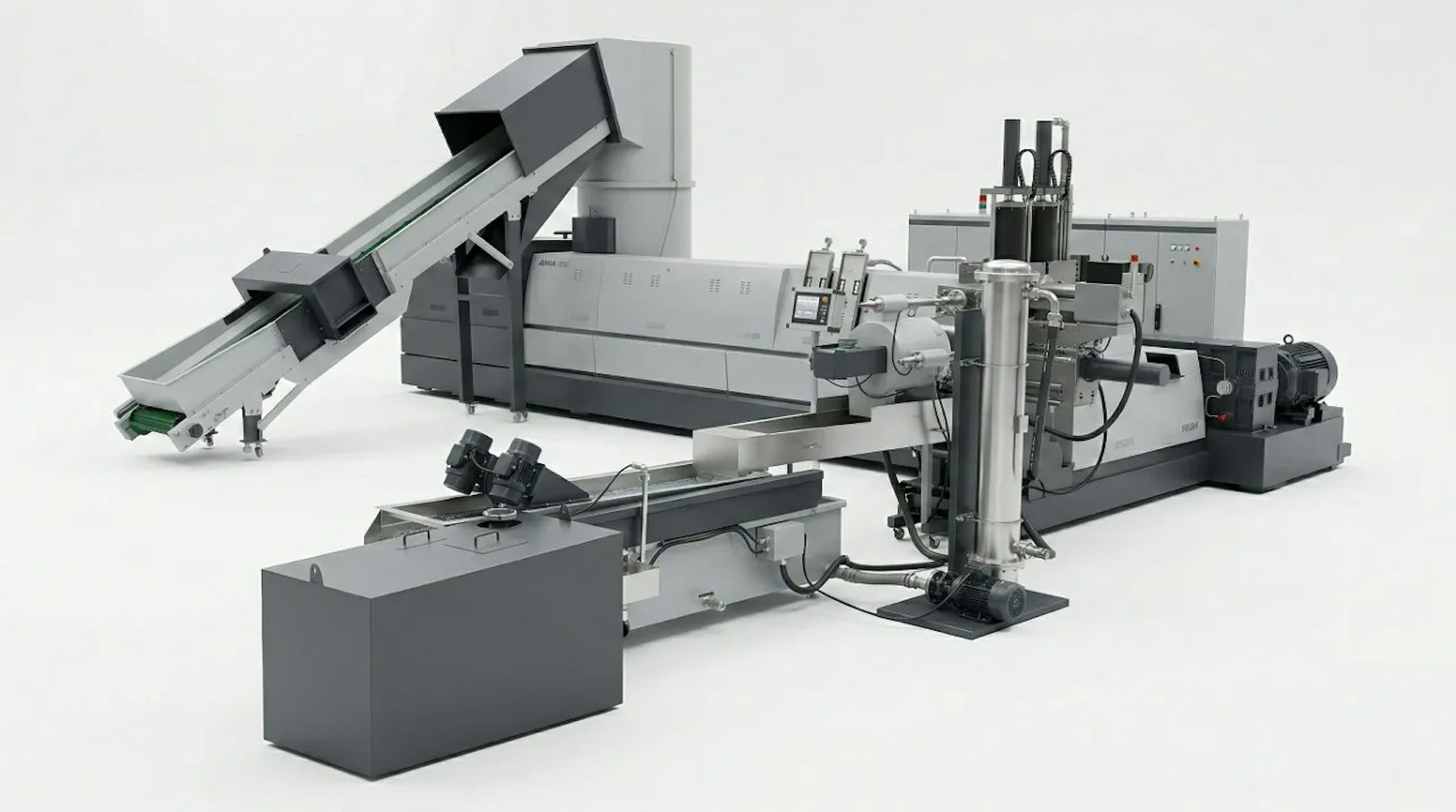
Utilisez ces pages pour passer du hub général à une route claire selon votre matière: broyat rigide, film lavé ou projet de regranulation sur mesure avec contraintes de filtration, dégazage et coupe.
Pour HDPE, PP, ABS, PS et broyats rigides mixtes nécessitant une alimentation stable, une filtration de fonte adaptée, du dégazage et une qualité de granulés constante pour réutilisation ou revente.
Pour film PE/PP lavé, raphia et sacs tissés à faible densité apparente, lorsque le compactage, la découpe et la stabilisation d alimentation sont indispensables avant l extrudeuse.
Pour les projets qui exigent une étude d ingénierie sur le nombre d étages, l évacuation des volatils, le type de changeur de filtre, la méthode de coupe et l extension future de capacité.
Cette comparaison aide a savoir si un devis machine standard suffit ou si le projet exige essais matiere, revue de layout et alignement avec le process aval.
| Point de decision | Devis equipement generique | Route engineering Rumtoo |
|---|---|---|
| Etat matiere | Suppose une alimentation propre et stable | Verifie humidite, densite, contamination et forme reelle |
| Capacite | Part du kg/h nominal | Adapte le debit au service ligne, a la sortie et au process aval |
| Risque integration | Traite la machine seule | Controle convoyeurs, commande, securite, acces et retrofit |
| Qualite sortie | Se concentre sur le modele | Relie taille, purete, humidite et objectifs lavage ou granulation |
La selection depend du type de matiere, du debit vise, de la contamination, de la taille de sortie et du process aval.
Oui. Les interfaces de convoyage, les capteurs et les protections peuvent etre adaptes a votre installation.
Envoyez des photos de matiere, capacite cible, humidite, contaminants, espace disponible et objectif de qualite.
La selection depend du type de matiere, du debit vise, de la contamination, de la taille de sortie et du process aval.
Oui. Les interfaces de convoyage, les capteurs et les protections peuvent etre adaptes a votre installation.
Envoyez des photos de matiere, capacite cible, humidite, contaminants, espace disponible et objectif de qualite.
Rumtoo valide les parametres avec vos echantillons afin de recommander une solution realiste pour la production.