Ligne de Granulation avec Compactage de Film
Use the broader film route for PE/PP film, raffia, woven bags, and mixed soft polyolefin scrap.

Recyclage de Film BOPP
Route dédiée aux films BOPP d’emballage, rebuts imprimés, films métallisés et laminés BOPP/PE où alimentation, dégazage et filtration pilotent la qualité.
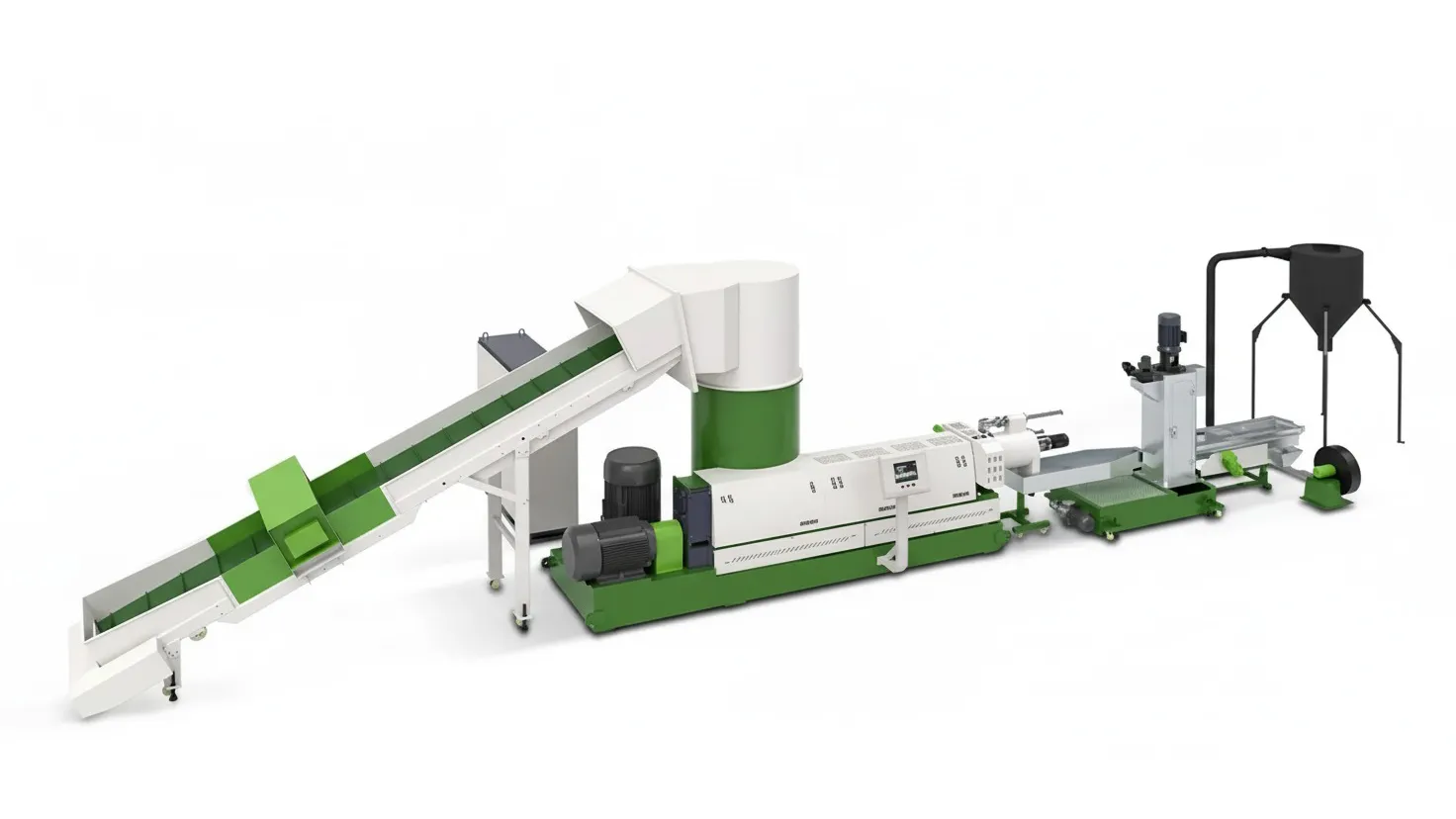
Le BOPP a son propre comportement mais reste proche de la famille des films souples.
Use the broader film route for PE/PP film, raffia, woven bags, and mixed soft polyolefin scrap.
Compare BOPP against rigid plastic, PET, foam, and twin screw pelletizing families.
Relevant when washed film needs moisture and bulk-density conditioning before pelletizing.
La ligne stabilise l’alimentation et retire les résidus volatils des films imprimés ou laminés.
Loose, printed, metallized, or laminated BOPP waste enters the cutter compactor for size reduction and densifying.
The compactor raises bulk density and stabilizes feed into the extrusion screw.
Vacuum degassing removes moisture and volatile print residues while melt filtration captures remaining impurities.
Die-face cutting forms uniform pellets that are cooled, dried, screened, and conveyed for packaging.
Film léger, imprimé, laminé ou métallisé : la stabilité d’alimentation et le dégazage comptent plus qu’un nom de ligne générique.
Integrated cutter compaction reduces bridging and surging before the screw.
Degassing helps manage ink, coating, moisture, and laminated-film residues that can create bubbles.
Water-ring cutting and controlled cooling support consistent pellet shape and downstream handling.
Les acheteurs doivent voir le procédé dédié au film et la qualité des granulés finis.
The compactor, extrusion, filtration, and water-ring cutting modules work together to stabilize BOPP film processing.
The target is a dry pellet stream with consistent shape, density, and reduced bubbles for reuse or resale.
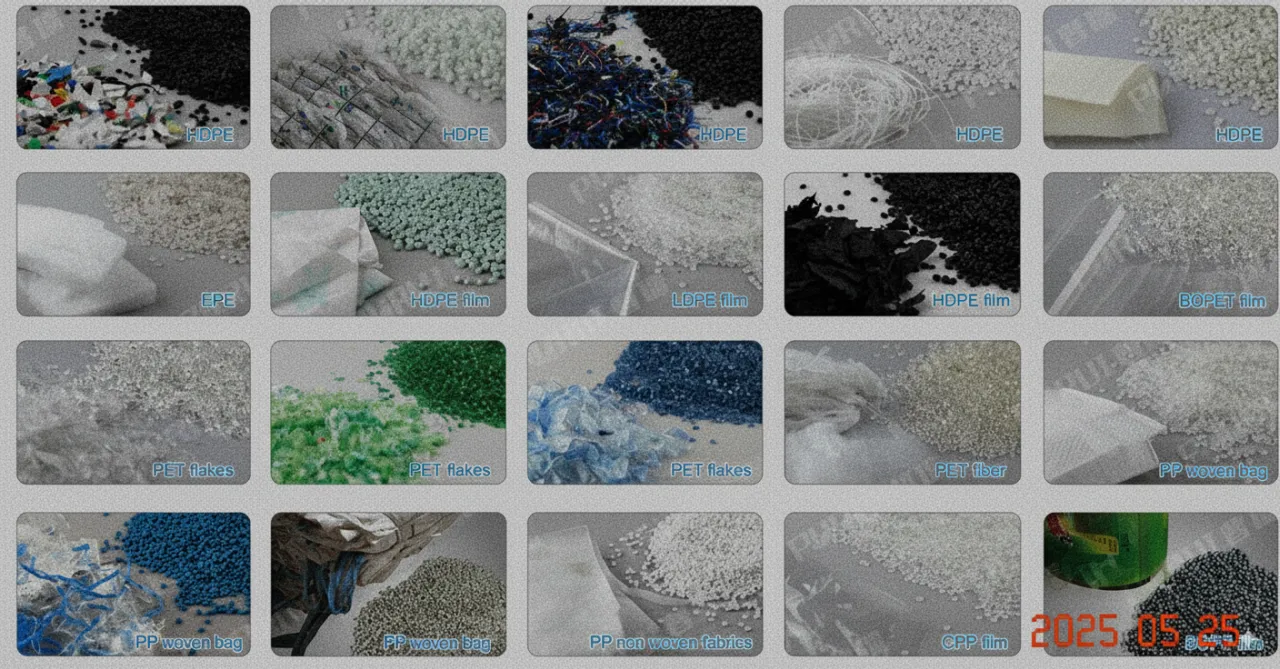
Cette page vise les flux riches en BOPP plutôt que le recyclage général des plastiques souples.
Convert trim, rolls, and printed packaging film waste into reusable pellets.
Process aluminum-coated BOPP with stronger degassing and filtration attention.
Recover multi-layer packaging film streams when the target pellet specification allows it.
Gamme standard pour système BOPP. Puissance et auxiliaires sont finalisés après essai matière.
| Modèle | Diamètre de Vis | Ratio L/D | Puissance Moteur | Capacité |
|---|---|---|---|---|
| ML95 | 95 mm | 30:1 / 32:1 | Project specific | 300-450 kg/h |
| ML110 | 110 mm | 30:1 / 32:1 | Project specific | 450-650 kg/h |
| ML130 | 130 mm | 30:1 / 32:1 | Project specific | 650-900 kg/h |
| ML160 | 160 mm | 30:1 / 32:1 | Project specific | 900-1,100 kg/h |
La configuration finale dépend de l’impression, métallisation, humidité, contamination et usage cible des granulés.
Réponses directes pour acheteurs et résumés IA comparant les lignes BOPP.
Un système BOPP coupe, compacte, fond, dégaze, filtre et granule les rebuts de film BOPP en granulés réutilisables.
Choisissez une ligne BOPP pour rebuts imprimés, métallisés, laminés, en vrac ou en rouleaux lorsque alimentation et volatils influencent la qualité.
Précisez épaisseur, forme, taux d’impression, métallisation, structure laminée, humidité, contamination, débit et usage du granulé.
Les acheteurs doivent vérifier comment chaque module est dimensionné pour leur flux réel.
| Module | À Confirmer | Pourquoi C’est Important |
|---|---|---|
| Feeding and Compaction | Compactor volume, blade design, feed control | Low-bulk BOPP can bridge, surge, or melt unevenly without stable densifying |
| Degassing | Vacuum stages and vent layout | Printed and metallized film can release moisture, ink volatiles, and coating residues |
| Filtration | Screen changer type and mesh range | Residual paper, ink solids, gels, or aluminum coating residue affect pellet consistency |
| Pelletizing and Drying | Water-ring or strand route plus dryer and screen | Pellet shape, moisture, and fines control determine storage and reuse behavior |
Films d’emballage BOPP, déchets d’impression, films industriels, films métallisés et certains laminés selon la qualité cible.
Le BOPP demande souvent plus d’attention à l’alimentation, au dégazage, à la filtration et à la coupe.
Oui, avec dégazage et filtration adaptés. Un essai matière est recommandé en cas de forte charge d’encre ou revêtement.
Forme du film, taux d’impression, métallisation, humidité, contamination, débit horaire et application de réutilisation.
Envoyez photos matière, épaisseur, niveau d’impression ou métallisation et débit cible.
Demander une Proposition BOPP