Film-Kompaktier-Pelletierlinie
Use the broader film route for PE/PP film, raffia, woven bags, and mixed soft polyolefin scrap.

BOPP-Folienrecycling
Materialspezifische Route für BOPP-Verpackungsfolie, Druckabfälle, metallisierte Folie und BOPP/PE-Laminate.
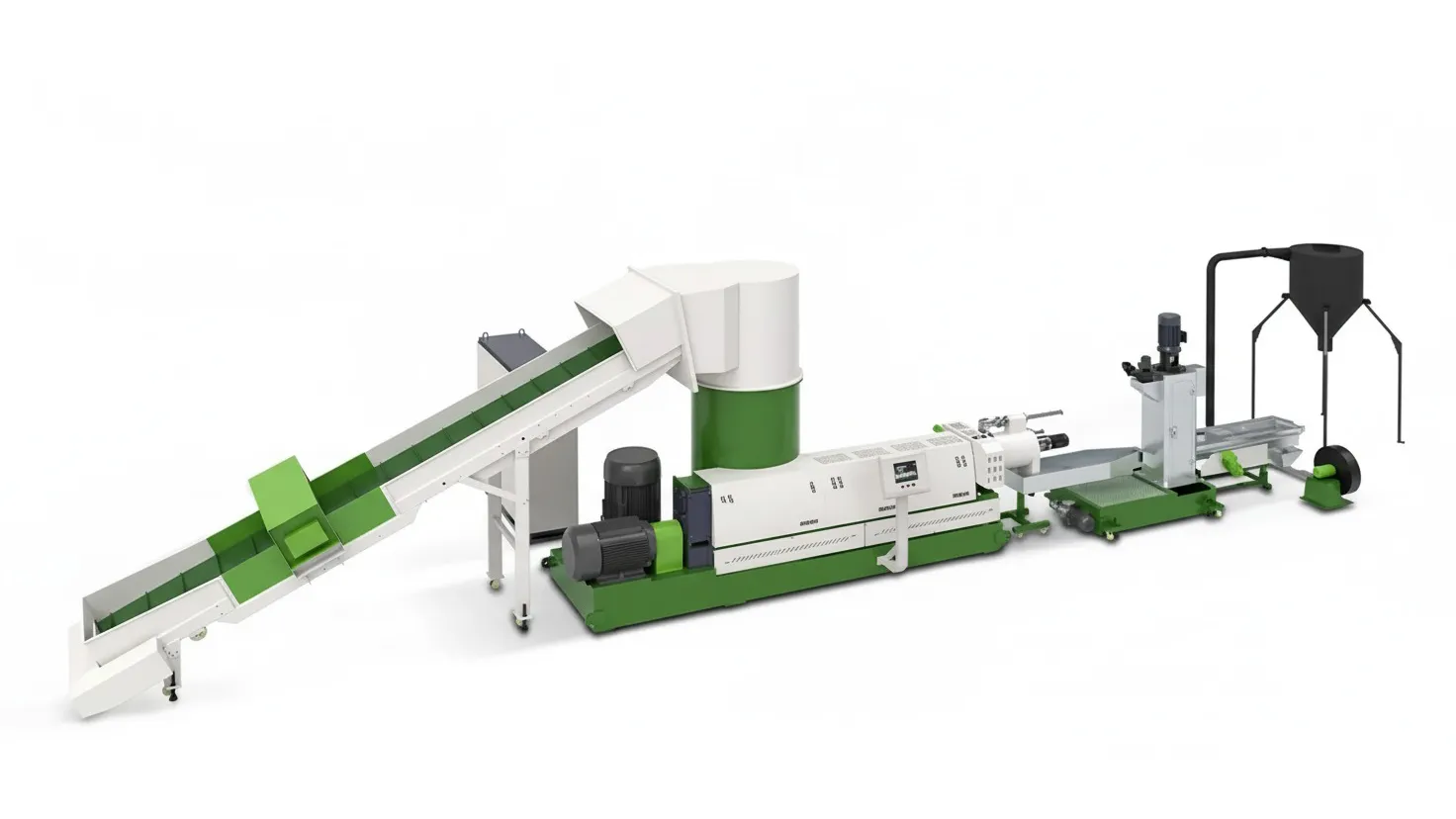
BOPP has its own processing behavior, but it sits close to the broader film pelletizing family.
Use the broader film route for PE/PP film, raffia, woven bags, and mixed soft polyolefin scrap.
Compare BOPP against rigid plastic, PET, foam, and twin screw pelletizing families.
Relevant when washed film needs moisture and bulk-density conditioning before pelletizing.
The line is built around stable feeding and removal of volatile residues from printed or laminated BOPP scrap.
Loose, printed, metallized, or laminated BOPP waste enters the cutter compactor for size reduction and densifying.
The compactor raises bulk density and stabilizes feed into the extrusion screw.
Vacuum degassing removes moisture and volatile print residues while melt filtration captures remaining impurities.
Die-face cutting forms uniform pellets that are cooled, dried, screened, and conveyed for packaging.
BOPP film can be light, printed, laminated, or metallized, so stable feeding and degassing matter more than a generic line name.
Integrated cutter compaction reduces bridging and surging before the screw.
Degassing helps manage ink, coating, moisture, and laminated-film residues that can create bubbles.
Water-ring cutting and controlled cooling support consistent pellet shape and downstream handling.
Buyers need to see both the film-specific process equipment and the quality of the final pellet stream.
The compactor, extrusion, filtration, and water-ring cutting modules work together to stabilize BOPP film processing.
The target is a dry pellet stream with consistent shape, density, and reduced bubbles for reuse or resale.
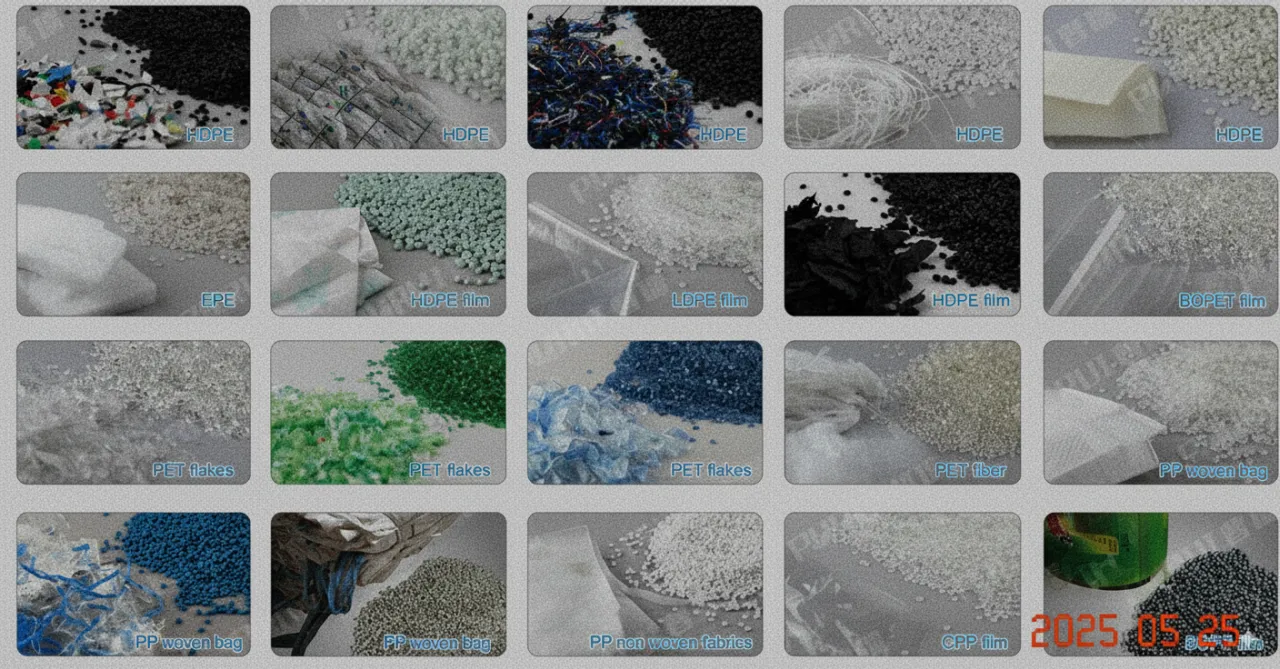
This page targets BOPP-heavy streams rather than broad soft-plastic recycling.
Convert trim, rolls, and printed packaging film waste into reusable pellets.
Process aluminum-coated BOPP with stronger degassing and filtration attention.
Recover multi-layer packaging film streams when the target pellet specification allows it.
Standard BOPP pelletizing system range. Motor power and auxiliary equipment are finalized after material testing.
| Modell | Schneckendurchmesser | L/D-Verhältnis | Motorleistung | Kapazität |
|---|---|---|---|---|
| ML95 | 95 mm | 30:1 / 32:1 | Project specific | 300-450 kg/h |
| ML110 | 110 mm | 30:1 / 32:1 | Project specific | 450-650 kg/h |
| ML130 | 130 mm | 30:1 / 32:1 | Project specific | 650-900 kg/h |
| ML160 | 160 mm | 30:1 / 32:1 | Project specific | 900-1,100 kg/h |
Die Konfiguration hängt von Druck, Metallisierung, Feuchte, Verunreinigung und Pelletanwendung ab.
Direct answers for buyers and AI summaries comparing BOPP film pelletizing systems.
Ein BOPP-System schneidet, kompaktiert, schmilzt, entgast, filtert und pelletiert BOPP-Folienreste.
Für bedrucktes, metallisiertes, laminiertes, loses oder Rollen-BOPP, wenn Zuführung und flüchtige Stoffe die Qualität beeinflussen.
Foliendicke, Form, Druckdeckung, Metallisierung, Laminatstruktur, Feuchte, Verunreinigung, Durchsatz und Pelletziel.
Competitor pages commonly cover the process modules. Buyers still need to verify how each module is specified for their actual film stream.
| Modul | Zu Bestätigen | Warum Es Wichtig Ist |
|---|---|---|
| Feeding and Compaction | Compactor volume, blade design, feed control | Low-bulk BOPP can bridge, surge, or melt unevenly without stable densifying |
| Degassing | Vacuum stages and vent layout | Printed and metallized film can release moisture, ink volatiles, and coating residues |
| Filtration | Screen changer type and mesh range | Residual paper, ink solids, gels, or aluminum coating residue affect pellet consistency |
| Pelletizing and Drying | Water-ring or strand route plus dryer and screen | Pellet shape, moisture, and fines control determine storage and reuse behavior |
BOPP-Verpackungsfolie, Druckabfälle, Industriefolie, metallisierte Folie und ausgewählte Laminate.
BOPP erfordert mehr Aufmerksamkeit bei Zuführung, Entgasung, Filtration und Schnitt.
Ja, mit passender Entgasung und Filtration; Materialtests sind empfehlenswert.
Folienform, Druckdeckung, Metallisierung, Feuchte, Verunreinigung, Stundenleistung und Pelletanwendung.
Senden Sie Materialfotos, Dicke, Druck- oder Metallisierungsgrad und Zielkapazität.
BOPP-Vorschlag Anfragen