
· Rumtoo Engineering Team · Buying Guides · 6 min read
Silicone vs Rubber vs Plastic: A Recycler's Separation Guide
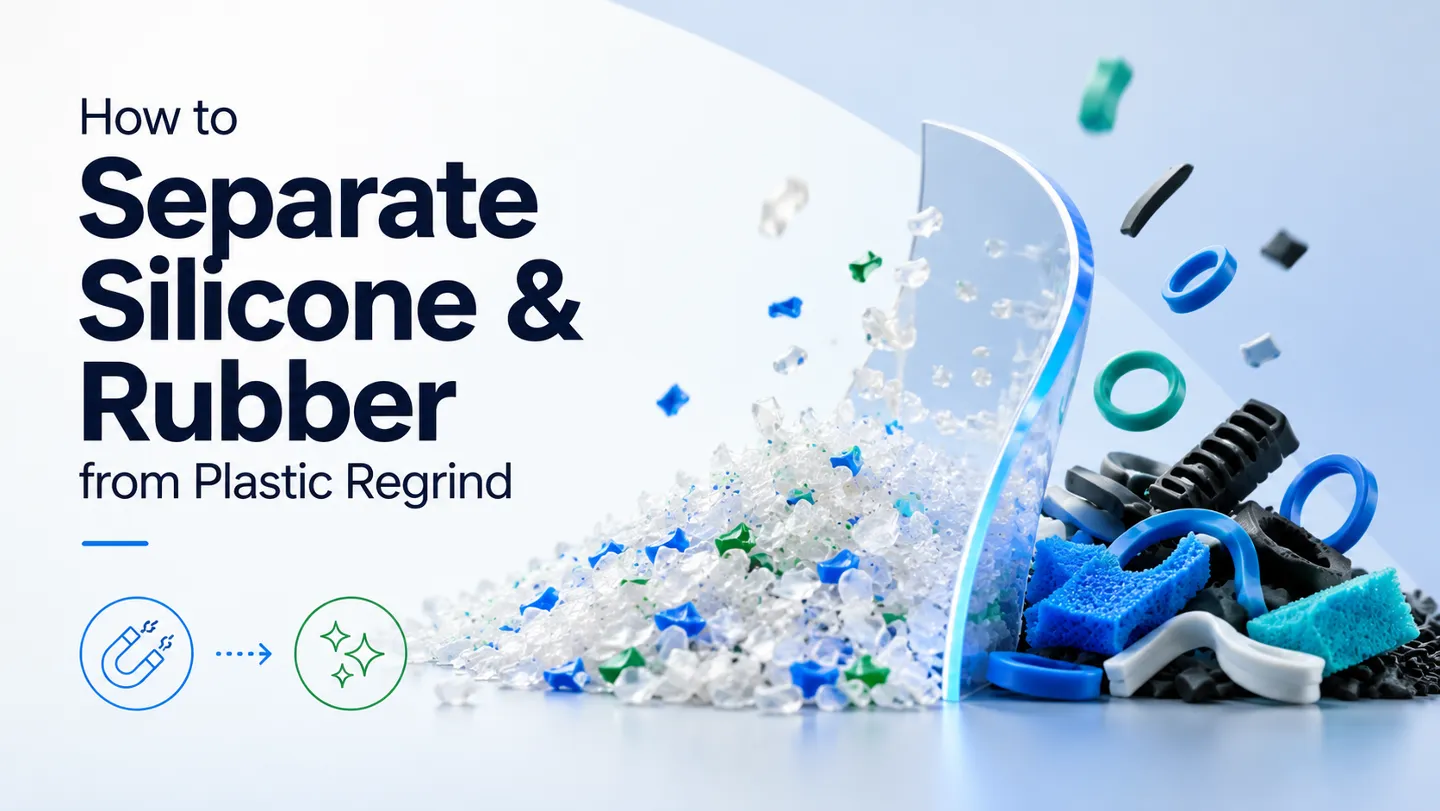
Silicone, rubber, and rigid plastic constantly end up mixed in recycling streams — and they are not the same material. This guide explains how they differ, why density sorting cannot tell them apart, and how a recycler actually separates them to sell clean, single-resin flake.
In a recycling plant, “silicone,” “rubber,” and “plastic” get used loosely — and often get crushed together into the same flake stream. But to a buyer paying for clean single-resin regrind, they are three different materials with three different problems. A few percent of silicone or rubber in an otherwise clean ABS or PP flake can drop it from prime grade to mixed scrap. This guide explains how the three materials actually differ, why the most common sorting method fails on them, and how recyclers separate them in practice.
The Three Materials, Briefly
It helps to be precise about what each material is, because their differences are exactly what separation equipment exploits.
- Rigid plastic (thermoplastic): ABS, PS, PP, PE, PVC, PC and similar. These soften when heated and re-solidify when cooled, which is what makes them recyclable by melting and re-pelletizing. They are hard, low-friction, and dimensionally stable.
- Rubber (elastomer): natural rubber, EPDM, NBR, SBR and the like. Most are vulcanized — cross-linked so they no longer melt. They stretch, rebound, and have a high surface friction. Vulcanized rubber cannot be re-melted into new product the way a thermoplastic can.
- Silicone: a silicon-oxygen polymer (not a carbon-backbone plastic at all). It is soft, elastic, heat-resistant, and chemically inert. Like vulcanized rubber, cured silicone does not melt and re-form.
The key takeaway: rigid plastic is the material you want to recover and re-melt. Rubber and silicone are contaminants in that stream — elastic, non-melting, and harmful to the quality of the recycled resin.
Why They End Up Mixed
Rubber and silicone rarely arrive as clean separate streams. They come attached to or crushed with the plastic you want:
- Over-molds and gaskets — a rigid ABS or PC housing with a soft rubber grip or silicone seal molded on.
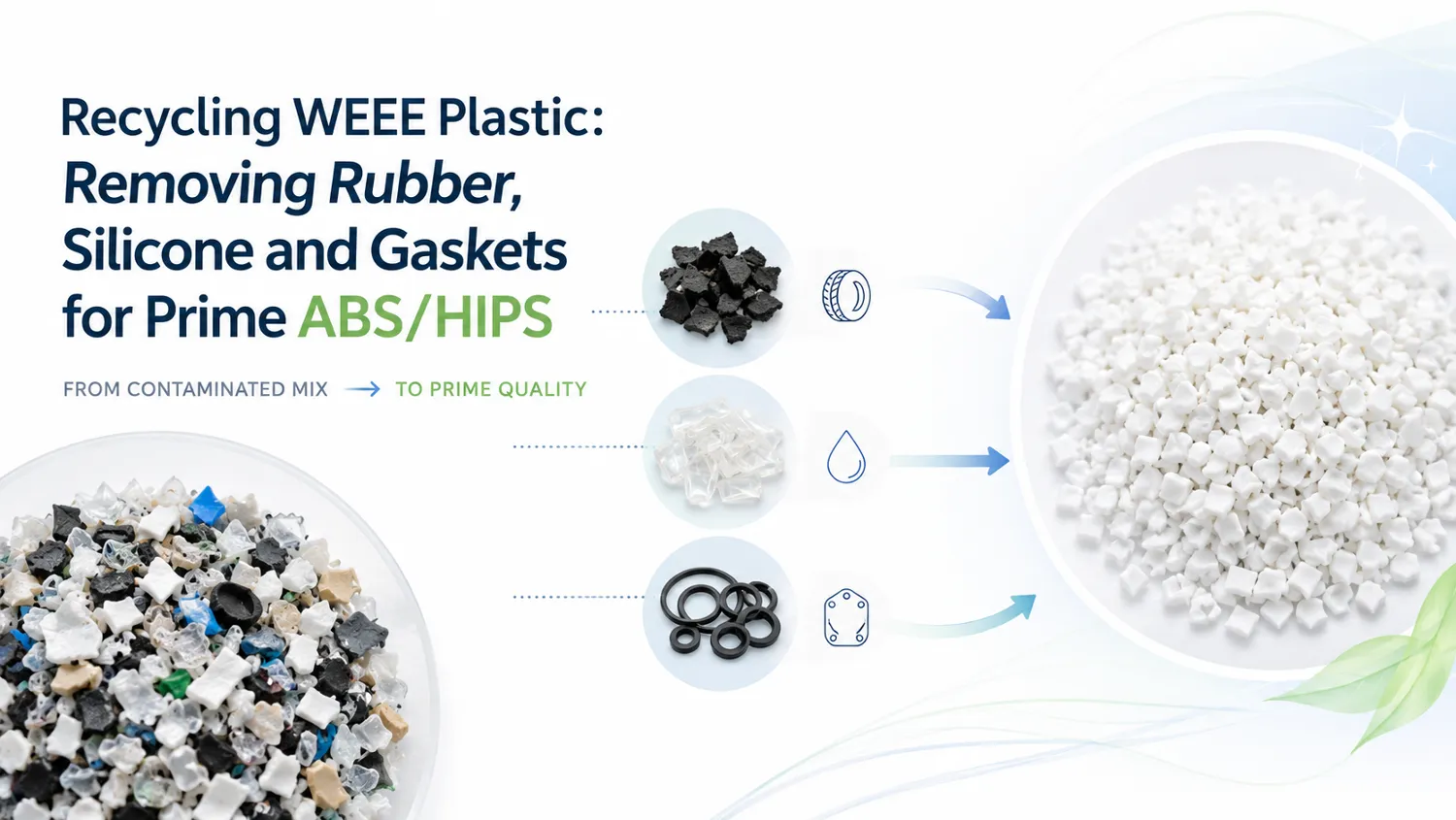
- WEEE / e-waste — rubber feet, silicone keypads, gaskets and cable sheathing throughout shredded electronics.
- ELV / automotive — weatherstrip, hoses, trim and seals mixed into vehicle plastics.
- Cable and wire regrind — after copper is recovered, the leftover jacket regrind blends rigid PVC/PE with rubber and silicone insulation.
- Medical scrap — rubber stoppers and silicone components mixed with PP/PE bottle regrind.
Once these are granulated together, you have a flake stream that is mostly good rigid plastic with a few percent of elastic contaminant dispersed through it. Now you have to get it back out.
Why Density Sorting Cannot Tell Them Apart
The first tool most recyclers reach for is a sink-float (density) tank — separate materials by whether they float or sink in water. It works beautifully for some splits (PP/PE float, PET/PVC sink). It fails on rubber and silicone, because their densities overlap the plastics you are trying to clean:
| Material | Typical density (g/cm³) |
|---|---|
| PP | 0.90–0.92 |
| PE (HDPE) | 0.94–0.97 |
| PS | 1.04–1.07 |
| ABS | 1.04–1.07 |
| Silicone | 1.10–1.20 |
| PET | 1.38–1.40 |
| PVC | 1.30–1.45 |
| Rubber (varies) | 0.90–1.50 |
Silicone sits right on top of ABS, PS and PET. Many rubbers span almost the entire range of common plastics. A water tank cannot make them reliably float or sink apart from the resin you want — so density sorting leaves the contamination behind.
How Recyclers Actually Separate Them
Since density is a dead end, separation has to target a property where rubber and silicone genuinely differ from rigid plastic. There are two:
- Elasticity — rubber and silicone deform and rebound; rigid plastic does not.
- Surface friction — rubber and silicone grip; rigid plastic slides.
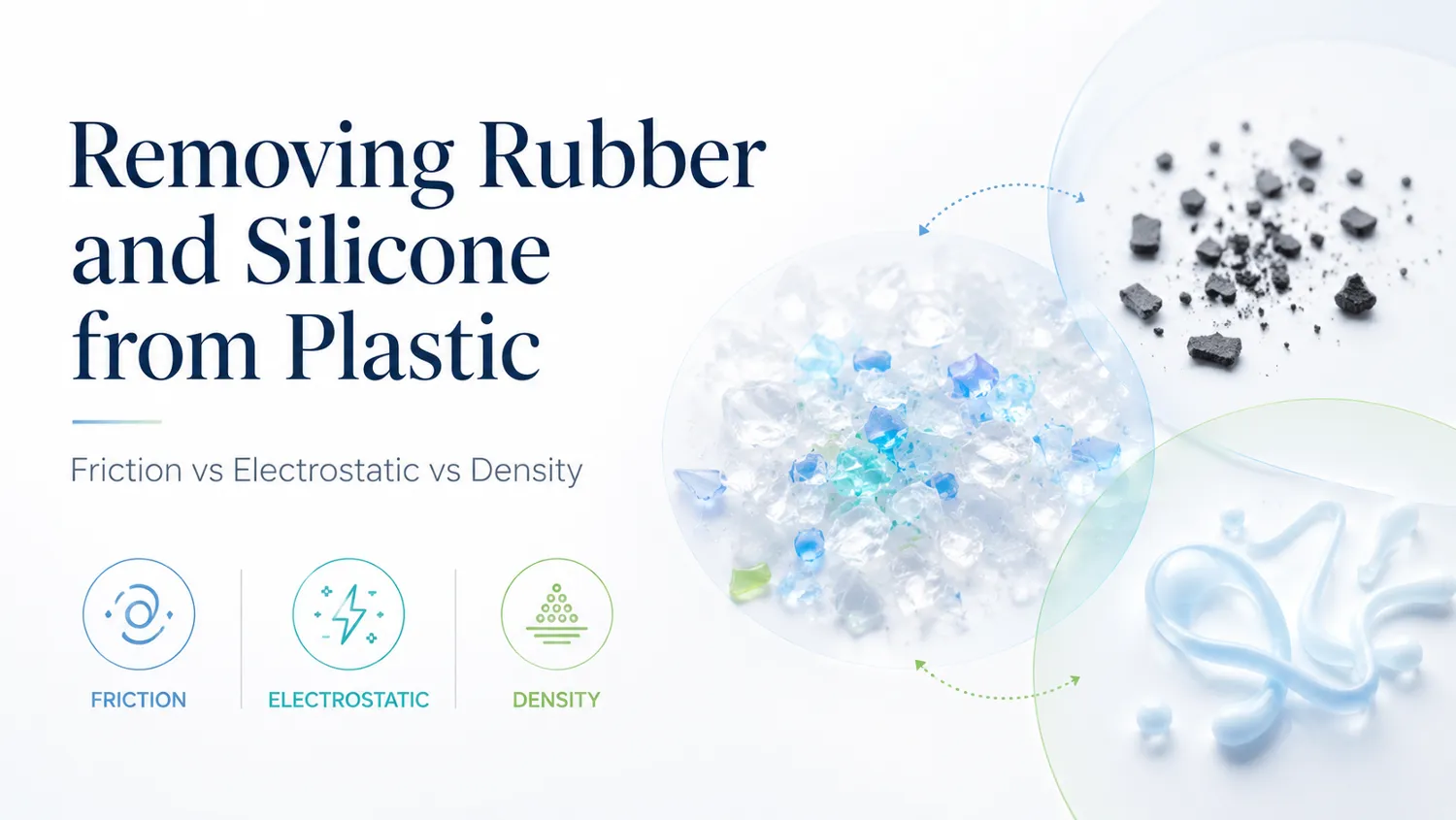
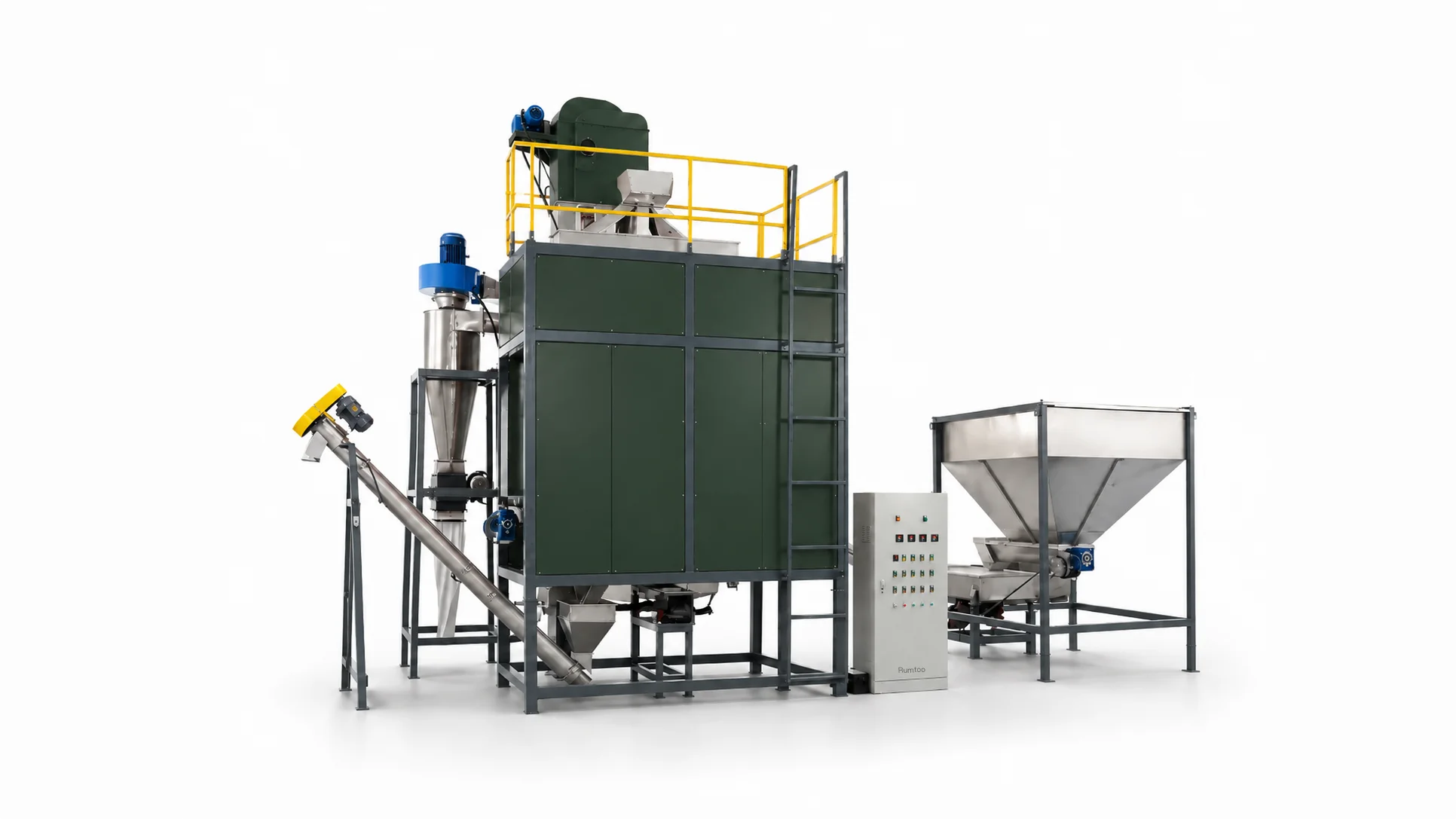
A silicone rubber separator is built around exactly these two properties. Dry flake is spread into a thin layer and carried across a deck of rotating friction spindles. Rigid plastic flakes — hard and low-friction — slide forward and discharge clean. Elastic silicone and rubber particles grip the spinning surface and are carried off to a separate outlet. It is a dry, mechanical process: no water, no chemicals, no heat to degrade the plastic. Tuned correctly on clean, dry feed, it brings rubber residue below about 2% — the threshold that typically separates prime single-resin flake from low-value mixed scrap. See the silicone rubber separator page for how the deck, spindle speed and throughput are configured to a target residue. For how this friction-elasticity route compares with density and electrostatic separation — and when to run them in sequence — see removing rubber and silicone from plastic: friction vs electrostatic vs density.
Quick Property Reference
When you are deciding how to handle a mixed stream, these are the differences that matter:
| Property | Rigid Plastic | Rubber | Silicone |
|---|---|---|---|
| Re-melts for recycling | Yes | No (vulcanized) | No (cured) |
| Elastic / rebounds | No | Yes | Yes |
| Surface friction | Low | High | High |
| Density vs common plastics | — | Overlaps | Overlaps |
| Separable by density | Often | No | No |
| Separable by friction/elasticity | — | Yes | Yes |
When It’s Worth Separating
Not every stream needs a dedicated separator. The decision comes down to value:
- Worth it when you are selling single-resin regrind (ABS, PP, PC) into compounding or molding, and a rubber-content spec stands between mixed-scrap price and prime price. Here the separator often pays back on the price uplift alone.
- Maybe not when the downstream use tolerates the contamination, or when rubber content is already negligible.
- Verify with a sample. Rubber type, flake size and moisture all change what residue is achievable, so the only reliable way to know is to run a representative sample and measure the result.
Frequently Asked Questions
Can silicone rubber be recycled?
Cured silicone and vulcanized rubber cannot be re-melted and re-pelletized the way thermoplastics can, so silicone recycling is mostly about separation and recovery, not re-melting. On a plastics line the goal is to pull silicone and rubber out so the thermoplastic fraction stays clean and sellable; the removed material then goes to its own route — energy recovery, devulcanization, or ground filler — rather than back into the resin.
How is elastomer recycling different from thermoplastic recycling?
Thermoplastics melt and re-form, so they recycle by re-pelletizing. Most elastomers — natural rubber, EPDM, NBR, SBR — are cross-linked and do not melt, so elastomer recycling relies on grinding, devulcanization, or reuse as filler. The exception is thermoplastic elastomer (TPE), which behaves like a plastic and can be re-melted, so TPE recycling sits much closer to standard thermoplastic recycling than vulcanized-rubber recycling.
What does the silicone rubber recycling process look like on a plastics line?
The silicone rubber recycling process here is a purification sequence: size the regrind, pre-sort the bulk resins by density, then make the rubber-and-silicone cut on a friction-and-elasticity separator that exploits their grip and rebound. The recovered clean plastic is sold as single-resin flake, while the separated silicone or rubber reject is handled in its own downstream stream.
Summary
Silicone, rubber, and rigid plastic look similar in a flake pile but behave like three different materials — only the rigid plastic re-melts into new product, while rubber and silicone are elastic, non-melting contaminants. Because their densities overlap the plastics you want, sink-float tanks can’t separate them; the reliable route is a friction-and-elasticity separator that sorts on grip and rebound instead of weight.
If you have a stream where rubber or silicone is holding back the value of otherwise clean plastic, send us a sample. Rumtoo will run it on a silicone rubber separator, measure the achievable rubber residue, and quote against a tested result — contact our engineering team to discuss your stream.
- silicone rubber separator
- rubber removal
- plastic regrind purity
- WEEE recycling
- elastomer separation