
Injection Sprues & Runners
Granulate cold-runner waste and sprues from known molding jobs. Assess pelletizing when melt filtration or more consistent material handling is needed.

Products and solutions
Products and solutions onlyNo matching products or solutions found.
Factory Regrind Recycling
Turn prepared injection molding sprues, runners and rejected parts into pellets for evaluated reuse or resale. Configure extrusion, melt filtration and strand or water-ring cutting for separately collected PP, HDPE, ABS or PS regrind.
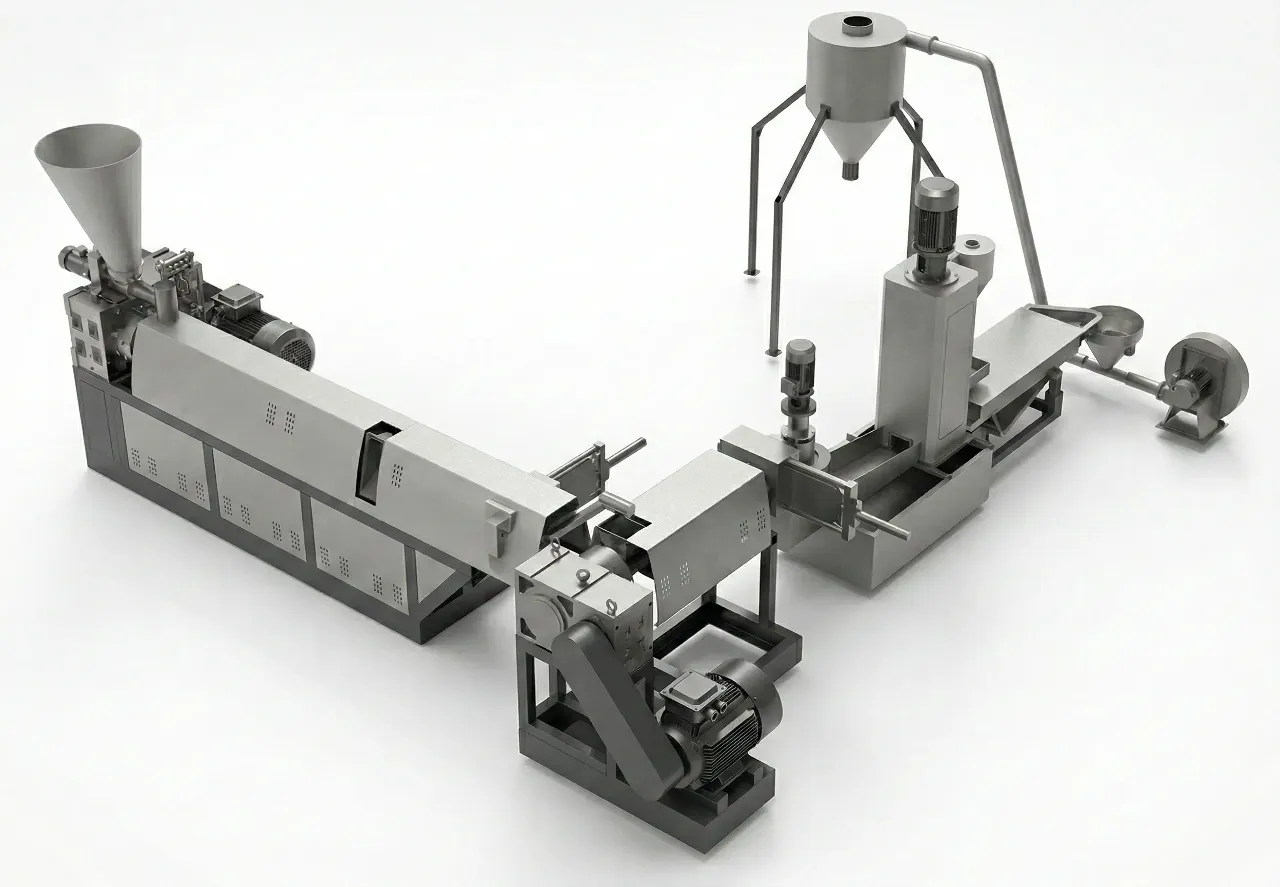
Keep resin grades and production batches identifiable from collection through pellet release.
Granulate cold-runner waste and sprues from known molding jobs. Assess pelletizing when melt filtration or more consistent material handling is needed.
Prepare short shots, dimensional rejects and other recoverable production parts. Remove metal inserts, labels and incompatible components before size reduction.
Process separately collected batches from multiple molding cells. Match feeding to particle size and bulk density, and retain the grade and colour history of each batch.
The line processes prepared thermoplastic regrind. Whole parts and mixed assemblies need upstream preparation.
| Feedstock | Preparation | What to Confirm |
|---|---|---|
| PP or HDPE sprues and runners | Granulate, remove foreign matter and keep each resin grade separate. | Particle size, bulk density, melt-flow target and the required pellet outlet. |
| ABS or PS production regrind | Separate by grade and colour; assess moisture and drying needs. | Resin-specific drying and extrusion conditions, appearance and downstream part performance. |
| Rejected parts with inserts or labels | Remove metals and other attachments, then reduce to a suitable feed size. | Residual contamination and the appropriate screen-change arrangement. |
| Filled, coated or multi-material rejects | Identify fillers, paint, inserts and every polymer present; submit samples separately. | Processing suitability, wear requirements and an acceptable reuse route before specifying equipment. |
Melting and filtration do not separate mixed polymer grades or restore degraded resin. Cleaning and drying, where needed, are upstream requirements; the pelletizer is not a washing or material-sorting system.
Define the resin and batch quality first, then set the feeding, melt treatment and cutting conditions.
Remove contaminants, granulate oversized scrap and dry as required for the resin. Select hopper and feeding equipment for the actual particle size and bulk density.
The extrusion screw plasticizes the regrind. Match the temperature profile and venting arrangement to the resin, moisture and volatile load.
Select plate, column or automatic screen-changing equipment for the contamination level and acceptable production interruption. Define screen size through material trials.
Form pellets using the selected strand or water-ring route, then cool, dry and screen them. Check the batch before returning it to production or dispatching it to a buyer.
The useful output is a qualified material batch that your next process can handle reliably.
Controlled pellet cutting can improve dosing and conveying compared with irregular regrind. Validate pellet size, fines and feeding behaviour in the receiving equipment.
Use melt filtration to capture solid contaminants within the chosen screen capability. Set the screen-change strategy against the measured contamination load.
Record grade, colour, filler content and processing history. Confirm an acceptable recycled-content ratio through trials with the actual molded product.
Review the line arrangement alongside the preparation and quality checks required by your factory.
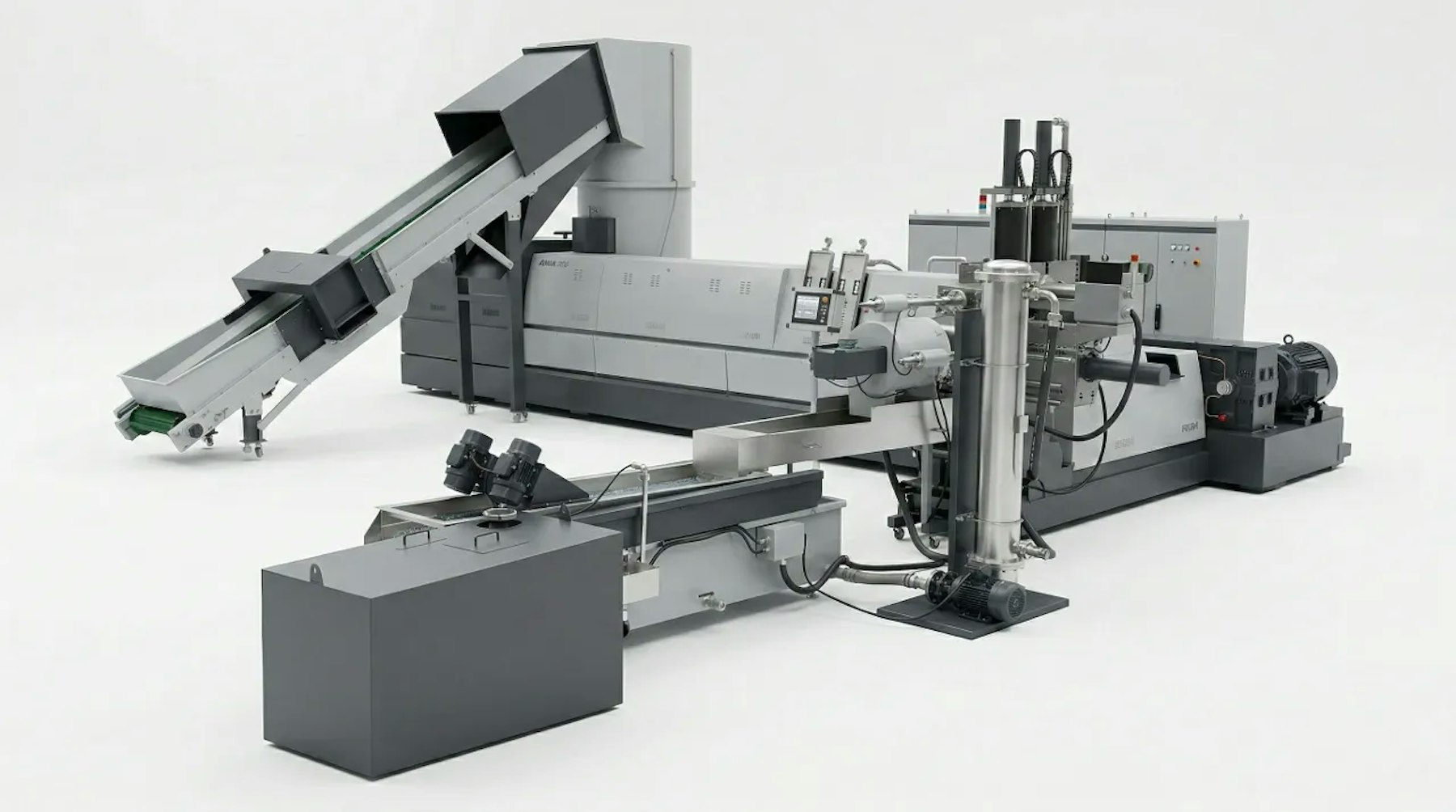
Select screw dimensions, venting, filtration and cutting around the prepared regrind. Assess the need for a second stage from the material condition and required melt quality.
The vibration screen supports pellet classification after cutting. Agree on pellet geometry, fines and residual moisture limits for storage, conveying and the next production step.
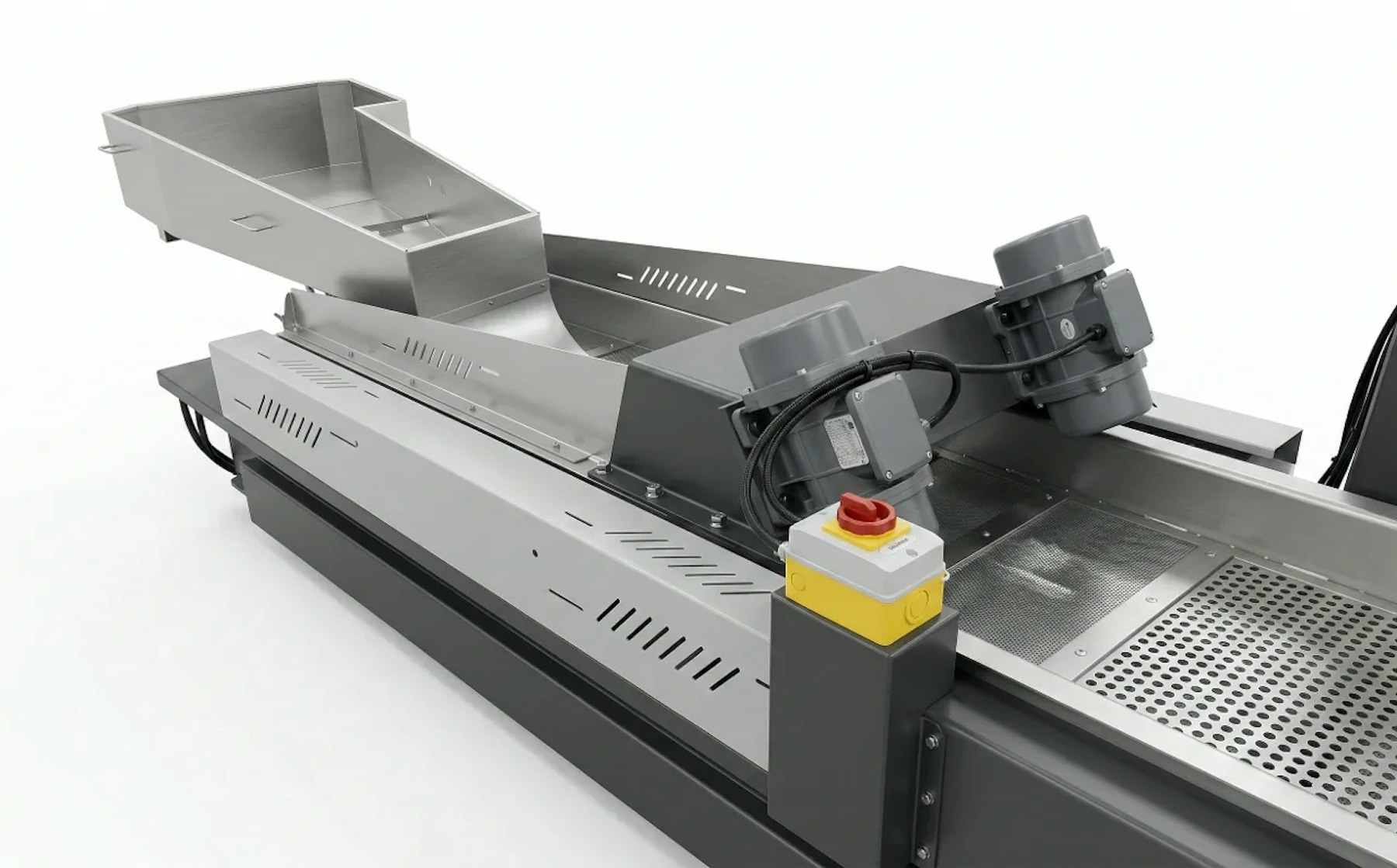
View the existing equipment demonstration, then discuss the feeding and melt-treatment arrangement for your own production scrap.
Each example requires identified feedstock and a verified downstream material specification.
Prepare sprues and rejected PP tubs, lids and household parts for a qualified factory reuse or resale route.
Repelletize separately collected HDPE molding regrind, with melt flow and finished-part properties checked for the intended application.
Evaluate known production offcuts and rejected molded components by resin grade, moisture, additives and appearance requirements.
Keep customer materials and jobs separated while consolidating recoverable scrap into traceable pellet batches.
Reference configurations for the existing six-model range. Confirm resin-specific output and auxiliary equipment before ordering.
| Model | Pelletizing Method | Screen Changer | Screw Diameter & L/D | Motor Power | Output Capacity |
|---|---|---|---|---|---|
| SJ85-100 | Water strands pelletizing | Plate screen changer | 85 mm (L/D 28-33:1) / 100 mm (L/D 10:1) | 55-75 kW | 100-200 kg/h |
| SJ100-120 | Water strands pelletizing | Plate screen changer | 100 mm (L/D 28-33:1) / 120 mm (L/D 10:1) | 90-110 kW | 200-350 kg/h |
| SJ130-150 | Water strands pelletizing | Column screen changer | 130 mm (L/D 28-33:1) / 150 mm (L/D 10-12:1) | 132-160 kW | 400-550 kg/h |
| SJ150-160 | Water strands / Water ring | Column screen changer | 150 mm (L/D 28-33:1) / 160 mm (L/D 12:1) | 185-200 kW | 500-650 kg/h |
| SJ160-180 | Water ring pelletizing | Automatic screen changer | 160 mm (L/D 28-33:1) / 180 mm (L/D 12:1) | 220-250 kW | 700-900 kg/h |
| SJ180-200 | Water ring pelletizing | Automatic screen changer | 180 mm (L/D 28-33:1) / 200 mm (L/D 12:1) | 280-315 kW | 900-1200 kg/h |
Actual throughput depends on resin, regrind size, bulk density, moisture, filtration and pellet requirements. The motor values are equipment reference figures, not total installed line power or measured energy consumption. Final screw, cutting and auxiliary configurations are project-specific.
Supply a representative scrap sample and the requirements of the receiving molding process.
Identify PP, HDPE, ABS or PS, the exact grade, colour and filler content. State whether the feed is sprues, runners, rejected parts or purchased regrind.
Share granulated particle size, bulk density, moisture and any metals, labels or coatings. Include the current granulator and drying arrangement.
Provide scrap kilograms per shift, planned recycling hours, available space and utilities. Size the line to the usable scrap rate and required pellet quality.
Specify melt flow or viscosity, appearance, moisture and contamination limits. Define downstream part tests and the proposed reuse or blending ratio.
Choose the route that meets the molded-product specification with an acceptable processing cost and thermal history.
| Decision | Direct Regrind Reuse | Repelletizing Route |
|---|---|---|
| Clean, known-grade scrap | May be suitable after granulation, drying where needed and an approved blending trial. | Evaluate when pellet form, batch consistency or a buyer specification justifies another processing step. |
| Particle shape & feeding | Check irregular particle size, fines and hopper behaviour. | Controlled cutting produces pellets whose size and feeding characteristics can be specified. |
| Residual solid contamination | Requires effective upstream separation; direct reuse adds no separate melt-filtration step. | Adds melt filtration within the selected screen capability; still requires properly prepared feedstock. |
| Material history & economics | Avoids a separate extrusion heat cycle but still needs traceability and part testing. | Adds equipment, energy and thermal exposure; qualify the pellets and intended recycled-content ratio. |
Yes. Prepared sprues and runners from identified PP, HDPE, ABS or PS grades can be evaluated for extrusion and pelletizing. Granulate oversized pieces, remove foreign material and confirm drying, filtration and reuse requirements for the actual resin.
Not always. Clean, consistent regrind may be suitable for direct return to molding after preparation and an approved blending trial. Pelletizing is worth evaluating when separate melt filtration, pellet handling or a resale specification is needed. Include the added processing cost and heat history in that decision.
Keep these resins and their grades identified and separated. A pelletizing line does not sort molten polymers or make an unknown blend suitable for a specified molded part. Mixed or filled formulations require a separate compatibility and process assessment.
The line requires feed prepared to an agreed size and condition. Remove inserts and attachments from rejected parts, then granulate or shred as needed. Assess purge lumps separately for resin identity, size and degradation; do not assume the same feeding route as ordinary regrind.
Assess drying against the ABS grade, storage conditions and measured moisture, following the resin supplier’s guidance. Venting during extrusion can help manage residual moisture and volatiles, but it is not a substitute for the required feed preparation.
Stage count follows moisture, volatile load, filtration needs and the required pellet quality. A second stage may provide additional processing flexibility, but adds equipment and thermal exposure. Compare configurations with representative regrind rather than assuming more stages always produce better material.
Strand and water-ring cutting must be matched to melt behaviour, capacity, handling and pellet requirements. Choose plate, column or automatic screen-changing equipment from the contamination load and changeover plan. Confirm filtration continuity and screen size for the quoted configuration.
The allowable substitution depends on the resin history, formulation and finished-part specification. Check melt flow or viscosity, appearance and the relevant mechanical and dimensional properties. Establish the reuse ratio through production trials; pelletizing does not restore degraded resin to virgin properties.
Send the resin grade, scrap photos, regrind size and daily quantity, together with your intended reuse. We can assess preparation, extrusion, filtration and the trials needed to qualify the pellets.