
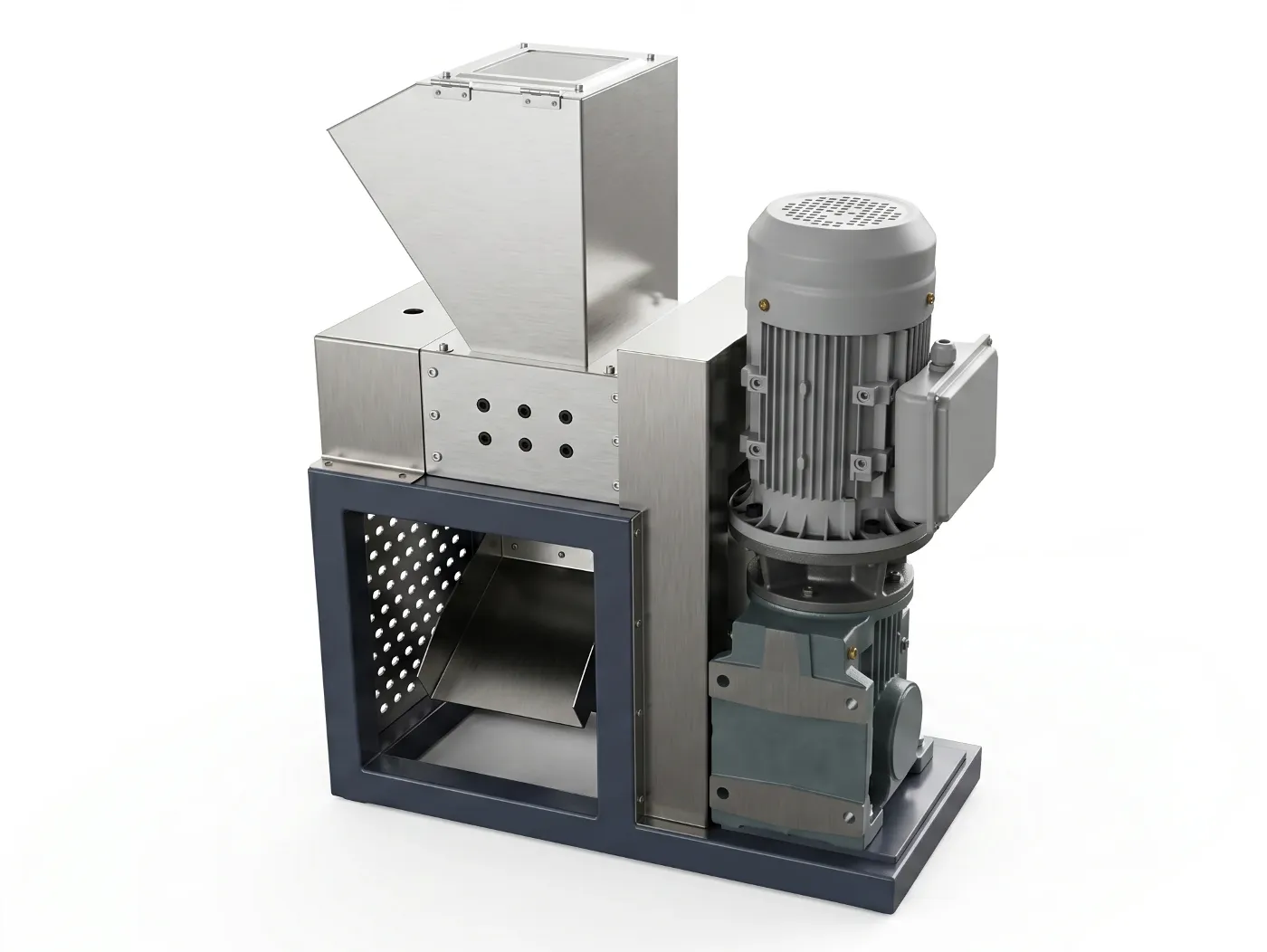
Mini Desktop Small Shredder
Up to 20 kg/h, depending on material. Produces controlled 3–6 mm regrind from failed prints, supports, and rigid samples.

Products and solutions
Products and solutions onlyNo matching products or solutions found.
Laboratory & Desktop Recycling Equipment
Compact shredders, filament extruders, and laboratory twin-screw systems for universities, R&D teams, makerspaces, and polymer labs. Validate material preparation, recycled-content recipes, and small-batch output before scale-up.
Start with the process you need to validate: size reduction, filament production, or polymer compounding.
Up to 20 kg/h, depending on material. Produces controlled 3–6 mm regrind from failed prints, supports, and rigid samples.
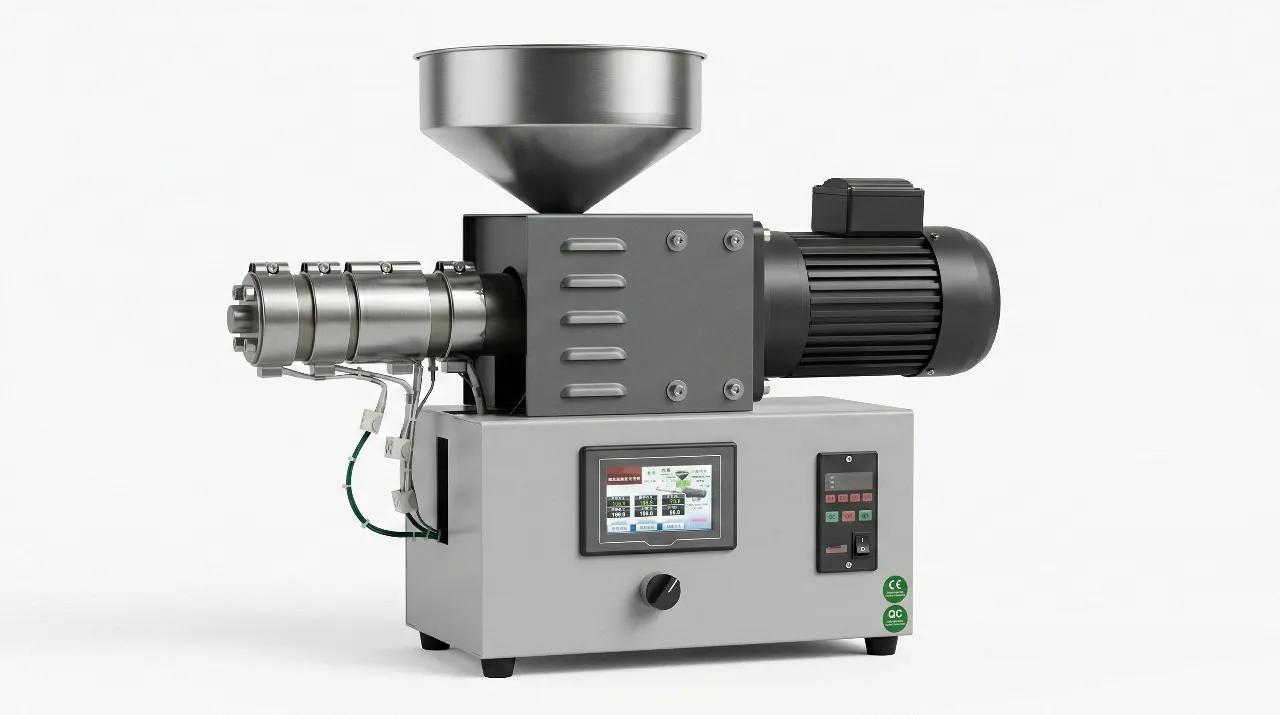
Standard output of 0.3–3 kg/h for controlled trials of 1.75 mm or 2.85 mm filament.
A 1–5 kg/h compounding platform for additives, blends, and recycled-content formulation work.
A task-specific combination of shredding, drying, extrusion, pelletizing, and measurement modules.
Build only the stages needed for your material and research goal.
Identify the polymer, sample volume, contamination, desired output, and measurements required.
Sort, clean, dry, and shred samples to a consistent particle size before extrusion.
Choose filament extrusion for finished filament or twin-screw compounding for formulation work.
Track temperature, output, moisture, dimensions, and quality so results can inform the next scale.
Work with realistic sample volumes without installing an oversized industrial line.
Control preparation and processing variables so trials can be compared.
Use recorded lab results to define the next pilot or production configuration.
Industrial machinery is oversized for laboratory sample volumes.
Select compact, task-specific modules for shredding, filament extrusion, or compounding.
Variable particle size and moisture make trials unstable.
Define sorting, screening, and drying steps before extrusion.
Filament making and polymer compounding are often treated as the same process.
Use a filament extruder for finished filament and a twin-screw extruder for formulation development.
Laboratory results can be difficult to translate into production requirements.
Record mass balance, process settings, output rate, and quality data from every run.
The right setup depends on whether the target is prepared regrind, finished filament, or a compounded formulation.
Prepare failed prints, supports, sprues, and rigid polymer samples for controlled downstream trials.
Choose a filament extruder for finished 3D printing filament or a twin-screw extruder for blend and additive development.
Visible, hands-on workflows for polymer processing, recycling, and circular-economy education.
Controlled formulation and process trials before pilot or production investment.
Recover sorted 3D printing scrap and test closed-loop filament workflows.
Produce representative regrind, filament, or compounds for evaluation.
| Equipment | Capacity Reference* | Typical Output | Best Fit |
|---|---|---|---|
| Mini Desktop Small Shredder | Up to 20 kg/h | 3–6 mm regrind | Failed prints, supports, and rigid samples |
| 3D Filament Extruder | 0.3–3 kg/h standard | 1.75 mm or 2.85 mm filament | Teaching, filament trials, and small batches |
| Laboratory Twin-Screw Extruder | 1–5 kg/h | Compounded strand or pellets | Formulation, additives, and recycled-content validation |
*These are individual equipment references, not an end-to-end line rating. Closed-loop output is limited by the slowest stage, usually extrusion. Actual capacity depends on polymer, feed geometry, preparation, and target quality.
| Objective | Recommended Equipment | Output |
|---|---|---|
| Prepare plastic samples | Mini Desktop Small Shredder | Controlled regrind |
| Make 3D printing filament | Mini shredder + dryer + 3D filament extruder | 1.75 mm or 2.85 mm filament |
| Develop polymer formulations | Laboratory twin-screw extruder | Compounded strand or pellets |
| Validate a closed-loop workflow | Configured lab recycling cell | Measured process and sample output |
Start from the teaching or research objective. A desktop shredder is the usual first step for material preparation; add a filament extruder for 3D printing loops or a twin-screw extruder for formulation research.
No. Prints should be sorted by polymer, cleaned, size-reduced, and dried. Recycled material may also need blending with virgin resin and filtration to achieve stable filament.
Each stage has its own rating. The mini shredder can reach up to 20 kg/h depending on material, while standard filament extrusion is typically 0.3–3 kg/h. End-to-end output follows the slowest stage.
Use it when the goal is controlled blending, additive dispersion, recycled-content formulation, or material development rather than simply producing finished filament.
Share the polymer, sample size, desired output, target capacity, available space, and utilities. We will recommend only the modules your work requires.