

Industrial Shredders

Hydraulic Drawer Single-Shaft Shredder with Swing Arm

A single-shaft shredder is only as good as its feeding system. This machine pairs a hydraulic drawer chamber with a swing-arm ram that presses material down onto the rotor at constant pressure — so purge lumps, pipe sections, film rolls, and bulky rigid parts stay engaged with the blades instead of floating above them. The result is steady output on exactly the feeds that make standard horizontal-ram shredders run empty.

  • Matched to your feedstock and output target
  • Stable throughput with controlled discharge size
  • Layout, controls, and service support customized
View Specifications
Scroll
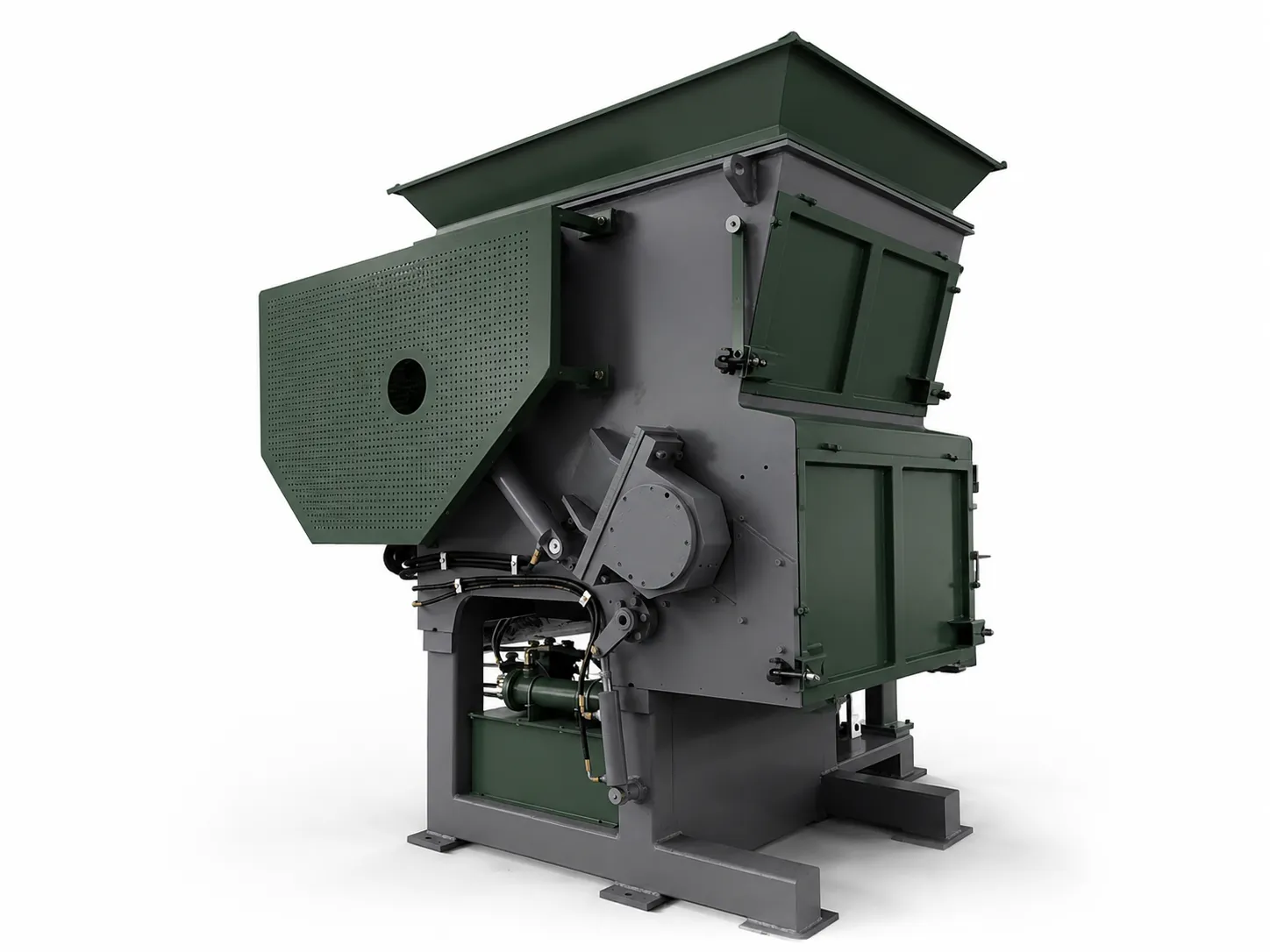
Hydraulic drawer single-shaft shredder with swing arm ram
  • Matched to your feedstock and output target
  • Stable throughput with controlled discharge size
  • Layout, controls, and service support customized

Backed by Documented Performance Targets

CE Certified Manufacturing
24/7 Global Technical Support
12-Month Comprehensive Warranty
Turnkey Installation & Training

How the Swing-Arm Feeding Cycle Works

The machine manages its own feed pressure — the operator loads the chamber and the hydraulics do the rest.

1

Step 1 — Load the chamber

Purge lumps, pipe sections, rolls, or bulky rigid scrap drop into the open feed chamber by forklift, tipping unit, or conveyor. The chamber takes mixed shapes and sizes together — no pre-sorting by geometry.

2

Step 2 — Drawer advances, swing arm presses

The hydraulic drawer pushes the charge toward the rotor while the swing-arm ram pivots down onto it. Feeding runs in manual, cyclic, or load-dependent mode — in load-dependent mode the two cylinders meter their pressure against rotor amp draw, so the blades cut into loaded material on every pass without forcing.

3

Step 3 — Rotor cuts against the screen

The single shaft rotor with indexable square knives cuts against fixed counter-knives. Everything stays in the chamber until it passes the screen under the rotor — the screen aperture, not luck, sets the output size.

4

Step 4 — Pressure adapts, overloads reverse

If rotor load climbs, the ram pressure eases automatically; if a hard contaminant jams the rotor, the drive auto-reverses to clear it. The cycle continues without an operator touching anything.

Why the Swing Arm Matters

The weak point of every single-shaft shredder is the moment material stops pressing against the rotor. This design removes that moment.

No Floating, No Empty Cutting

Light and springy material — film rolls, hollow parts, big-bag scrap — rides up over a horizontal ram and lets the rotor spin uncut. The swing arm presses from above, so the rotor always cuts loaded material and hourly output stays near nameplate.

Takes Bulky and Heavy Feed in One Step

Purge lumps, pipe sections up to the chamber length, pallet-sized rigid parts, and start-up cakes go in as they arrive. The drawer-plus-arm combination grips shapes that would bridge or bounce in a gravity-fed machine.

Screened, Washing-Line-Ready Output

The under-rotor screen delivers a defined flake size in one pass — 20 to 80 mm depending on the screen fitted — so output feeds a washing line, granulator, or extruder densifier directly.

Problems This Design Solves

These are the four failure modes that put a swing-arm machine on the RFQ after a standard shredder disappoints.

Problem

Throughput collapses on light or springy feed because material floats above the rotor.

Rumtoo Solution

The swing-arm ram holds the charge down under constant hydraulic pressure. The rotor cuts full-depth every rotation, so rated throughput holds on film rolls and hollow parts, not just on dense regrind-friendly feed.

Problem

Purge lumps and thick-wall pipe stall the rotor or demand a bigger machine than the budget allows.

Rumtoo Solution

Pressure-controlled feeding meters how hard the charge presses the rotor. Dense lumps are cut progressively at stable load instead of shock-loading the drive — a mid-size motor handles feed that stalls gravity-fed machines.

Problem

Dead corners in the feed chamber leave uncut material and force manual raking.

Rumtoo Solution

The drawer floor sweeps the full chamber and the arm covers the zone above the rotor. Material has nowhere to sit — the chamber self-clears between charges.

Problem

Oversize pieces in the output contaminate the washing line downstream.

Rumtoo Solution

Nothing leaves the chamber until it passes the screen. Output size is set by screen aperture, and swapping the screen changes the spec in under an hour.

Two Feeding Systems Working Together

Most single-shaft shredders push material sideways with a horizontal ram. This design adds a second axis: the swing arm presses from above, keeping the material loaded against the rotor through the whole cut.

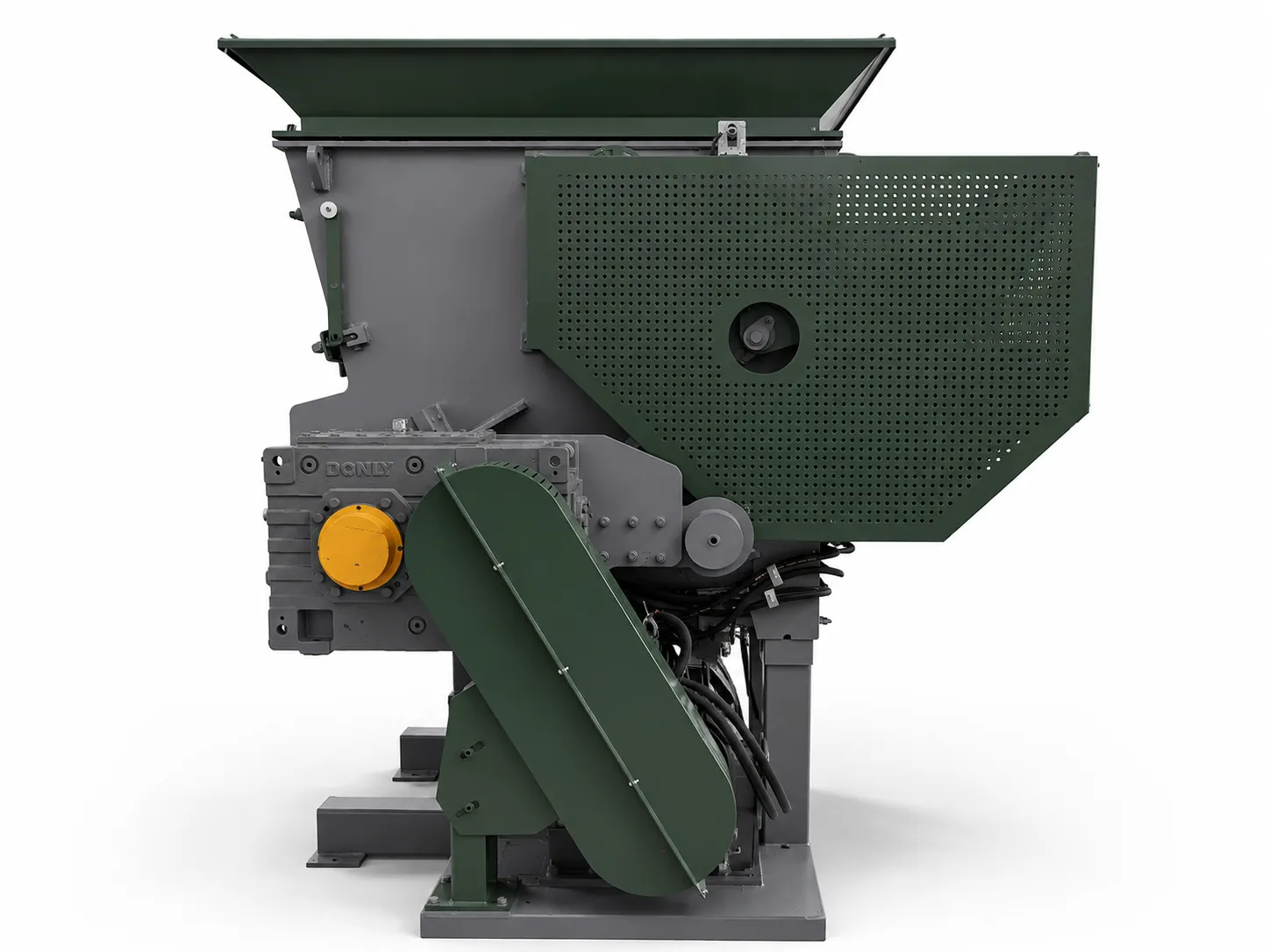
Swing-arm ram and drawer feed chamber of a single-shaft shredder, drive side

Equipment View: Drawer Chamber Plus Swing-Arm Ram

The hydraulic drawer forms the feed chamber floor and advances material toward the rotor. Above it, the swing-arm ram pivots down and holds the charge under constant hydraulic pressure. Light material cannot float, hollow parts cannot bounce, and the rotor bites full-depth on every rotation instead of skimming the surface.

  • Swing-arm ram applies constant downward pressure onto the rotor
  • Hydraulic drawer advances the charge — no dead corners in the chamber
  • Pressure-controlled feeding: ram force adapts to rotor load automatically
Process View: One-Step Size Reduction to Screened Flake

Material drops into the chamber by forklift, tipper, or conveyor. The rotor with indexable knives cuts against fixed counter-knives, and a screen under the rotor holds everything in the cutting chamber until it passes the target size — typically 20 to 80 mm. Output goes by conveyor or blower to washing, pelletizing, or storage.

  • Screen-controlled output size, changeable in 20–80 mm steps
  • Feeds a washing line or granulator directly — no secondary pass for most jobs
  • Auto-reverse clears overloads before they become downtime
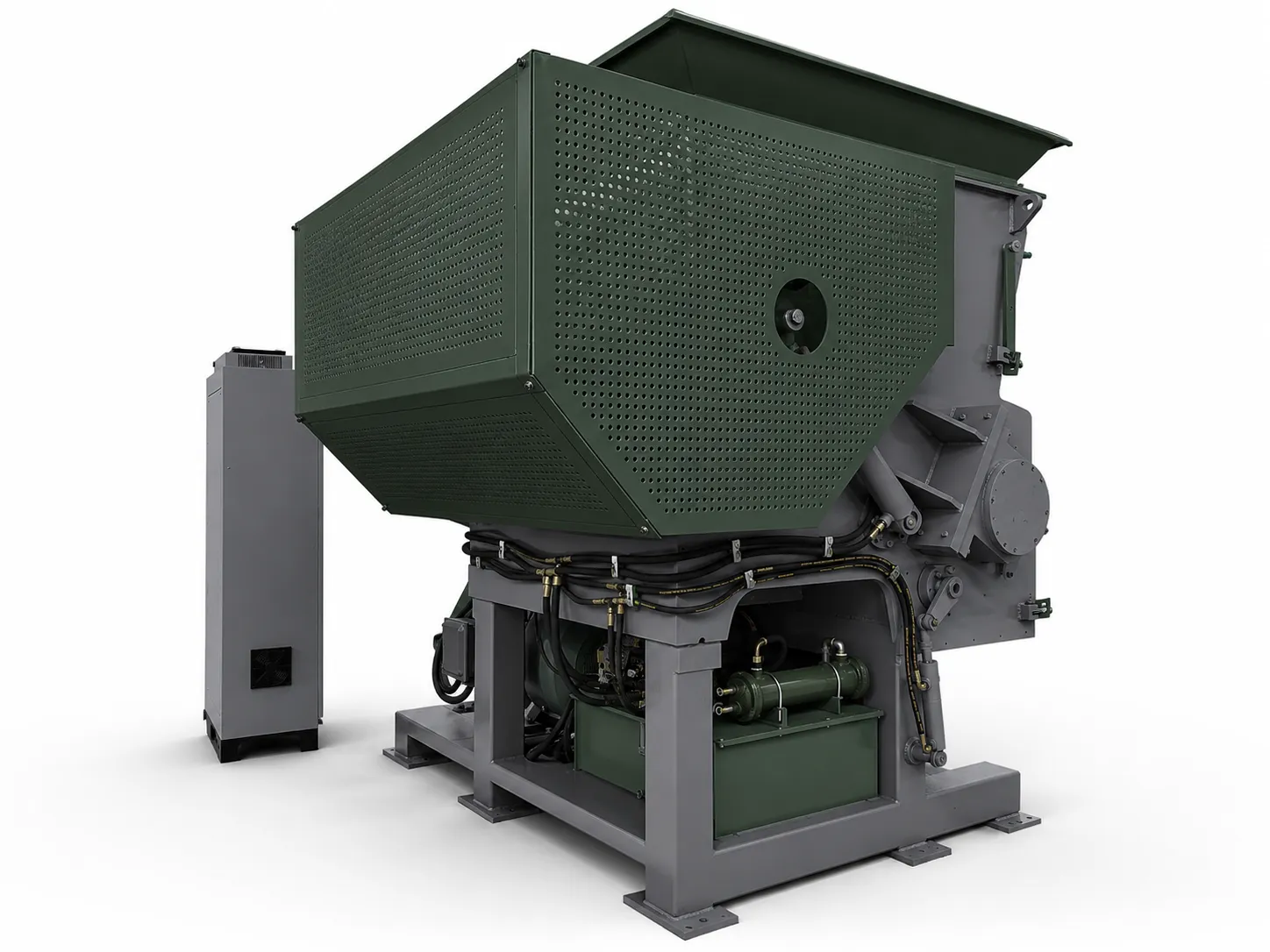
Hydraulic power unit and control cabinet feeding the single-shaft shredder

Hydraulic Drawer Single-Shaft Shredder in Operation

Watch the swing-arm ram hold the charge against the rotor while the drawer advances — steady cutting on material that would float or bounce in a gravity-fed machine.

Applications

The common thread: feed that is too bulky, too dense, or too light-and-springy for gravity-fed or horizontal-ram machines.

  • Purge Lumps and Start-Up Cakes

    PE, PP, ABS, and PA purgings cut progressively under ram pressure — the classic feed for pressure-controlled single-shaft machines.

  • Pipe and Profile Sections

    HDPE and PVC pipe up to the chamber length, thick-wall fittings, and window profiles reduced to screened flake in one pass.

  • Film and Nonwoven Rolls

    Reel ends and full rolls held down by the swing arm so the web cannot ride the rotor — cut to washing-line-ready size.

  • Rigid Plastic and Bulky Parts

    Crates, drums, pallets, dashboards, and molded rejects gripped by the drawer-and-arm combination without pre-breaking.

  • Post-Industrial Mixed Scrap

    Production rejects in mixed shapes and wall thicknesses processed together — the pressure control absorbs feed variation.

  • Washing Line Front End

    As the size-reduction stage of a recycling wash line, delivering uniform screened flake to friction washing and separation.

Reference Configurations

Rotor width and motor power are the sizing parameters; the screen sets output size. Rumtoo confirms the model against your heaviest feed sample before quoting.

ModelRotor WidthMotor PowerThroughputTypical Feed
RT-DS-800800 mm37 kW500–900 kg/hPurge lumps, pipe off-cuts, rigid scrap
RT-DS-12001,200 mm55 kW800–1,500 kg/hPipes, rolls, crates, mixed post-industrial
RT-DS-16001,600 mm90 kW1,200–2,200 kg/hLarge purgings, drums, pallet-size rigid parts
RT-DS-20002,000 mm132 kW1,800–3,000 kg/hHigh-volume washing line front end

Screen apertures available from 20 to 80 mm; output size and throughput move together — finer screens reduce hourly rate. Rotor knives are indexable square inserts, rotatable four times before replacement. Auto-reverse and overload protection are standard on all models.

RFQ Checklist — Information We Need to Size the Machine

Five inputs fix the rotor width, motor power, and screen. The heaviest, bulkiest feed sets the machine, not the average.

  1. Feed Material and Form

    State what you shred: purge lumps, pipe, rolls, crates, mixed rigid scrap. Include wall thickness for pipe and the resin for purgings — PA purge needs more margin than PE.

  2. Largest Piece Dimensions

    Longest pipe, biggest lump, widest roll. The chamber and rotor width are fixed by the largest piece you load, because the alternative is pre-cutting you did not plan for.

  3. Target Output Size

    What does the next machine need — 30 mm for a washing line, 50 mm for a granulator feed? The screen aperture sets this, and it also sets the realistic throughput.

  4. Throughput and Operating Hours

    Target kg/h and hours per day. Continuous washing-line duty sizes differently from batch processing of production rejects.

  5. Loading and Discharge

    Forklift, tipper, or conveyor infeed; conveyor or blower discharge; and the height of whatever comes next. These set chamber height and discharge configuration.

Swing-Arm vs Horizontal-Ram Single-Shaft Shredder

Both are single-shaft machines with screens. The difference is what happens between the ram and the rotor.

Decision FactorHorizontal-Ram ShredderRumtoo Drawer + Swing-Arm Shredder
Light / springy feedMaterial rides up over the ram and floats above the rotor — output fallsSwing arm presses from above; rotor cuts loaded material every pass
Dense lumps and thick pipeShock loads when the ram forces a lump into the rotorPressure-controlled feed meters the charge; stable amp draw
Chamber dead zonesCorners the ram cannot sweep collect uncut materialDrawer floor plus arm coverage — chamber self-clears
Feed variationTuned for one feed type; mixed charges feed unevenlyRam pressure adapts to the material actually in the chamber
Wear partsRam guide rails and floor plates wear under side loadPivot-mounted arm has fewer sliding surfaces in the material path

Frequently Asked Questions

What does the swing arm do on a single-shaft shredder?

The swing arm is a pivot-mounted hydraulic ram that presses material down onto the rotor at constant pressure. It solves the main weakness of horizontal-ram machines: light or springy material floating above the rotor while the blades spin without cutting. With the arm holding the charge down, the rotor cuts loaded material on every rotation and throughput stays near the rated figure.

What is the hydraulic drawer for?

The drawer is the moving floor of the feed chamber. It advances the charge toward the rotor and sweeps the full chamber width, so no dead corners collect uncut material. Together with the swing arm it grips shapes — lumps, rolls, bulky parts — that bridge or bounce in gravity-fed machines.

What output size does the machine produce?

Output size is set by the screen under the rotor, available in apertures from 20 to 80 mm. Nothing leaves the cutting chamber until it passes the screen, so the flake is uniform enough to feed a washing line or granulator directly. Finer screens reduce hourly throughput, so the screen choice and the rate target are set together.

Can it shred purge lumps and start-up cakes?

Yes — purgings are a core application. The pressure-controlled ram feeds the lump into the rotor progressively instead of forcing it, so dense PE, PP, and ABS purge cuts at stable load. For very large or engineering-resin cakes, pre-cutting with a hydraulic guillotine reduces the duty on the shredder and lets a smaller motor do the job.

How long is the pipe it can take?

Up to the feed chamber length of the model — pipe sections load lengthwise and the drawer advances them into the rotor. For pipe longer than the chamber, cut to length first or choose a dedicated horizontal pipe shredder designed for full-length pipe.

What happens when metal enters the feed?

The drive auto-reverses on overload to clear the jam, and the ram pressure releases automatically. Hard metal should still be removed upstream — tramp iron damages knives — so a magnet on the infeed conveyor is recommended for post-consumer or mixed scrap streams.

How is knife wear handled?

The rotor carries indexable square knife inserts that rotate four times before replacement, and they change from outside the rotor without removing it. Counter-knives adjust to keep the cutting gap tight as wear accumulates — gap maintenance is the single biggest factor in keeping output size and energy use stable.

How are the rotor bearings protected from dust and fines?

The rotor bearings sit outside the cutting chamber in offset housings, separated from the material path by sealed wall passages. Fines and abrasive dust never reach the bearing races — the failure mode that shortens rotor life on machines with in-chamber bearings — and greasing points are accessible from outside without opening the chamber.

Size the Shredder to Your Heaviest Feed

Send your material type, largest piece dimensions, target output size, and hourly rate. Rumtoo will return a configured proposal with rotor width, motor power, screen choice — and a straight answer on whether your feed needs the swing-arm design or a simpler machine will do.

Expert response within 24 hours. No obligation quote.