
Clean Factory Trim & Offcuts
For segregated PE film edges, bag-making offcuts and dry production rejects. Define the collection method, resin grade and feed rate.

Products and solutions
Products and solutions onlyNo matching products or solutions found.
PE Packaging Film Recycling
Turn PE stretch film, packaging offcuts and collected film edge trim into pellets for evaluated reuse or sale. Rumtoo matches feeding, compaction, degassing and filtration to clean factory scrap or prepared used pallet wrap.
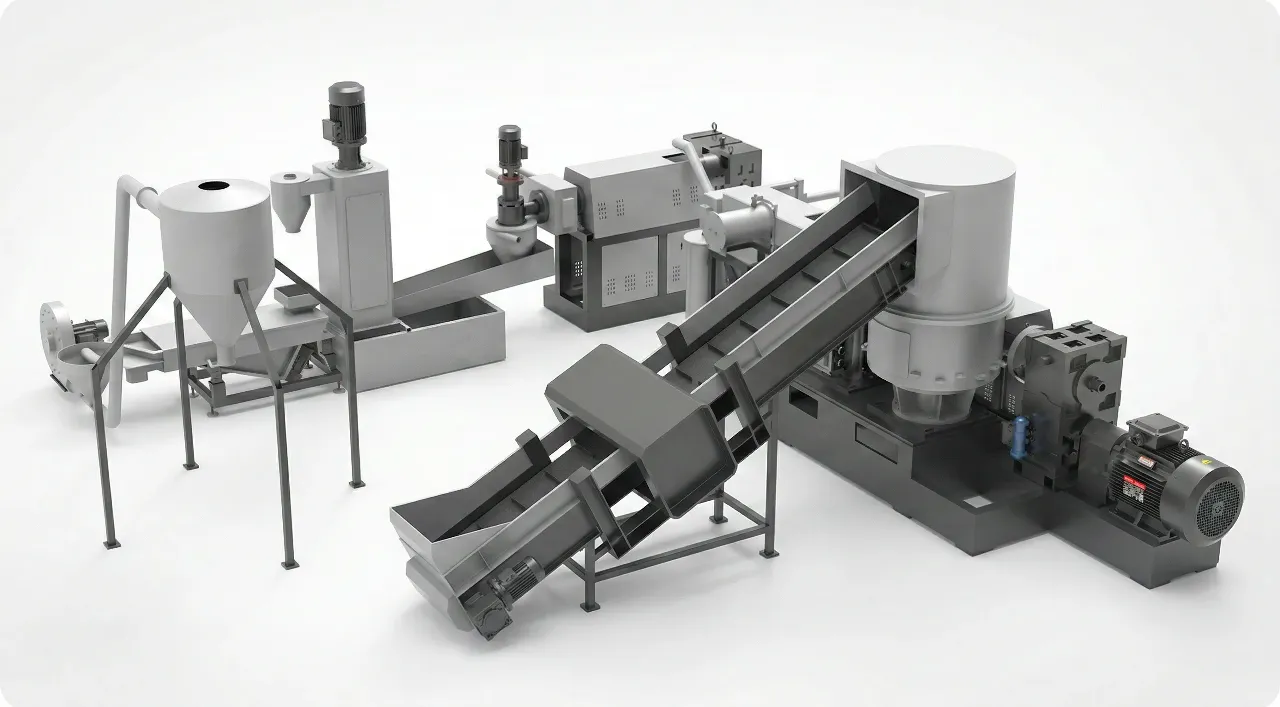
Start with the source and condition of the material before selecting the extrusion configuration.
For segregated PE film edges, bag-making offcuts and dry production rejects. Define the collection method, resin grade and feed rate.
For recovered pallet wrap with labels, dirt or moisture. Assess sorting, washing and dewatering before the compactor.
For prepared film arriving from a washing line. Check residual moisture and bulk density to select the required dewatering or squeezing stage.
The same polymer can need different preparation depending on where the scrap comes from.
| Film Feedstock | What to Check | Preparation & Configuration |
|---|---|---|
| Clean PE edge trim and bag-making offcuts | Resin grade, color, print coverage and collection method | Keep batches separate; assess dry feeding and filtration for the intended pellet use |
| Rejected rolls and startup film | Roll dimensions, cores, film thickness and delivery rate | Specify unwinding, cutting or size reduction as needed; remove cores before processing |
| Used stretch wrap and pallet covers | Tape, labels, straps, surface dirt and mixed packaging | Sort first; assess washing and dewatering before compaction and extrusion |
| Washed PE packaging film | Measured moisture, bulk density and remaining contamination | Match upstream dewatering, extrusion stages, venting and filtration to the prepared feed |
This page focuses on PE packaging film. Agricultural mulch, PP woven sacks, BOPP and multilayer packaging require separate feedstock and process evaluation.
Connect feed preparation, compaction and extrusion around the actual packaging scrap. Washing and online trim collection are specified separately when needed.
Separate PE grades and colors where required. Remove unsuitable packaging and prepare loose film, collected trim or roll scrap for the agreed feeding arrangement.
The cutter compactor reduces and preheats lightweight film, increasing bulk density for extrusion. Match feed rate and operating settings to the film condition.
Melt the prepared film and use the specified venting and filtration arrangement to manage residual moisture, volatiles and remaining contaminants. Select extrusion stages for the feed and pellet target.
Use the selected water-ring or strand cutting arrangement, then cool, dry and screen the output. Sample the pellets for agreed reuse or buyer acceptance checks.
Feeding consistency, contamination load and the intended use of the pellets determine the equipment selection.
The cutter compactor reduces and densifies loose film before extrusion. Size its working volume and feed controls for the bulk density and delivery rate of your stretch film or collected trim.
Clean, segregated factory trim and used warehouse wrap require different preparation. Specify sorting, washing or dewatering where needed before choosing venting and filtration.
Choose the filtration and cutting arrangement around pellet requirements for reuse or sale. Confirm color, melt flow, contamination and trial results with the receiving film or molding operation.
Describe the problem at the feed or pellet stage so the proposed line addresses its cause.
Loose stretch film and edge trim feed unevenly into the extruder.
Match scrap metering, compactor volume and extrusion demand to reduce feed fluctuations. Compare performance on the actual loose, baled or prepared material.
Used pallet wrap carries tape, labels, straps or surface dirt.
Separate non-PE materials before processing and assess washing where needed. Select melt filtration for remaining contaminants; a pelletizer is not a substitute for sorting or cleaning.
Washed film carries excess water into the melt section.
Measure residual moisture and confirm upstream dewatering or drying requirements. Compactor heating and extruder venting do not establish a universal acceptable inlet moisture level.
Printed batches or mixed resin grades change pellet color and processing behavior.
Keep sources and colors segregated where practical, evaluate venting for the print load, and test the output. Filtration and degassing cannot guarantee removal of color, odor or incompatible polymers.
Review the compaction and extrusion layout together with cooling, screening and collection for the planned PE film feedstock.
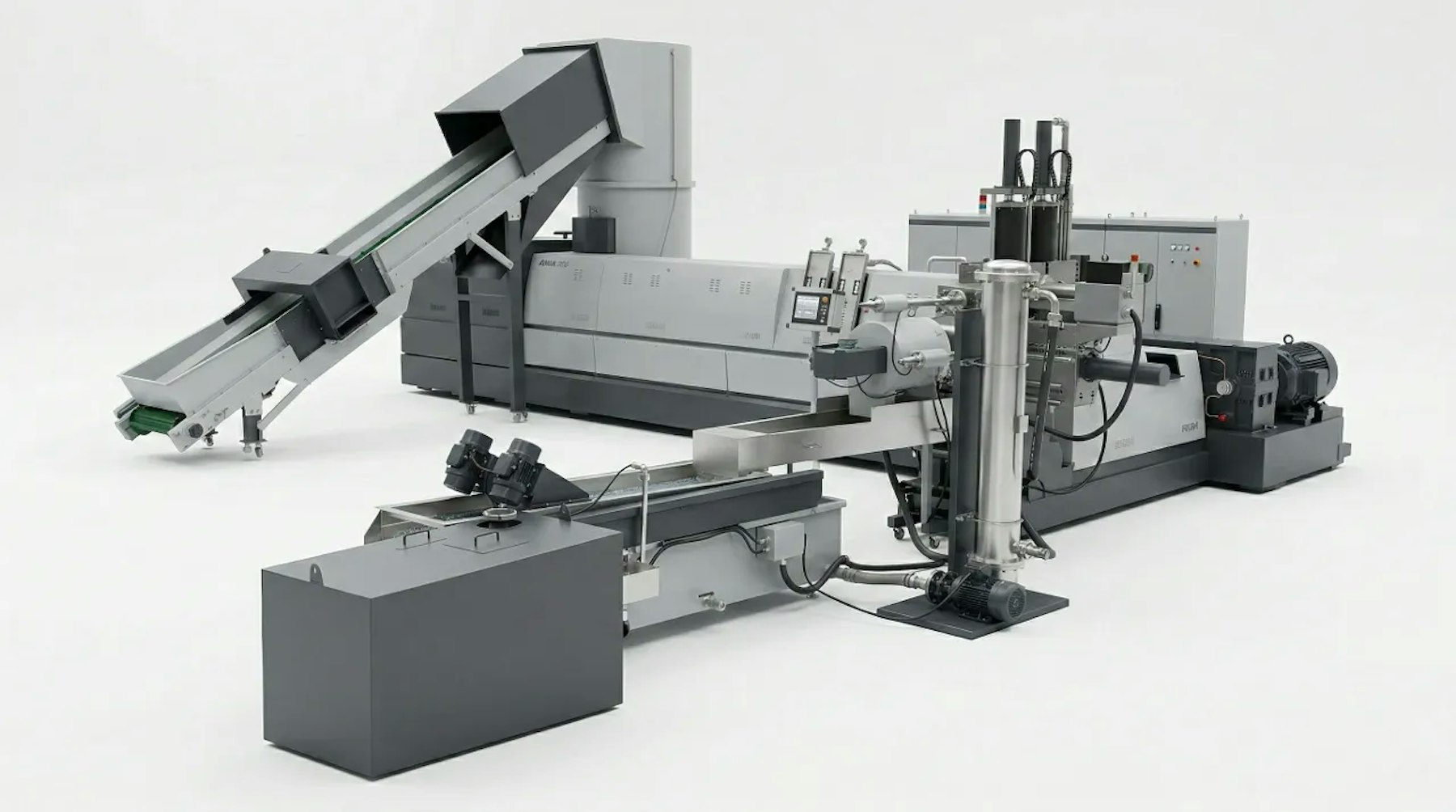
Match the compactor to loose stretch film or collected packaging trim, then specify extrusion, venting and melt filtration around the prepared material.
Plan pellet cooling, drying and screening for storage or transfer to the next process. Sample output against the receiving production line or buyer specification.
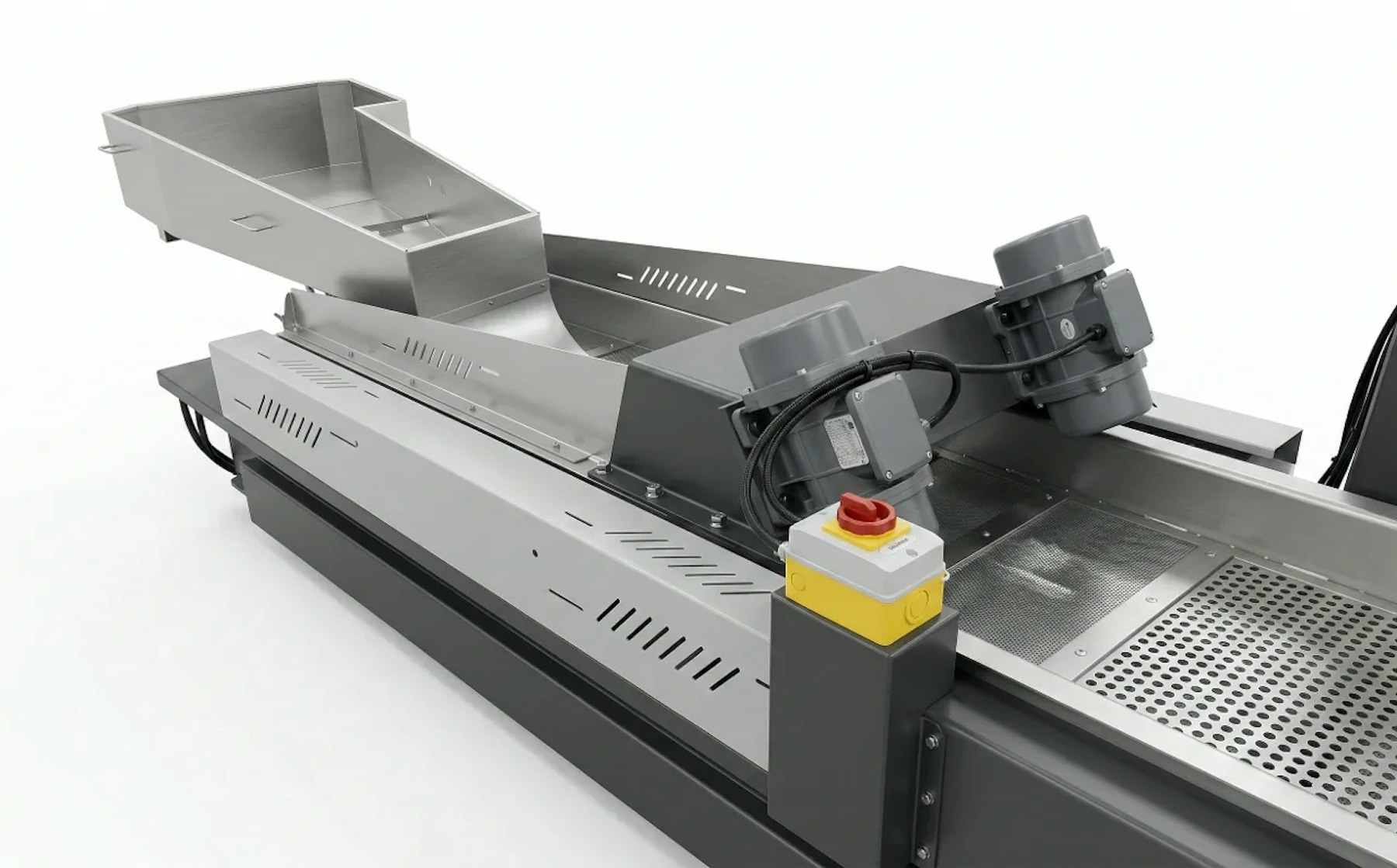
View the equipment arrangement and pelletizing process. The configuration for your packaging scrap is selected from its feed form, preparation needs and output target.
From factory offcuts to recovered pallet wrap, define the scrap source before specifying the line.
Recover separated stretch-film offcuts and production rejects. An LLDPE stretch film pelletizing machine needs feeding matched to how the scrap is collected, with temperature control and filtration chosen for its intended reuse.
Configure an LDPE packaging film scrap pelletizing line for bag-making offcuts and rejected PE film. Keep resin grades, colors and printed batches identifiable so the pellet specification follows a known input stream.
Use a PE film edge trim recycling pelletizer for collected production trim. Define the trim collection method, storage and feed rate; direct online trim take-off requires a separately engineered connection.
A pallet wrap recycling pelletizing machine handles a different preparation task from clean factory trim. Sort used wrap, remove straps and labels, and assess washing and dewatering before specifying the extrusion section.
| Model | Compactor Volume / Power | Screw Diameters / L/D | Extruder Motor | Reference Output |
|---|---|---|---|---|
| ML85-100 | 300 L / 37-45 kW | 85 mm (L/D 28-33:1) / 100 mm (L/D 10:1) | 55-75 kW | 150-200 kg/h |
| ML100-120 | 500 L / 55-75 kW | 100 mm (L/D 28-33:1) / 120 mm (L/D 10:1) | 90-110 kW | 250-350 kg/h |
| ML130-150 | 800 L / 90-110 kW | 130 mm (L/D 28-33:1) / 150 mm (L/D 10-12:1) | 132-160 kW | 400-550 kg/h |
| ML150-160 | 950 L / 110-132 kW | 150 mm (L/D 28-33:1) / 160 mm (L/D 12:1) | 185-200 kW | 500-650 kg/h |
| ML160-180 | 1100 L / 110-132 kW | 160 mm (L/D 28-33:1) / 180 mm (L/D 12:1) | 220-250 kW | 700-900 kg/h |
| ML180-200 | 1100 L / 160-185 kW | 180 mm (L/D 28-33:1) / 200 mm (L/D 12:1) | 280-315 kW | 900-1200 kg/h |
The listed models and specifications are reference configurations. Actual throughput depends on film grade, bulk density, moisture, contamination and filtration duty. Confirm the compactor, extrusion stages, pelletizing method and required utilities using representative feedstock.
Specify LDPE or LLDPE, the production or collection source, color and print coverage. Send scrap photos and identify any coatings or non-PE layers.
Show whether the film arrives loose, baled, in rolls or after washing. Include roll sizes where relevant, measured moisture and the existing sorting or dewatering equipment.
Provide the scrap supply rate, operating hours, target kg/h, available space, power supply and cooling arrangements. These inputs guide model and line sizing.
State whether pellets will return to your own production or be sold. Share the receiving process requirements and arrange sample testing before agreeing output quality.
The target application determines what must be checked during a material trial.
| Output Check | Return to In-House Production | Supply an External Pellet Buyer |
|---|---|---|
| Resin and batch identity | Keep grades, colors and production scrap sources traceable | Agree the accepted PE grades and source consistency with the buyer |
| Melt behavior | Measure melt flow and trial the intended production settings | Agree the test method and acceptable melt-flow range |
| Contamination and appearance | Check gels, specks and color against the finished product requirements | Define filtration targets, visible defects and color acceptance |
| Use approval | Validate the recycled blend in the actual film or molding process | Agree sampling, packaging and batch acceptance before supply |
These PE film streams are the focus of this configuration. Keep the resin grade, color, print coverage and contamination identifiable, then confirm feeding, temperature control and melt filtration with a representative sample. Different film grades may require different operating settings.
Clean, dry trim collected separately at a film or bag-making plant may be suitable for a dry preparation route. Check for dust, paper, oil, labels and other contamination first. Used pallet wrap or dirty packaging scrap may need sorting, washing and dewatering before extrusion.
Do not assume that the standard conveyor and compactor accept whole rolls or connect directly to a film production line. State roll dimensions, core material, scrap collection method and feed rate. Unwinding, cutting, shredding or an online trim-handling connection must be specified for the project.
Identify the film polymer and separate it from strapping, paper, labels and other packaging. Assess dirt and moisture to decide whether washing is required, then agree the condition of the material entering the pelletizer. Mixed waste from a warehouse should not be treated as clean factory trim.
The required dewatering or drying depends on measured moisture, film bulk density, throughput and the selected venting arrangement. Provide a sample and inlet moisture measurement. Do not assume frictional heating alone can prepare any wet film for extrusion.
Printed PE film requires assessment of ink, coating and volatile load. Multilayer films containing other polymers, barrier layers or metal need separate compatibility review. Degassing and filtration do not turn every laminated packaging waste stream into reusable PE pellets.
Possible reuse depends on the resin mix, previous processing, contamination and the receiving film specification. Check melt flow, gels, color and trial film properties before agreeing a blend ratio. Pelletizing alone does not guarantee original stretch-film performance or food-contact suitability.
Send the polymer grade, scrap source, loose or roll form, print coverage, preparation method, measured moisture, available kg/h and intended pellet use. The six model rows are reference configurations; confirm output and the complete line specification for your feedstock.
Send your film grade, scrap photos, collection method, print coverage, preparation condition and target kg/h. Include the intended pellet use so the proposal matches your production or recycling operation.