
· Rumtoo Engineering Team · Buying Guides · 5 min read
How to Separate Silicone & Rubber from Plastic Regrind
A step-by-step plant workflow for removing silicone, rubber and elastomer contamination from plastic regrind — from feed prep and density pre-sorting to friction separation, second-pass recovery, and verifying you hit a sub-2% rubber residue.
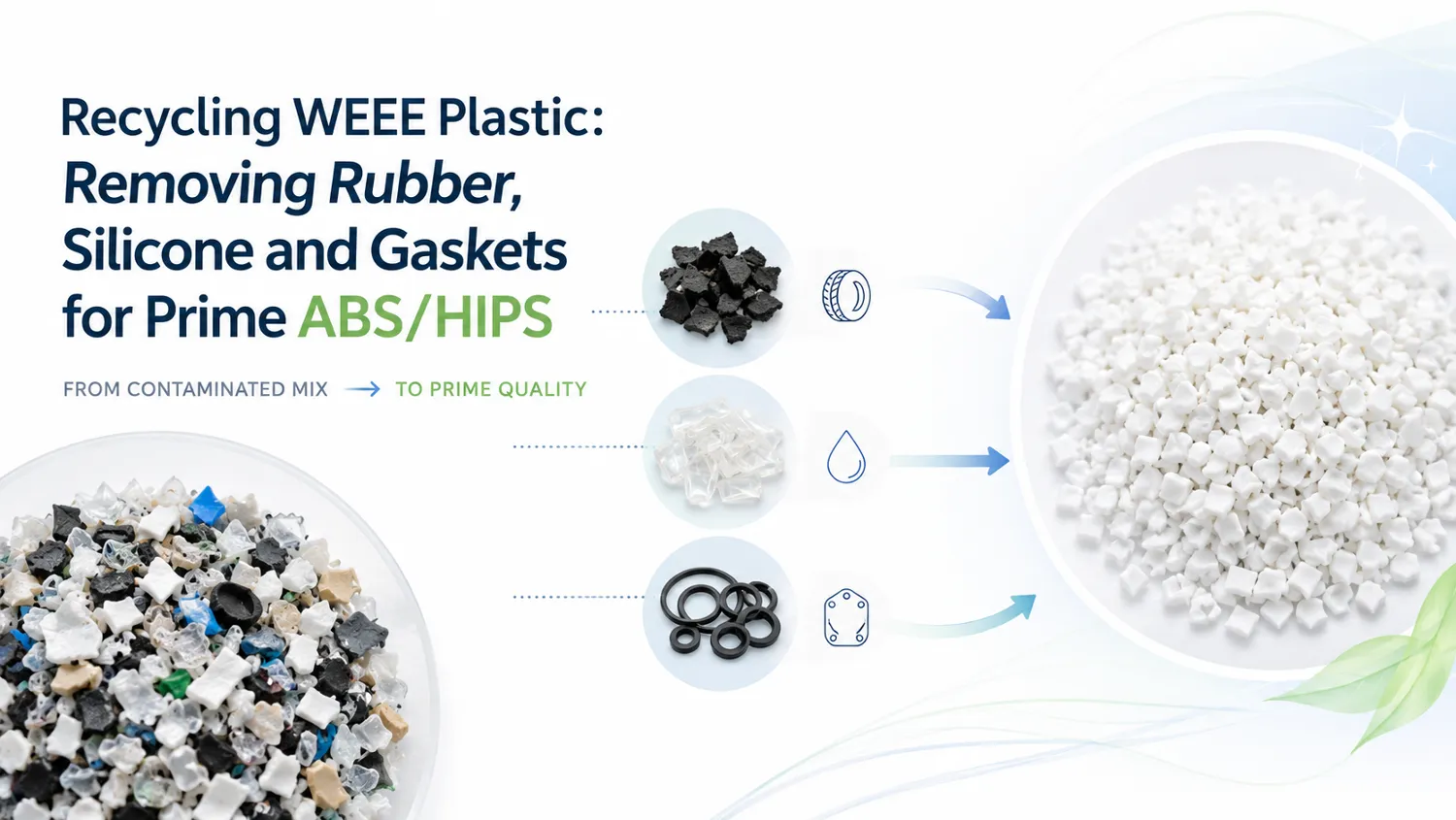
If your plastic regrind is being downgraded because of rubber or silicone contamination, the fix is a defined sequence of steps — not a single machine. Elastic contaminants behave nothing like rigid plastic, and the only reliable way to remove them is to prepare the feed correctly, sort out what you can by density, and then make the final cut on a property that actually distinguishes rubber from plastic. This guide walks through that silicone rubber recycling process the way it runs in a real plant — the sequence that turns contaminated regrind back into clean, single-resin flake.
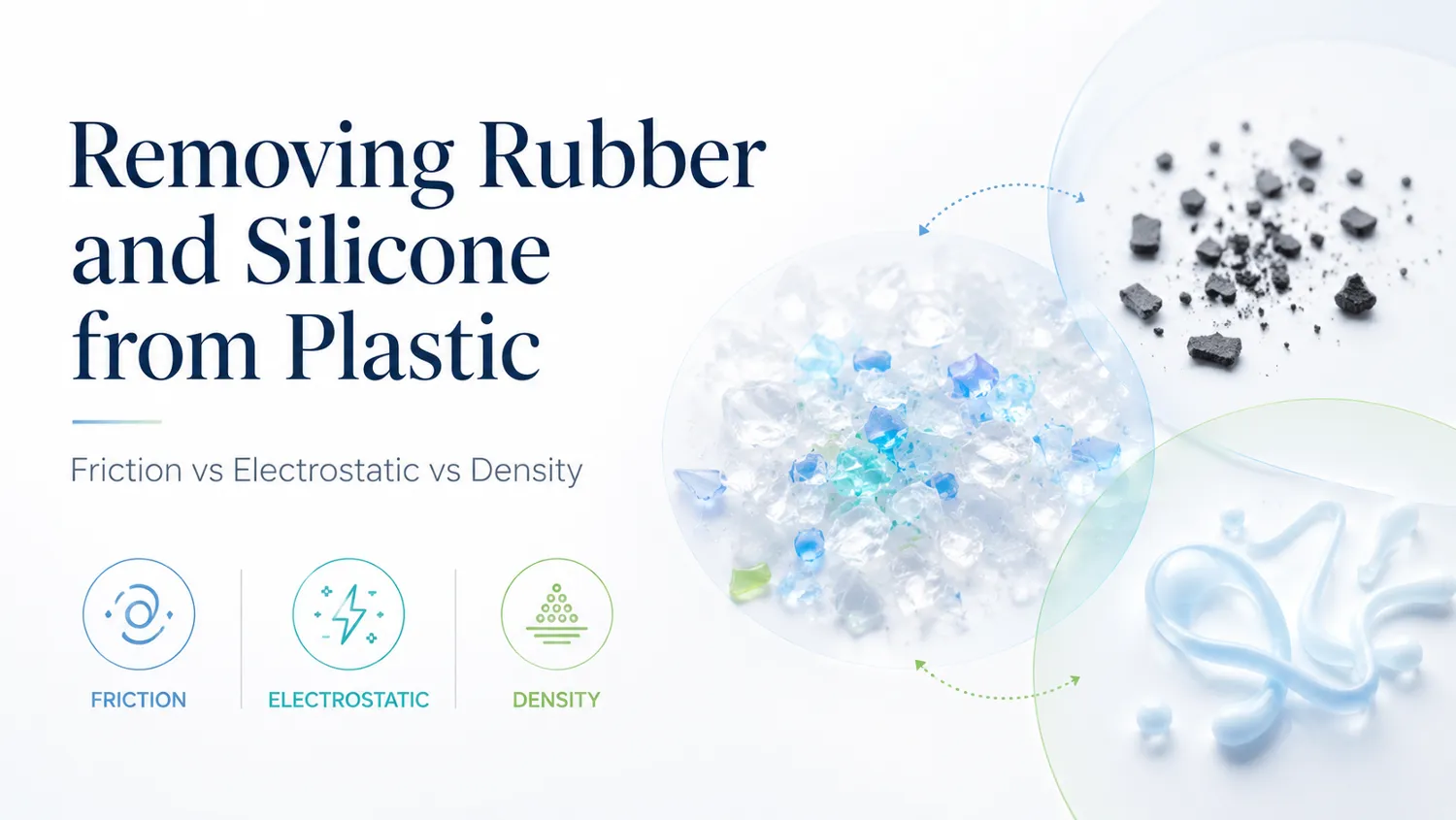
For the underlying material science — why these three materials differ and why density sorting alone fails — see the companion guide on silicone vs rubber vs plastic. This page is the operational playbook.
Step 1 — Identify What You’re Actually Removing
Before choosing equipment, characterize the stream. The right method depends on three things:
- Base resin — ABS, PS, PP, PE, PC, PVC. This is the material you want to keep clean.
- Contaminant type — silicone, vulcanized rubber (EPDM, NBR, SBR), natural rubber, or sponge. Each has different elasticity and friction behavior.
- Contamination level — roughly what percent of the feed is rubber/silicone, and the maximum residue your buyer or compounder will accept (often below 2%).
A quick way to gauge it: grab a representative sample, hand-pick the visible rubber from a known weight, and weigh it. That rough percentage tells you whether you need a dedicated separation step or just spot removal.
Step 2 — Get the Feed Right First
Separation only works on clean, consistent flake. Skipping this step is the most common reason a rubber-removal stage underperforms.
- Size-reduce to consistent flake. Shred and granulate the regrind to a uniform flake size. Wildly mixed sizes defeat every downstream sorting method.
- Wash if the material is dirty. Surface dirt, oils, and labels mask the property differences sorting relies on.
- Dry thoroughly. Friction-based separation needs dry flake — surface moisture flattens the friction difference between rubber and plastic.
- De-dust. Fines bridge the gap between particles and coat equipment surfaces, degrading every separation stage.
Coming out of this step you want dry, screened, single-size flake. Now the material is ready to sort.
Step 3 — Pre-Sort by Density (When the Stream Is Complex)
If your feed is a mix of several resins, run it through a sink-float separation tank first. Density sorting cheaply splits the bulk resin families — PP and PE float, PET and PVC sink — which simplifies everything downstream.
But set expectations correctly: density sorting will not remove silicone or most rubber. Their densities overlap common plastics (silicone sits right on top of ABS, PS and PET), so they pass straight through a float-sink tank with the resin you’re trying to clean. Density is a pre-sort to reduce complexity — not the rubber-removal step. After it, dry the material again before the next stage.
Step 4 — Make the Rubber Cut with a Friction-and-Elasticity Separator
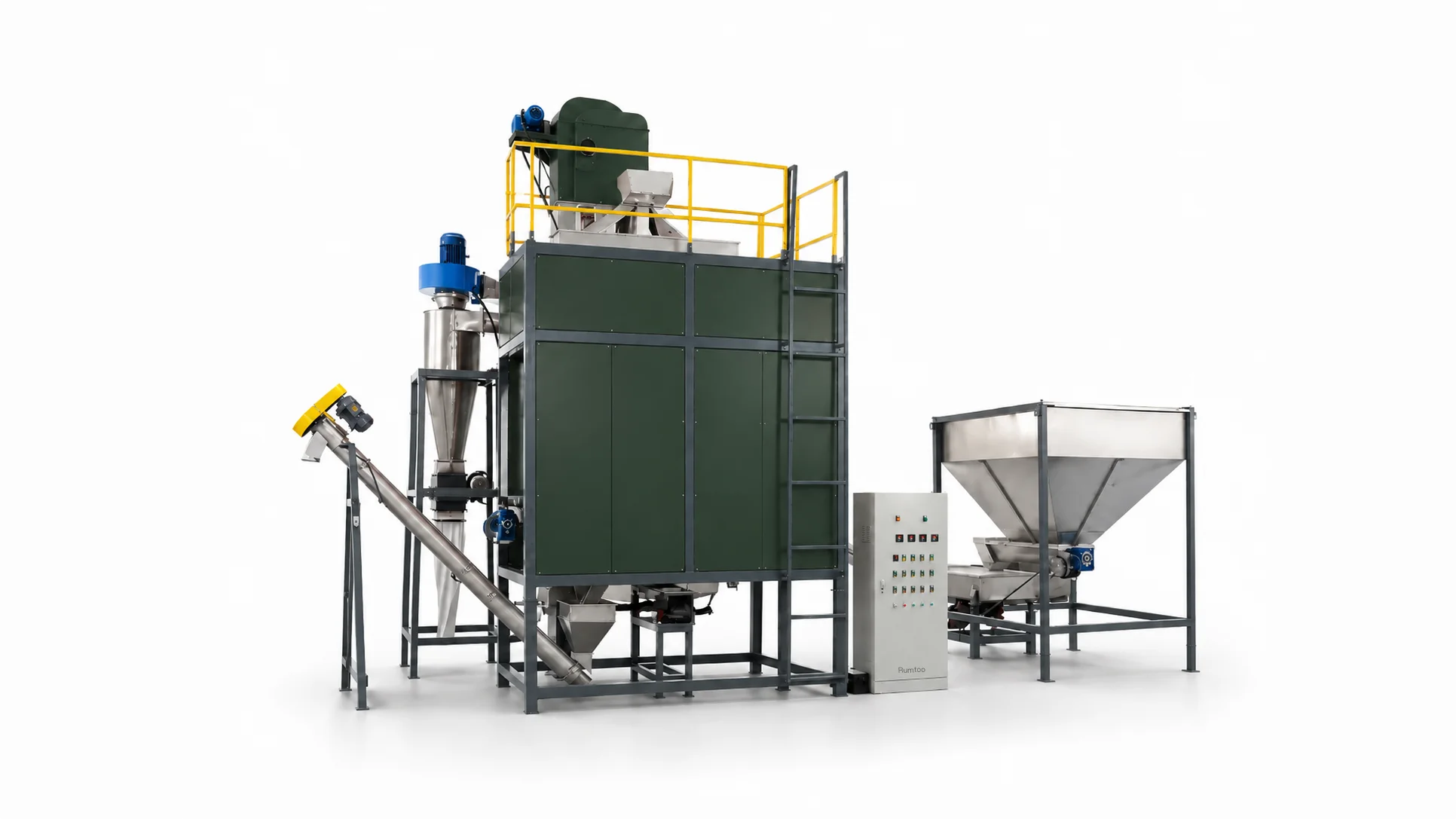
This is the step that actually removes the rubber. A silicone rubber separator sorts on the two properties where rubber and silicone genuinely differ from rigid plastic: elasticity and surface friction. If you are still weighing this against other routes, see how it compares with density and electrostatic separation.
Dry flake is spread into a thin layer and carried across a deck of rotating friction spindles. Rigid plastic — hard and low-friction — slides forward and discharges clean. Elastic silicone and rubber grip the spinning surface and are carried off to a separate rubber-rich outlet.
To dial it in:
- Feed thin and even. A monolayer, not a pile — this is the single biggest factor in a clean cut.
- Set spindle speed and deck angle, then sample both outputs. Walk the settings until rubber residue in the clean fraction drops to target without losing too much good flake to the reject.
- Lock the settings and record them for restart on the same feed.
Tuned correctly on clean, dry feed, this stage brings rubber residue below about 2% — the threshold that typically separates prime single-resin flake from low-value mixed scrap.
Step 5 — Recover Good Flake from the Reject
The rubber-rich reject still carries some rigid flake that got swept out with the rubber. Run that reject back through the separator on a second pass. Most of the carried-over plastic is recoverable without loosening the main cut, which improves overall yield and concentrates the rubber in the final reject.
Step 6 — Verify Before You Ship
Don’t assume the cut held. Sample the clean output and measure the actual rubber residue against your buyer’s spec. The fastest field check is the same hand-pick-and-weigh method from Step 1, run on the cleaned fraction. If it meets spec, lock the line settings; if not, return to Step 4 and re-walk the cut.
Common Mistakes
- Sorting wet or dusty flake. The friction difference disappears — dry and de-dust first.
- Expecting a density tank to remove rubber. It won’t; densities overlap. Use it only as a pre-sort.
- Feeding in a pile. A heaped feed defeats the friction cut no matter how the machine is set.
- Cutting too aggressively. You lose good plastic to the reject. Cut conservatively and recover on a second pass instead.
- Skipping verification. A drifting feed (new batch, different rubber type, higher moisture) silently moves the cut — re-sample when the feed changes.
Summary
Removing silicone and rubber from plastic regrind is a sequence: characterize the stream → prepare clean dry flake → density pre-sort to cut complexity → friction-and-elasticity separation to make the rubber cut → second pass to recover yield → verify against spec. Density handles the bulk resins; a friction-and-elasticity separator handles the elastic contaminants density can’t touch.
Send us a representative sample and we’ll run it on a silicone rubber separator, measure the achievable rubber residue, and quote the line stage you need against a tested result.
- silicone rubber separator
- rubber removal
- plastic regrind purity
- recycling line setup
- elastomer separation