
· Rumtoo Engineering Team · Buying Guides · 7 min read
Recycling WEEE Plastic: Removing Rubber, Silicone and Gaskets for Prime ABS/HIPS
WEEE plastic is mostly valuable ABS and HIPS — until rubber feet, silicone keypads and elastomer gaskets drag it down to mixed scrap. This guide shows where elastic contamination fits among the other WEEE challenges, and how recyclers strip it out to sell prime single-resin flake.
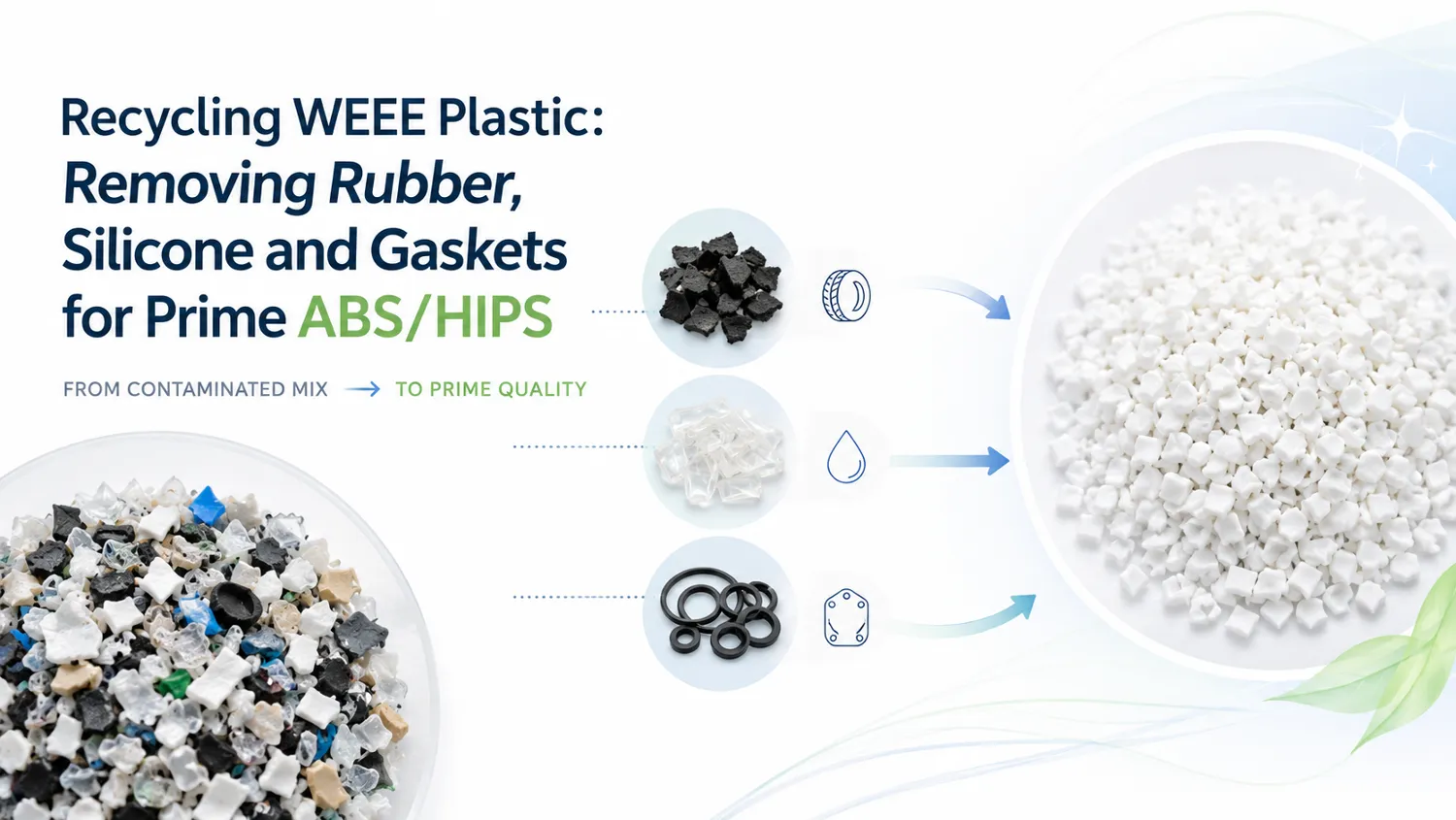
Shredded electronics plastic is one of the most valuable regrind streams in recycling — most of it is ABS and HIPS, the high-grade engineering plastics that compounders pay prime prices for. The problem is everything mixed in with it. Rubber feet, silicone keypads, elastomer gaskets, cable offcuts and seals ride through the shredder alongside the ABS and HIPS, and a few percent of that elastic contamination is enough to drop a clean WEEE fraction from prime to mixed scrap. This guide explains where rubber and silicone fit among the other WEEE plastic challenges, and how recyclers strip them out to recover prime single-resin flake.
What’s Actually in WEEE Plastic
WEEE (waste electrical and electronic equipment) plastic is a mix, and knowing the mix is what tells you how many cleaning stages it needs. A typical shredded stream contains:
- ABS and HIPS — the bulk of the value, from housings, casings and panels.
- PC/ABS, PP, PE, PVC — smaller fractions from internal parts, cables and structural pieces.
- Elastic contaminants — rubber feet, anti-slip pads, silicone keypads and seals, elastomer gaskets, and rubber/silicone cable insulation.
- Non-plastics — residual metal (screws, shielding), brominated flame retardants (BFR) in older housings, paint, labels and adhesive.
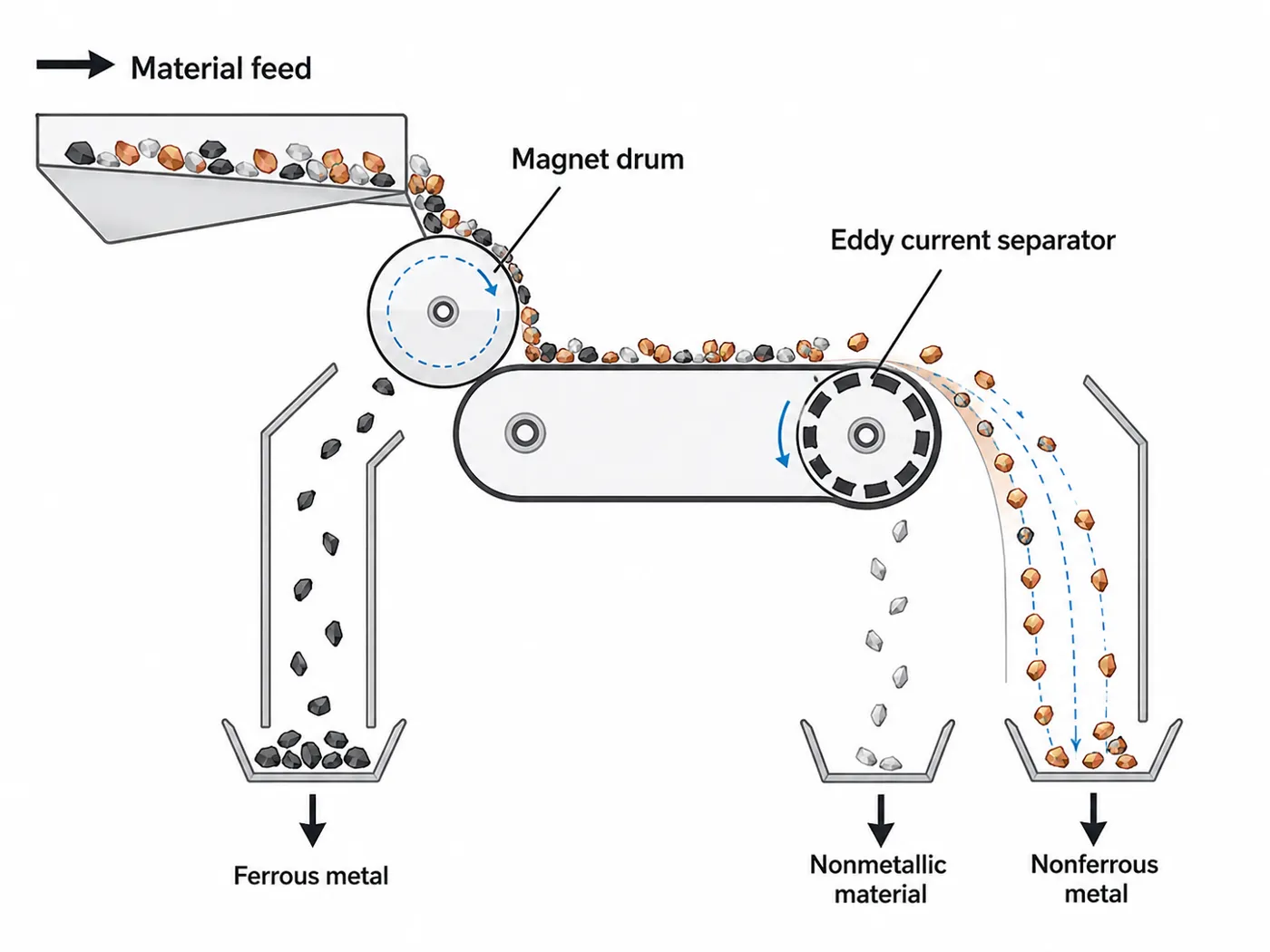
The metals come out with magnets and eddy-current separators, and BFR-bearing plastics are usually sorted by density or X-ray. But the elastic contamination is a different problem, and it is the one most likely to be left in the finished ABS/HIPS flake.
Why Rubber and Silicone Are the Hard Part
Rubber and silicone are hard to remove because they hide from the two methods recyclers reach for first. A sink-float tank sorts by density, but cured silicone (~1.1–1.2 g/cm³) and many rubbers overlap the density of ABS and PS — so they sink together and stay mixed in. Optical and X-ray sorters read surface or elemental signatures that a small black rubber foot in black ABS does not reliably present.
So the elastic fraction survives shredding, washing and density sorting, and ends up in the flake a compounder rejects. For the full material science of why density cannot tell these apart, see the silicone vs rubber vs plastic separation guide.
Key takeaway: In WEEE plastic, rubber and silicone are not removed by the metal, density or optical steps — they need a stage that sorts on elasticity, or they stay in your ABS/HIPS.
The Purification Sequence for WEEE Plastic
Clean WEEE flake is the output of a sequence, not a single machine. A practical order looks like this:
- Shred and liberate — reduce to a uniform flake so contaminants separate from the plastic they are attached to.
- Remove metal — overband magnets for ferrous, eddy-current for non-ferrous, before metal damages downstream equipment.
- Wash and dry — strip dirt, adhesive and labels; the friction and electrostatic stages both need dry flake.
- Density split — sink-float separates the bulk resin families (PP/PE float; ABS/PS/PET sink). This is also where many BFR-heavy plastics are diverted.
- Remove rubber and silicone — a friction-elasticity stage pulls out the elastic contamination that density left behind.
- Separate ABS from HIPS — electrostatic separation splits the two styrenics that have nearly identical density.
Steps 5 and 6 are where WEEE plastic actually becomes prime, and they are the two most often missing from a line that keeps producing “almost clean” flake.
Removing the Rubber, Silicone and Gaskets
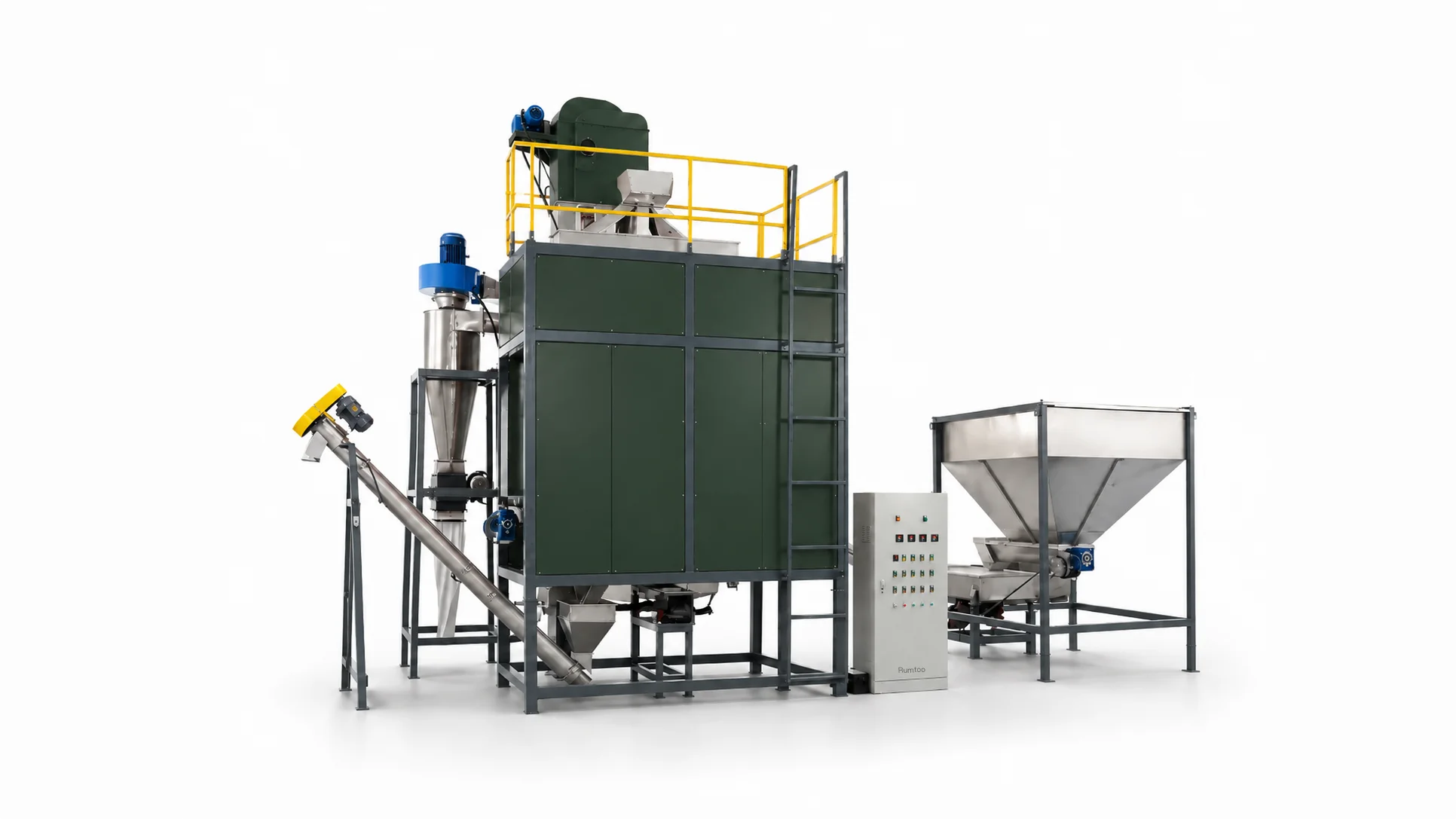
The stage that makes the elastic cut is a friction-elasticity separator. It sorts on the two properties that always distinguish rubber and silicone from rigid plastic: surface friction and rebound. Dry flake is spread thin across a deck of rotating spindles; rigid ABS and HIPS flakes slide and bounce forward to a clean discharge, while elastic rubber feet, silicone keypad fragments and gasket pieces grip the spindles and divert to a separate outlet. It is a dry, mechanical process — no water, no chemicals, no heat to degrade the styrenics.
On dry, pre-screened WEEE flake this typically brings rubber residue below 2% (roughly 98% plastic purity), and a second pass pushes it lower. That is usually the line between selling shredded electronics plastic as a low-value mix and selling it as prime ABS or HIPS regrind. This is the job a dedicated silicone rubber separator is built for, and where it sits among density and electrostatic separation is covered in friction vs electrostatic vs density.
The Other WEEE Challenges — and Where They Fit
A friction separator solves the elastic-contamination problem, not every WEEE plastic problem. Two others are worth naming so you size the whole line correctly:
- Separating ABS from HIPS. These two make up most WEEE plastic and have nearly the same density, so sink-float cannot split them. This is electrostatic separation’s core job — and it needs the flake clean and dry first, which is part of why the rubber/silicone and wash stages come before it.
- Brominated flame retardants (BFR). Older housings contain BFR that must be kept out of recycled feedstock for compliance. BFR plastics are typically diverted by density (they are denser) or X-ray/XRF sorting, not by a friction stage.
The point is that no single machine cleans WEEE plastic. Knowing which property each stage sorts on — magnetism, density, elasticity, charge, elemental signature — is what tells you how many stages your specific stream needs.
What Clean WEEE Flake Is Worth
The economics are why this matters. Mixed shredded WEEE plastic sells as a low-grade commodity. The same material, separated into clean single-resin ABS and HIPS with the rubber and silicone removed, sells as prime regrind that compounders will pay near-virgin prices for — because they can put it straight into electronics, automotive or appliance parts without re-sorting. The cost of the rubber/silicone and electrostatic stages is recovered on the price gap between “mixed WEEE” and “prime ABS/HIPS,” not on volume.
Frequently Asked Questions
How do you remove rubber and silicone from shredded electronics plastic?
After metal removal, washing and a density split, the elastic contamination is removed on a friction-elasticity separator. It sorts on grip and rebound, so rigid ABS and HIPS flakes pass forward while rubber feet, silicone keypads and gaskets divert to a separate outlet — typically leaving rubber residue below 2%.
Why does WEEE plastic need so many separation stages?
Because it contains different contaminants that each respond to a different property: metal (magnetism), bulk resin families and BFR (density), rubber and silicone (elasticity), and ABS-versus-HIPS (electrostatic charge). No single machine sorts on all of those, so clean WEEE flake comes from a sequence of stages.
Can a sink-float tank remove the rubber and silicone from ABS/HIPS?
No. Cured silicone and many rubbers overlap the density of ABS and PS, so they sink together and stay in the fraction you wanted clean. Density sorting is for splitting resin families; removing elastic contamination needs a friction-elasticity stage.
What makes WEEE plastic worth recycling carefully?
WEEE plastic is mostly ABS and HIPS — high-value engineering plastics. Separated clean, with rubber and silicone removed, it sells as prime single-resin regrind at near-virgin prices, far above the value of mixed shredded electronics plastic.
Summary
WEEE plastic is mostly prime-grade ABS and HIPS, but rubber feet, silicone keypads and elastomer gaskets ride through shredding, washing and density sorting and drag the flake down to mixed scrap. Those elastic contaminants overlap the plastic’s density and don’t read on optical or X-ray sorters, so they need a friction-elasticity stage that sorts on grip and rebound. Combined with metal removal, washing, density splitting and electrostatic ABS/HIPS separation, it turns mixed electronics plastic into clean single-resin flake worth far more.
If shredded WEEE plastic is being downgraded by rubber, silicone or gasket contamination, send Rumtoo a sample. We will run it on a silicone rubber separator, measure the achievable rubber residue, and quote against a tested result.
- WEEE recycling
- silicone rubber separator
- ABS HIPS recycling
- rubber removal
- electronics plastic