
· Rumtoo Engineering Team · Buying Guides · 5 min read
Plastic Pulverizer Guide: PE, HDPE, Pickleball Powder and Beyond
PE and HDPE — not PVC — drive the largest share of the plastic pulverizer market. This guide covers rotomolding powder for pickleballs, tanks and kayaks, plus how the same machine handles PP, PS, ABS, EVA and PA with the right disc and cooling configuration.
If you only read about plastic pulverizers in the context of PVC profile and pipe rework, you are seeing one corner of the market. The largest installed base of disc pulverizers worldwide actually runs on PE — especially HDPE for rotomolding. Pickleballs, water tanks, kayaks, agricultural drums and playground equipment all start as HDPE powder produced on the same machines that grind PVC. This guide explains how to pick and configure a plastic pulverizer for PE-led workloads while keeping the door open to PVC, PP, PS, ABS, EVA and even PA.
Why PE is the Single Largest Pulverizer Market
Rotomolding requires a feedstock that flows like fine powder, sinters evenly against a hot mold wall, and produces a part with uniform thickness and no pinholes. That is precisely what a direct-drive disc pulverizer delivers when you set the gap for 35–60 mesh on LLDPE or HDPE. Demand grew sharply with the pickleball boom — every ball is a hollow rotomolded HDPE shell, and a single mid-size HDPE pulverizer can feed millions of balls per year. Outside sports, the same powder line feeds tank, kayak, planter and toy producers.
If your primary workload is HDPE rotomolding, this is your reference page. If your line is mainly PVC pipe and profile rework, read our companion PVC pulverizer guide for that mature and well-understood application.
Plastic Pulverizer vs Granulator vs Shredder
A shredder reduces bulky scrap to chunks. A granulator cuts chunks into 4–12 mm flakes. A pulverizer turns those flakes into 20–120 mesh powder — flour-like, free-flowing, and small enough to sinter or compound. Only the pulverizer delivers the surface area needed for rotomolding and for blending dry powder back into extrusion.
HDPE Rotomolding Powder — The Pickleball Use Case
A typical pickleball powder spec is 35 mesh, dust-free, with a controlled bulk density. To hit it consistently you need three things working together:
- A direct-drive disc set with a stable gap — no belts to slip mid-shift.
- Combined water-jacket and air cooling that keeps the chamber under the PE softening point at full load.
- A closed-loop sieve return so anything coarser than 35 mesh re-enters the chamber instead of contaminating your bag.
Run a 600 kg/h class machine for an 8-hour shift and you produce enough powder for tens of thousands of pickleballs — at a cost per kilogram far below virgin micronized PE.
Beyond PE — What Else the Same Machine Will Grind
The strength of a disc pulverizer is range. With standard discs you can already run:
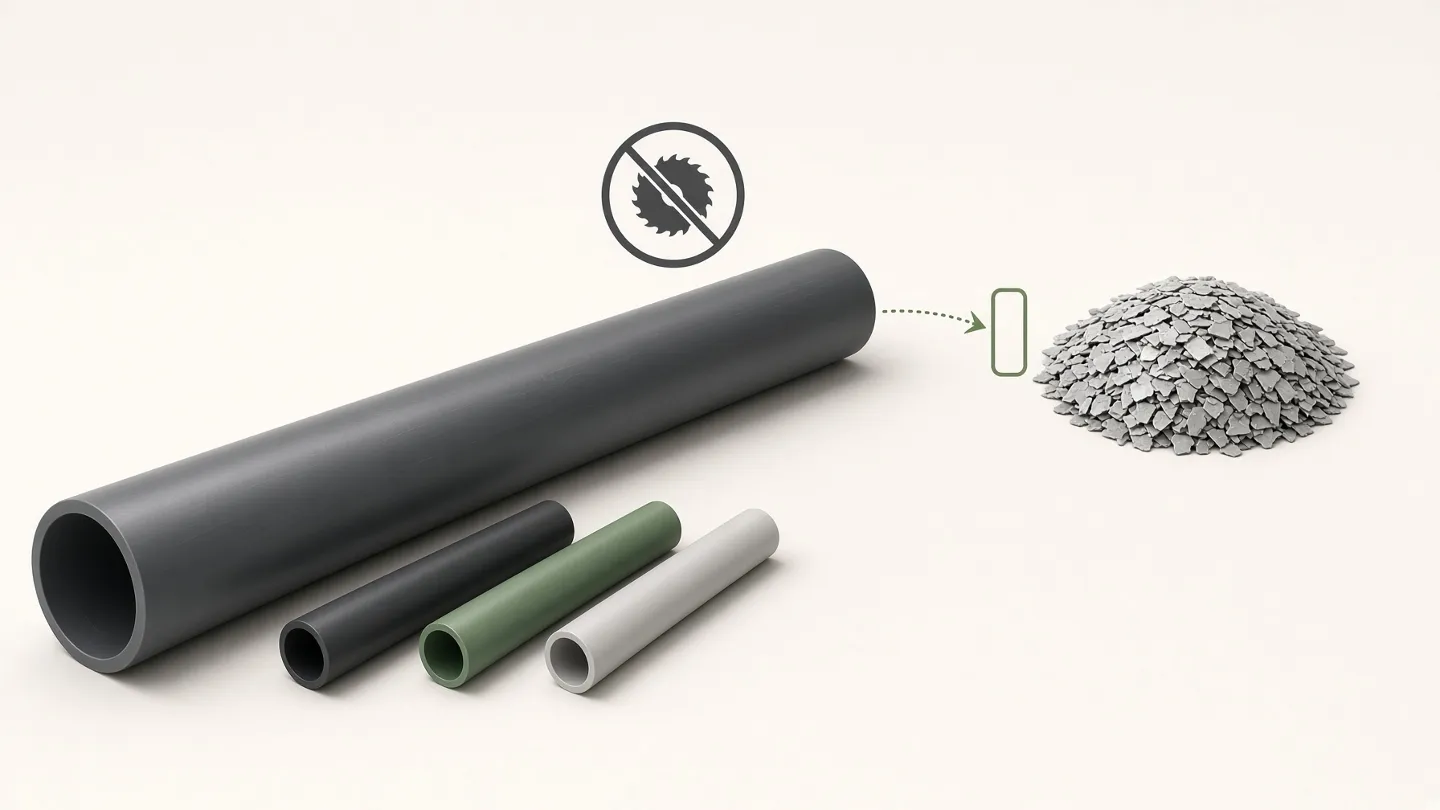
- PVC — pipe, profile, sheet, flooring and off-cuts. The most mature application; powder feeds straight back into compounding.
- PP — injection scrap, sheet and blocks. Tougher than PE; expect lower throughput, a tighter gap and stronger cooling.
- PS (GPPS and HIPS) — brittle and easy to grind, very high throughput at fine mesh.
- ABS — workable, throughput typically below PE; useful for compounding feed.
- EVA — foam off-cuts and trim, processable on selected models; confirm cell density before quoting.
The economic question is rarely “can it grind X?” but “what mesh and throughput on X without thermal pickup?” That is a disc geometry and cooling decision, not a fundamental machine limit.
Specialty: PA (Nylon) With Dedicated Discs
PA6 and PA66 are tough, hygroscopic and thermally sensitive. They can be pulverized — for adhesives, rotomolding, selective laser sintering and 3D-printing feedstock — but only with dedicated grinding discs and an enhanced cooling package, sometimes with cryogenic assist. If your business case is PA powder, tell the supplier the grade and target mesh up front so they spec the right disc and cooling, not a generic PE machine.
How to Choose the Right Plastic Pulverizer
- Lead with the polymer mix. A 70 % HDPE / 30 % PVC mill is a different spec from a 100 % PP mill. The dominant material dictates disc geometry, motor sizing and cooling capacity.
- Pin down target mesh per product. Rotomolding lands at 35–60 mesh; extrusion compounding often accepts 60–80; specialty SLS feedstock pushes to 100–120.
- Size the cooling to the worst case. A machine that runs 600 kg/h on HDPE in winter may stall on PP in summer if the water loop and blower are under-spec. Always size cooling for the hardest material you will actually run.
- Plan for disc wear. Mineral-filled PVC (SPC flooring scrap, calcium-loaded compound) and glass-filled engineering plastics eat discs. Specify wear-resistant alloy or coated discs if those streams are in scope.
- Match the model to throughput. Browse the full plastic pulverizer range — 150 to 800 kg/h on PE / PVC with mesh ranges from 20 to 120 — and align motor power, disc diameter and cooling to your shift target.
Summary and Next Steps
The pulverizer market is broader than PVC alone. PE — and HDPE rotomolding powder in particular — is the largest single application, with the pickleball boom adding new demand on top of long-standing tank, kayak and drum production. The same disc mill, with the right disc geometry and cooling, also serves PVC, PP, PS, ABS, EVA and (with a specialty package) PA.
Tell us your polymer mix, target mesh and shift throughput, and we will spec the right machine. Start from our plastic pulverizer range or read the dedicated PVC pulverizer guide if rigid PVC rework is your primary use case.
- plastic pulverizer
- HDPE pulverizer
- rotomolding powder
- pickleball powder
- PE powder mill