
· Rumtoo Engineering Team · Buying Guides · 7 min read
Plastic Sorting Methods: How to Choose Between Sink-Float, Air, and Electrostatic Separation
Every plastic sorting method works on one physical property — density, weight, surface charge, conductivity, or polymer fingerprint. This guide compares sink-float, air classification, electrostatic, eddy-current, and NIR sorting, shows what each one separates, and gives a decision framework for matching the method to your contamination.
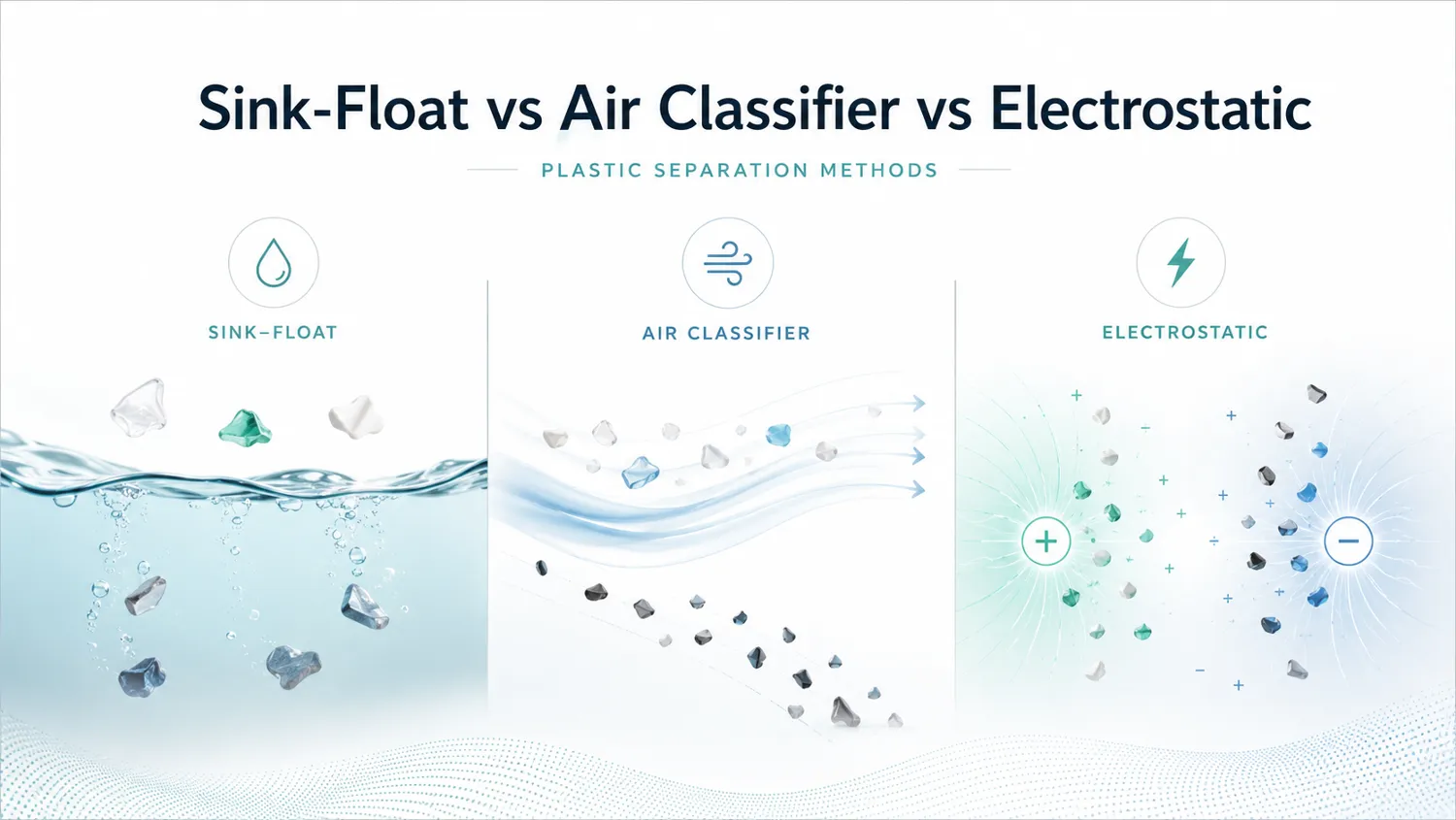
Every plastic sorting method works by exploiting one physical difference between materials — density, aerodynamic weight, surface charge, conductivity, or polymer fingerprint. Pick the method that matches the difference between your target plastic and its contamination, and the sort is cheap and clean; pick the wrong one and it fails no matter how much you spend. This guide compares the five sorting methods used on real recycling lines, shows exactly what each separates, and gives you a decision framework for choosing.
The five plastic sorting methods at a glance
There is no single best sorting method — each exploits a different property, so the right one depends entirely on what your contamination is. The table below is the quick comparison; the sections after it explain when to use each.
| Method | Separates by | Best at | Cannot do | Relative cost |
|---|---|---|---|---|
| Sink-float (density) | Float vs sink in water | PP/PE vs PET/PVC; caps off PET | Split similar densities (PET/PVC) | Lowest |
| Air classification | Weight + aerodynamics | Film, dust, fines vs heavy flake | Resin-by-resin sorting | Low |
| Electrostatic | Surface charge | Same-density pairs (ABS/PS) | Wet, coarse, or dirty flake | Medium |
| Eddy-current / magnetic | Conductivity / magnetism | Metals out of plastic | Plastic-from-plastic | Medium |
| NIR sensor | Polymer type + color | Resin-specific, any density | Black plastic (absorbs NIR) | Highest |
Key takeaway: Match the method to the difference you are exploiting. Density and air sorting are the cheap bulk steps; electrostatic and NIR are the precision finishers for what density cannot split.
Sink-float: the cheapest bulk split
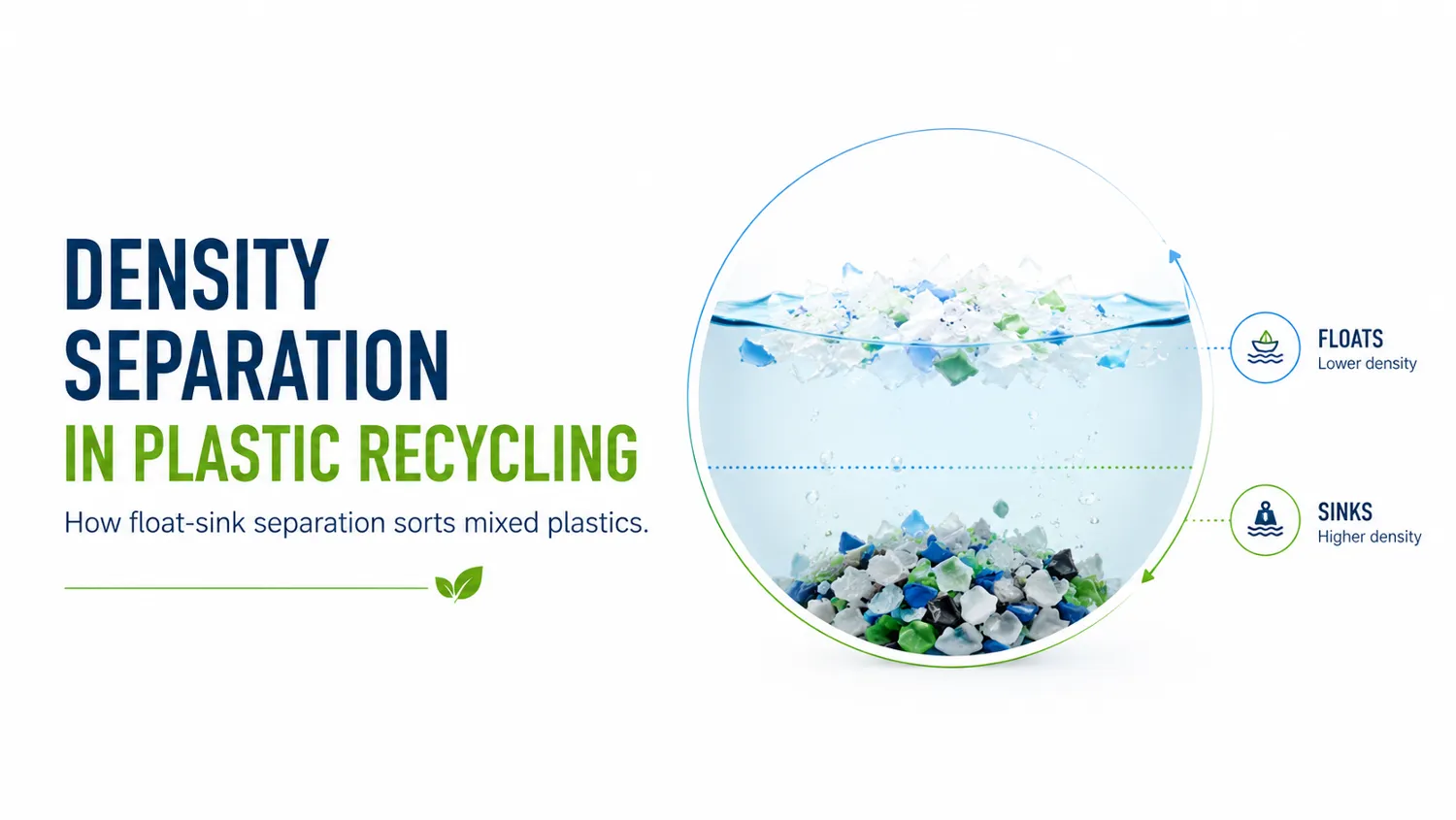
Sink-float separation sorts plastic by whether it floats or sinks in water, and it is the lowest-cost method per ton. Light polyolefins (PP, PE) float; heavier resins (PET, PVC, PS, ABS) sink — a clean two-way split with no sensors and no consumables.
Use it as your first and biggest sorting step whenever your two materials sit on opposite sides of water’s 1.0 g/cm³ line. A sink-float separation tank is the classic example: on a PET bottle line it sinks the PET while floating off the PP/PE caps and labels, doing the bulk separation before anything more expensive runs. The full method is in our density separation guide, and the float/sink behavior of each resin is in the plastic density chart.
Its limit is overlapping density — it cannot tell PET from PVC because both sink. That is where the other methods earn their cost.
Air classification: removing the light fraction
Air classification sorts by aerodynamic weight, using an air stream to lift light material (film, dust, fibers, fines) away from heavy flake. It is not resin-specific — it splits “light” from “heavy,” not “PP” from “PET.”
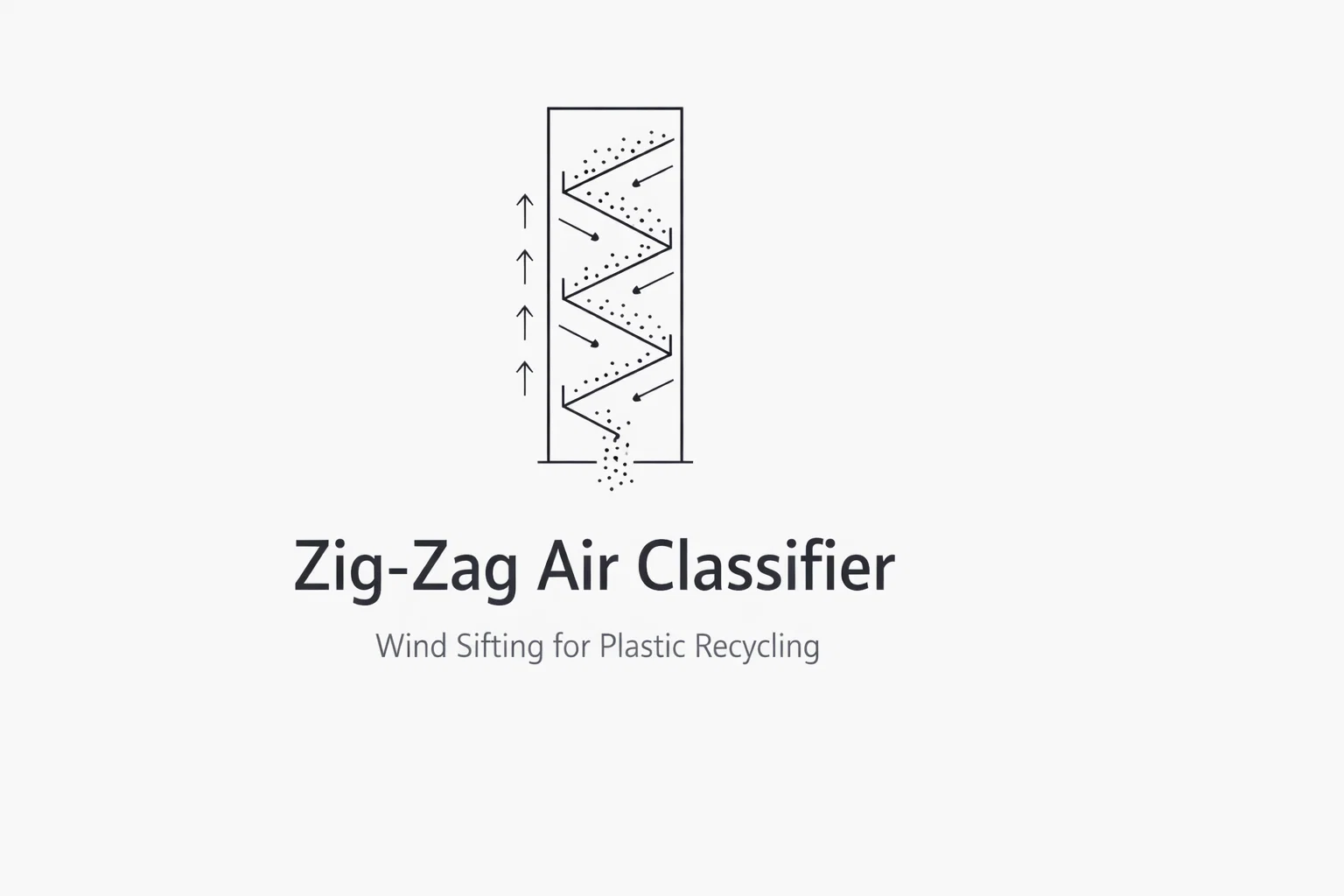
Reach for it when your problem is film or fines mixed into rigid flake, or when you need to de-dust a stream before another sorting step. A zig-zag air classifier bounces material through a column of rising air so light pieces ride up and out while heavy flake drops through — covered in detail in our air classifier guide, with the full type comparison (zig-zag vs cross-flow vs drum wind sifter) in our air classifier for recycling overview. It pairs well ahead of sink-float, clearing film that would otherwise foul the water tank.
Electrostatic: splitting same-density plastics
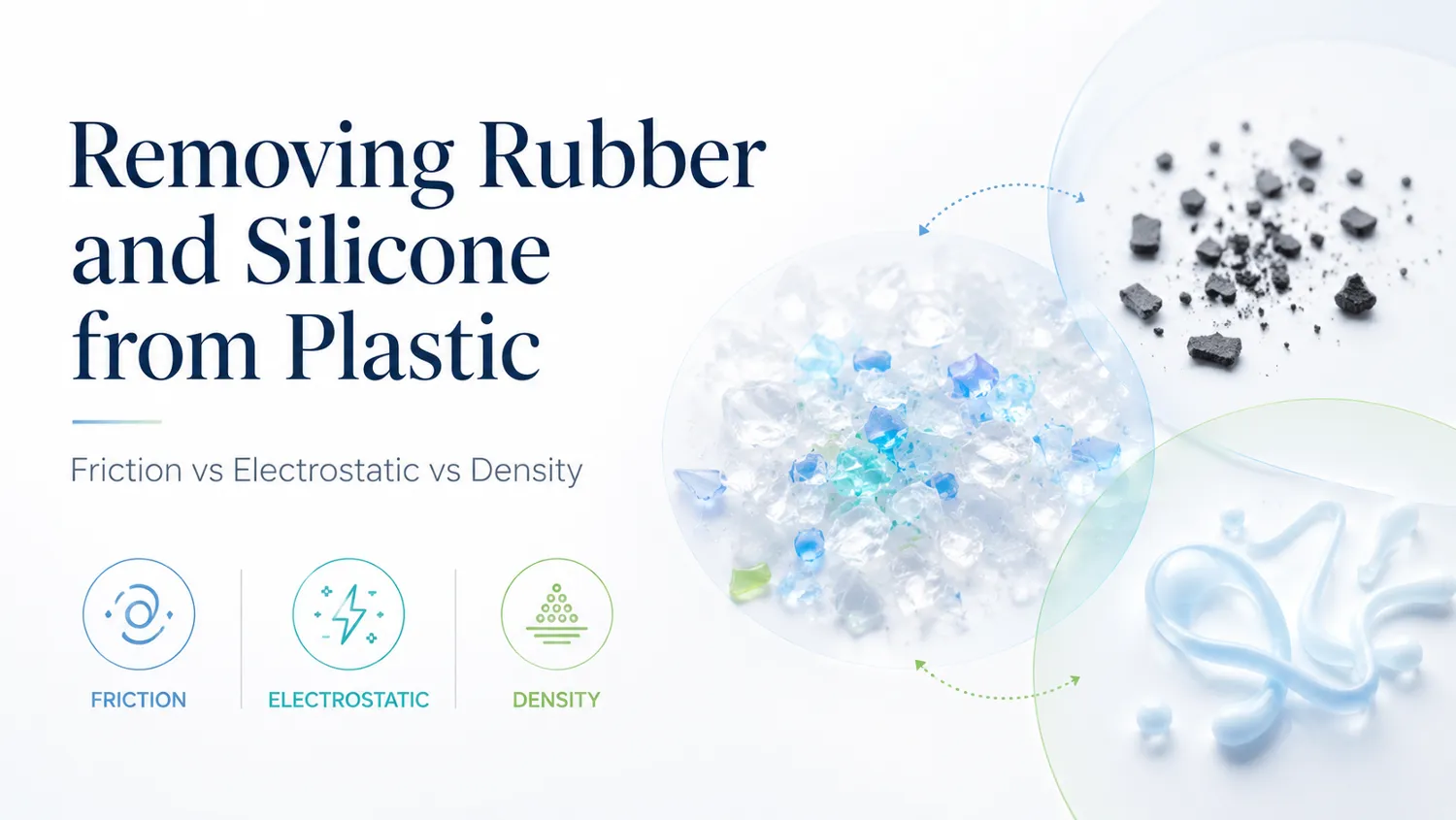
Electrostatic separation sorts plastics that have the same density but different surface charging behavior — the job sink-float physically cannot do. The flake is charged by friction, then passed through an electric field where each polymer deflects differently and falls into separate bins.
Use it for same-density pairs like ABS and PS, or to clean a fraction density sorting left mixed. The trade-off is strict input requirements: the flake must be dry, finely sized, and clean, because moisture and dirt kill the surface charge. Our plastic electrostatic separator guide covers where it fits and where it struggles. Think of it as the precision finisher after density has made the cheap bulk cut.
Eddy-current and magnetic: pulling out metal
Eddy-current and magnetic separators remove metal from plastic, not plastic from plastic. Magnetic drums pull ferrous metal; eddy-current units induce a field that repels non-ferrous metal (aluminum, copper) out of the stream.
These run early, as a protection step — metal in the feed damages shredders, screens, and pelletizers downstream, so it comes out first. They sort by magnetism and conductivity, properties no plastic shares, which is why they are reliable for metal but useless between two plastics. The difference between the two is in our eddy-current vs magnetic separator guide.
NIR sensor sorting: resin-by-resin precision
Near-infrared (NIR) sensor sorting identifies each piece by its polymer fingerprint and ejects it with an air jet, sorting resin-by-resin regardless of density. It is the only method that cleanly separates PET from PVC or splits a mixed-resin stream into pure single-polymer fractions.
Use it when you need resin-specific purity that density cannot reach — removing PVC from PET, or sorting a comingled stream into PET, HDPE, and PP. The cost is capital: NIR is the most expensive method here, and it cannot read black plastic, which absorbs the infrared signal. That is why lines use NIR as a finishing sorter on a stream that density and air have already reduced, not as the bulk step.
How to choose: a decision framework
Choose your sorting method by naming the physical difference between your target and your contamination — then pick the method that reads that difference.
- Is there metal? Pull it first with magnetic and eddy-current separators, before anything else.
- Is the contamination film, dust, or fines? Use air classification to lift the light fraction out.
- Do your two plastics differ in density (one floats, one sinks)? Use sink-float — the cheapest bulk split. Check the density chart first to confirm they fall on opposite sides of 1.0 g/cm³.
- Same density, different polymer (ABS/PS)? Use electrostatic separation.
- Need pure single-resin output, or splitting PET from PVC? Add NIR sensor sorting as the finisher.
Real lines stack these in that order — cheap bulk methods first, precise expensive ones last — so each stage only handles what the previous one could not. The goal is not to find one perfect machine but to layer the methods so the most expensive sorter sees the smallest, cleanest stream.
Frequently Asked Questions
What are the main methods of sorting plastic?
The main plastic sorting methods are sink-float (density) separation, air classification, electrostatic separation, eddy-current and magnetic separation, and NIR sensor sorting. Each works on a different property — density, aerodynamic weight, surface charge, conductivity, or polymer type — so recyclers layer them, using cheap bulk methods first and precise sensor sorting last.
Which plastic sorting method is cheapest?
Sink-float (density) separation is the cheapest method per ton because it uses buoyancy in water to sort, with no sensors or consumables. It makes the bulk split between floating polyolefins (PP, PE) and heavier resins (PET, PVC), which is why most wash lines use it first and reserve costlier methods for what it cannot separate.
How do you separate PET from PVC?
PET and PVC cannot be separated by sink-float because their densities overlap and both sink in water. Separating them requires NIR (near-infrared) sensor sorting, which identifies each piece by polymer type and ejects the PVC, regardless of density.
Can one machine sort all types of plastic?
No single machine sorts every plastic cleanly. Each method reads only one property, so real recycling lines combine them — metal removal first, then density and air sorting for the bulk split, then electrostatic or NIR sorting to reach single-resin purity. Layering the methods is more reliable and cheaper than trying to force one machine to do everything.
Match the method to the difference
The fastest way to choose a plastic sorting method is to name the one property that separates your target from your contamination — density, weight, charge, magnetism, or polymer type — and pick the method that reads it. Then stack the cheap bulk methods ahead of the precise ones so your most expensive sorter handles the least material.
If you have a mixed stream and are not sure which sorting method (or sequence) fits, send Rumtoo your resins and contamination. We will map your stream to the right methods and recommend the equipment — starting with the cheapest step that works, like a sink-float separation tank. Contact our engineering team for a tested recommendation.
- plastic sorting methods
- plastic separation
- sink float separation
- air classification
- electrostatic separation