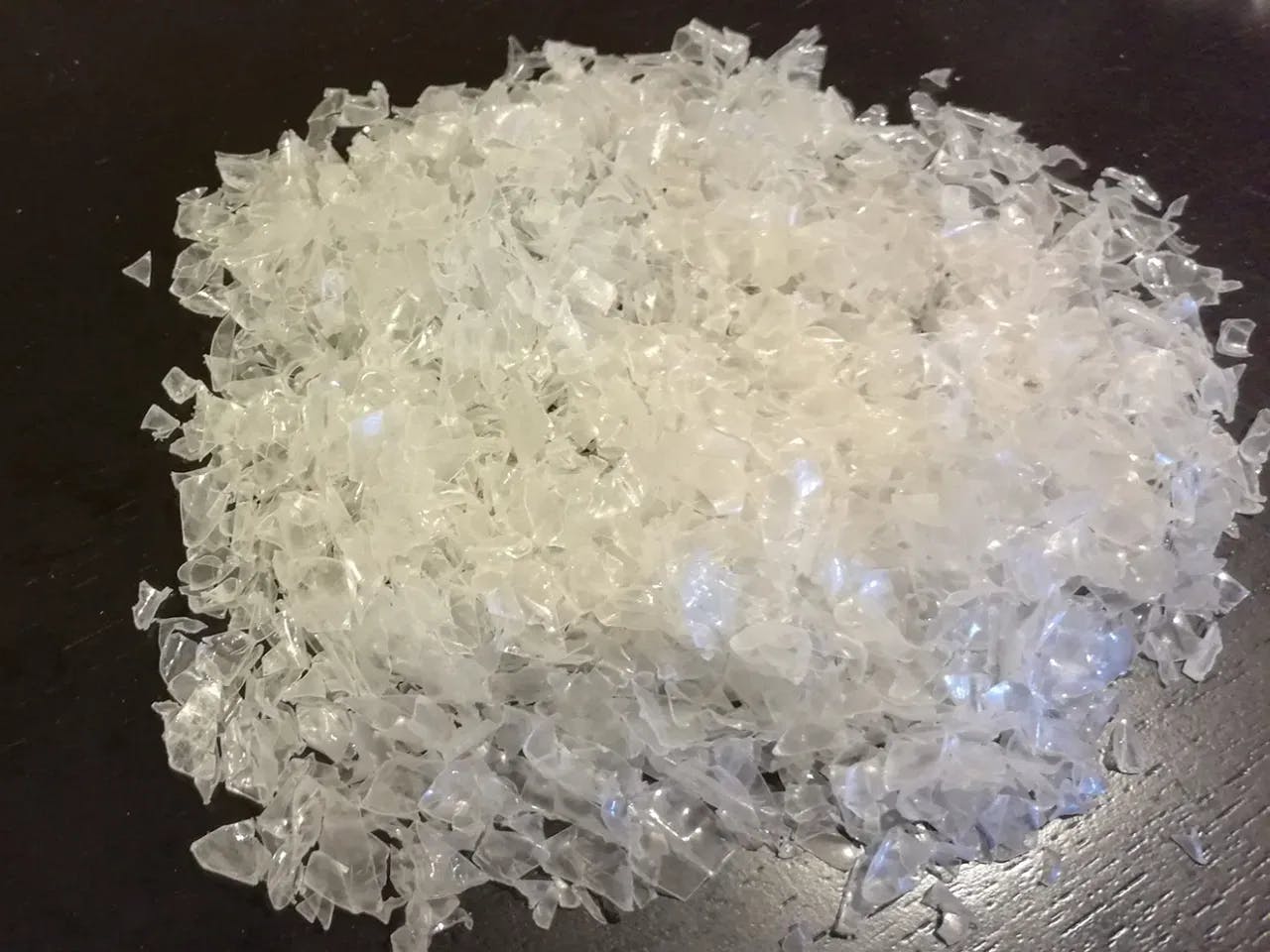
Identify the light fraction to be removed
Define whether the target contaminant is paper labels, PE/PP film fragments, fiber, dust, or a mix. Each has different aerodynamic behavior in the zig-zag column.
Ancillary Equipment
A zig-zag air classifier uses a rising air column inside a multi-stage angular channel to separate lighter materials — labels, film fragments, dust, and fines — from heavier plastic flakes or granules. Rumtoo helps size the classifier around the actual material mix, target purity, and line throughput so the separation stage works with the rest of the washing or sorting line.

The classifier must be matched to the material density difference, particle size range, and throughput of the line — not selected on air volume alone.
Define whether the target contaminant is paper labels, PE/PP film fragments, fiber, dust, or a mix. Each has different aerodynamic behavior in the zig-zag column.
The number of zig-zag stages, channel width, and baffle angle should suit the flake or granule size range coming from the upstream crusher or dryer.
The blower is tuned so the airflow velocity lifts contaminants lighter than the target threshold while allowing heavier clean material to fall through.
The light fraction carried out the top must be captured by a cyclone separator and optional bag filter to prevent dust emission and allow material recovery.
The zig-zag design is chosen when a recycling line needs a dry, density-based separation stage that handles moderate throughput with high purity in a small footprint.
The multi-stage zig-zag column reliably separates paper labels, thin film scraps, and lightweight contaminants from heavier PET, HDPE, or PP flakes.
Air volume and feed rate can be fine-tuned to shift the light/heavy cut point, allowing the same machine to handle different material mixes without mechanical changes.
The vertical column design uses much less floor space than horizontal air tables or vibrating density separators while delivering comparable separation performance.
Most issues arise from incorrect air volume, wrong placement in the line, or ignoring the moisture condition of the feed material.
Labels and film fragments still appear in the clean flake output.
Rumtoo reviews the particle size distribution and adjusts the number of zig-zag stages and air velocity to improve the separation of near-density contaminants.
Too many good flakes are carried out with the light fraction, reducing yield.
Rumtoo tunes air volume and feed rate together so the cut point sits between the contaminant density and the product density, minimizing flake loss.
Wet or damp material clogs the zig-zag channel and disrupts separation.
Rumtoo places the classifier after the drying stage and verifies the inlet moisture is low enough for reliable aerodynamic separation.
Dust emission around the classifier discharge area.
Rumtoo integrates a cyclone separator and optional bag filter on the light-fraction outlet for enclosed, zero-emission operation.
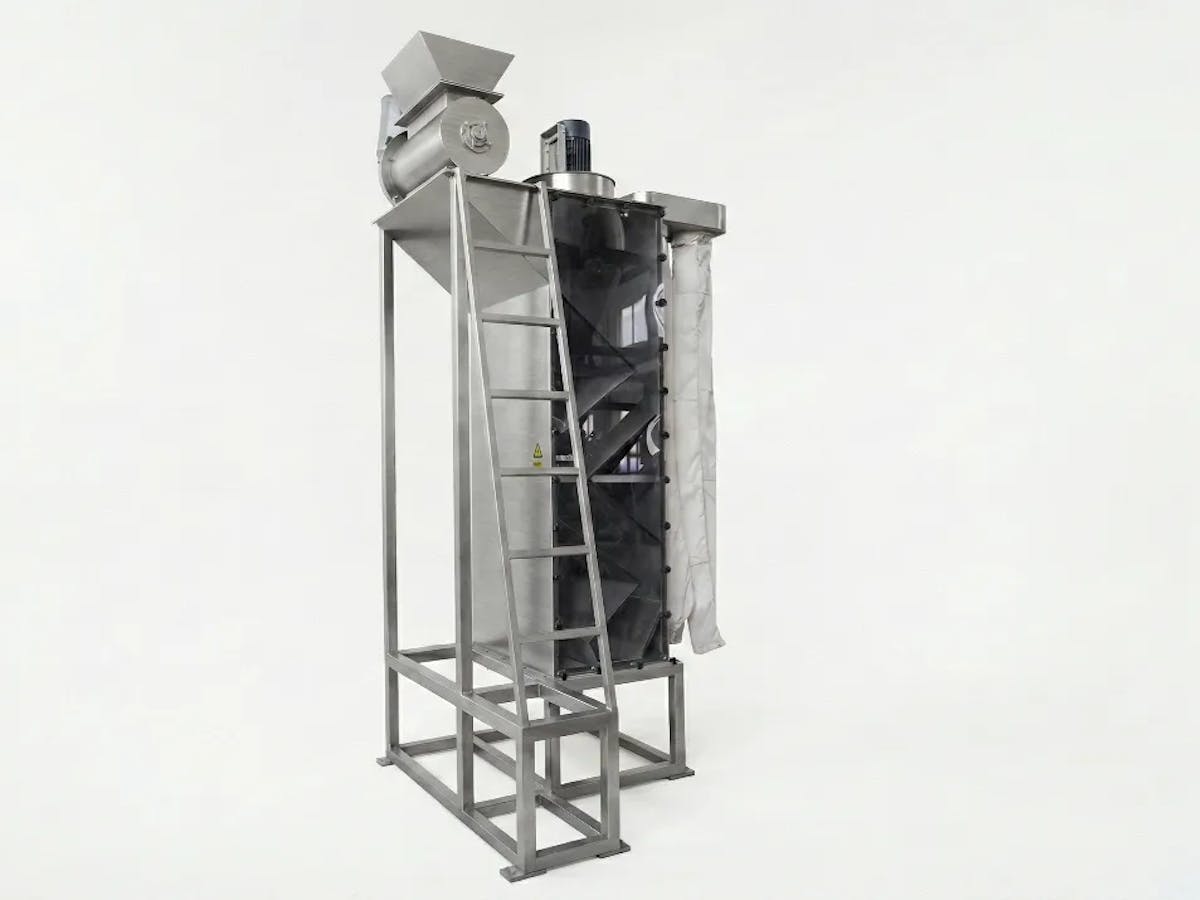
The zig-zag channel creates multiple separation stages where rising air lifts light fractions while heavy flakes fall through gravity.

The classifier feeds material into a vertical column with angled baffles that create turbulence zones. A blower generates upward airflow, carrying light contaminants to a top cyclone while clean heavy flakes discharge at the bottom.
In a typical washing line, the air classifier sits after drying or after granulation. It separates residual paper labels, thin film scraps, fiber, and dust from heavier PET bottle flakes, ensuring the final output meets purity requirements for extrusion or premium flake sale.

See how the zig-zag air column separates light contaminants from heavy plastic flakes in a working recycling line.
Zig-zag air classifiers are used wherever a dry density-based separation step is needed to remove lightweight contaminants from recycled plastic streams.
Removes residual paper labels, cap liner film, and dust from washed and dried PET flakes before extrusion or sale as clean flake.
Separates film scraps, label fragments, and fines from rigid HDPE or PP regrind after crushing and washing.
Removes film, paper, and fiber contaminants from mixed shredded streams before further sorting or pelletizing.
Works in series with hot-wash or friction label removers to catch any remaining label material after the primary separation stage.
Final dry cleaning step before the extruder to reduce contamination-related pressure variation and pellet defects.
Assists with removing lightweight foreign materials from mixed rigid plastic streams before NIR or sink-float sorting.
These are planning references. Actual separation performance depends on material type, particle size, moisture content, and the upstream process.
| Model | Channel Width | Throughput Range | Key Features |
|---|---|---|---|
| RT-ZZ300 | 300 mm | 300–500 kg/h | Compact, 4-stage zig-zag, ideal for small washing lines |
| RT-ZZ500 | 500 mm | 500–1000 kg/h | 6-stage zig-zag, adjustable baffles, standard cyclone |
| RT-ZZ800 | 800 mm | 1000–2000 kg/h | 8-stage zig-zag, heavy-duty blower, dust collection ready |
| RT-ZZ1000 | 1000 mm | 2000–3000 kg/h | 10-stage, dual-inlet option, high-capacity recycling lines |
Throughput depends on bulk density, particle size, and target purity. Rumtoo will confirm the right model after reviewing your material data.
These inputs help size the zig-zag column and blower correctly for your line.
State the main plastic type (PET, HDPE, PP, mixed) and the light contaminant to be removed (labels, film, dust, fiber).
Share the flake or granule size after the upstream crusher, granulator, or dryer — this determines channel geometry.
Provide the target kg/h and any peak-hour variation so the blower and feed system are sized with margin.
Confirm whether the classifier will sit after a dryer (preferred) or directly after washing, and share the expected moisture range.
| Decision Criteria | Single-Stage Air Separator | Rumtoo Zig-Zag Air Classifier |
|---|---|---|
| Separation stages | One pass through an air stream | Multiple zig-zag stages for progressive separation |
| Cut-point control | Coarse — air volume only | Fine — air volume, baffle angle, and stage count together |
| Footprint | Wide horizontal layout | Compact vertical column |
| Near-density contaminants | Often missed in a single pass | Caught by repeated direction changes in the zig-zag channel |
It is a vertical column with angled internal baffles that create multiple separation zones. Rising air carries light materials upward while heavy flakes or granules fall downward through gravity.
Typically after the drying stage and before extrusion or flake packing. The feed material should be dry for the best aerodynamic separation.
Yes. Paper labels are significantly lighter than PET flakes, making them an ideal target for zig-zag air classification after hot washing and drying.
By tuning air volume and feed rate so the cut-point velocity sits between the terminal velocity of the contaminant and the product. Rumtoo configures this during commissioning.
A cyclone separator on the light-fraction outlet is standard. For fine dust, an additional bag filter is recommended to keep the workshop environment clean.
Share your material type, flake size, throughput, and the contaminant you need to remove. Rumtoo will recommend the right zig-zag air classifier model and integration plan.
Request Air Classifier Proposal