Filament Production Systems

3D Filament Extruders for Recycled Pellets, Qualified Regrind, and Pilot Production

This page is for teams that need stable filament diameter, repeatable winding quality, and a realistic process route from material preparation to finished spool. Rumtoo helps define when a compact desktop line is enough, when drying and melt filtration become mandatory, and when a lab setup should move to a more controlled pilot line.

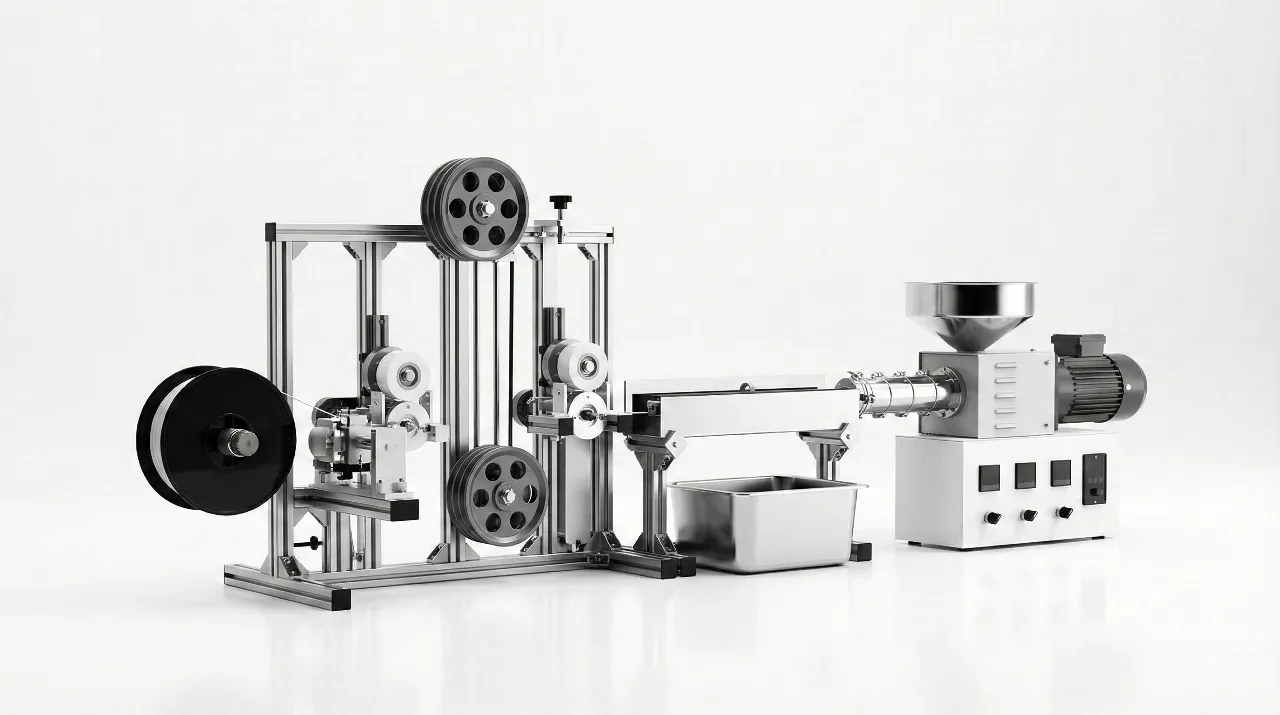
3D filament extrusion line for recycled plastic production

How Filament Line Selection Should Actually Work

Top results and manufacturer clusters repeatedly organize this topic around feed preparation, diameter control, and spool quality instead of just naming a screw size. This page follows that structure.

1

Qualify Feedstock First

Pellets, compounded blends, and shredded print scrap do not feed the extruder the same way. Material family, moisture condition, contamination level, and particle consistency have to be defined before line sizing.

2

Decide If Direct Regrind Is Realistic

Some projects can run qualified, screened regrind. Others are more stable when the material is pelletized or at least filtered and dried before extrusion. This is a process decision, not a marketing claim.

3

Build the Diameter-Control Block

Filament quality depends on the combined behavior of melt stability, cooling, puller speed, laser measurement, and winding tension. Buying an extruder barrel without the downstream control block creates avoidable tolerance drift.

4

Match the Line to the Real Use Case

A desktop R&D line, a university setup, and a pilot commercial filament line do not need the same output, automation, or material-preparation package. The line should be sized around the real operating target.

What Buyers Actually Need From a Filament Line

The strongest pages in this topic cluster focus on process stability, not only on the extruder headline. That is the right standard here too.

Built Around Diameter Stability

Rumtoo frames the line around drying, filtration, cooling, pulling, and winding so the 1.75 mm or 2.85 mm target is treated as a process outcome, not a brochure number.

Ready for Recycled-Material Validation

The page helps teams judge when qualified recycled pellets are practical, when screened regrind is possible, and when moisture or contamination makes the route unstable.

Usable Path From Desktop to Pilot

Instead of mixing hobby and industrial language, this structure separates bench-scale development, educational use, and more controlled pilot output.

Common Filament Extrusion Problems

SERP leaders and recent resources repeatedly point to moisture, feed consistency, and line control as the reasons filament projects underperform.

Problem

Rumtoo Solution

Material is loaded without proper drying, so bubbles, brittleness, and diameter drift appear during extrusion.

Rumtoo defines drying needs by polymer and moisture sensitivity before line configuration, especially for PETG, PA, PC, and recycled feed.

Problem

Rumtoo Solution

Teams buy an extruder only, then try to manage tolerance manually without a real puller, gauge, or winding logic.

Rumtoo treats the filament line as a complete control block: extrusion, cooling, puller, measurement, and spool handling are matched together.

Problem

Rumtoo Solution

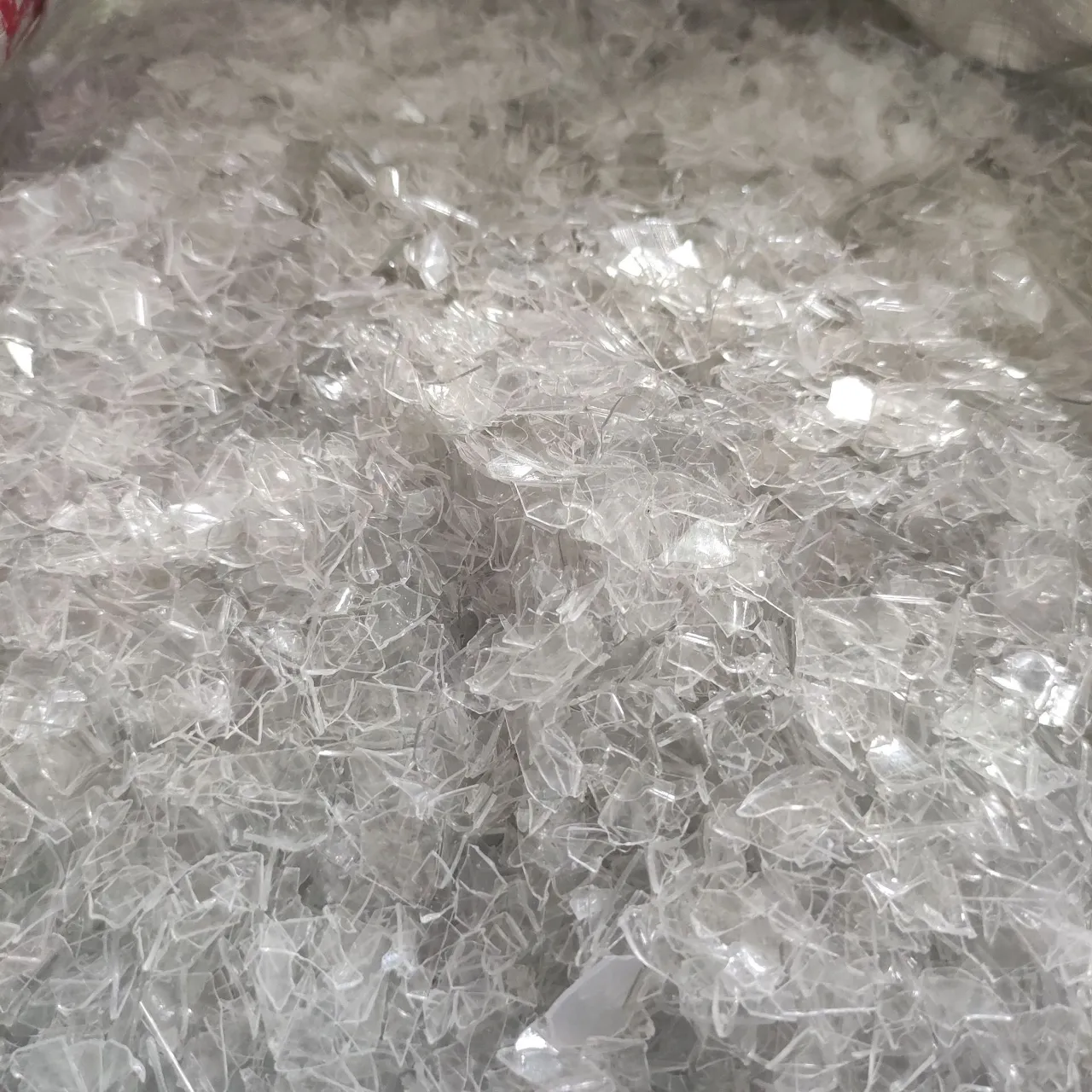
Shredded print waste is fed directly without screening or filtration, causing unstable flow and surface defects.

Rumtoo reviews feed form, particle window, and contamination risk first, then decides whether direct regrind, melt filtration, or a pellet-first route is more realistic.

Problem

Rumtoo Solution

Output goals are vague, so the line ends up undersized for pilot production or overbuilt for a lab workflow.

Rumtoo sizes the line around diameter target, kg/h, material family, changeover frequency, and the level of automation required for the real use case.

Line and Output Showcase

A useful filament page should show both line context and the output quality the line is supposed to protect.

3D filament production line view

Line View: Extruder Plus the Control Block

A practical filament line is more than a heated barrel. Cooling, puller stability, diameter measurement, and spool handling are what turn raw extrusion into usable filament output.

  • Shows why puller and winding logic matter as much as the screw section
  • Helps buyers evaluate bench versus pilot line scope
  • Frames the system as a process block instead of a standalone extruder head

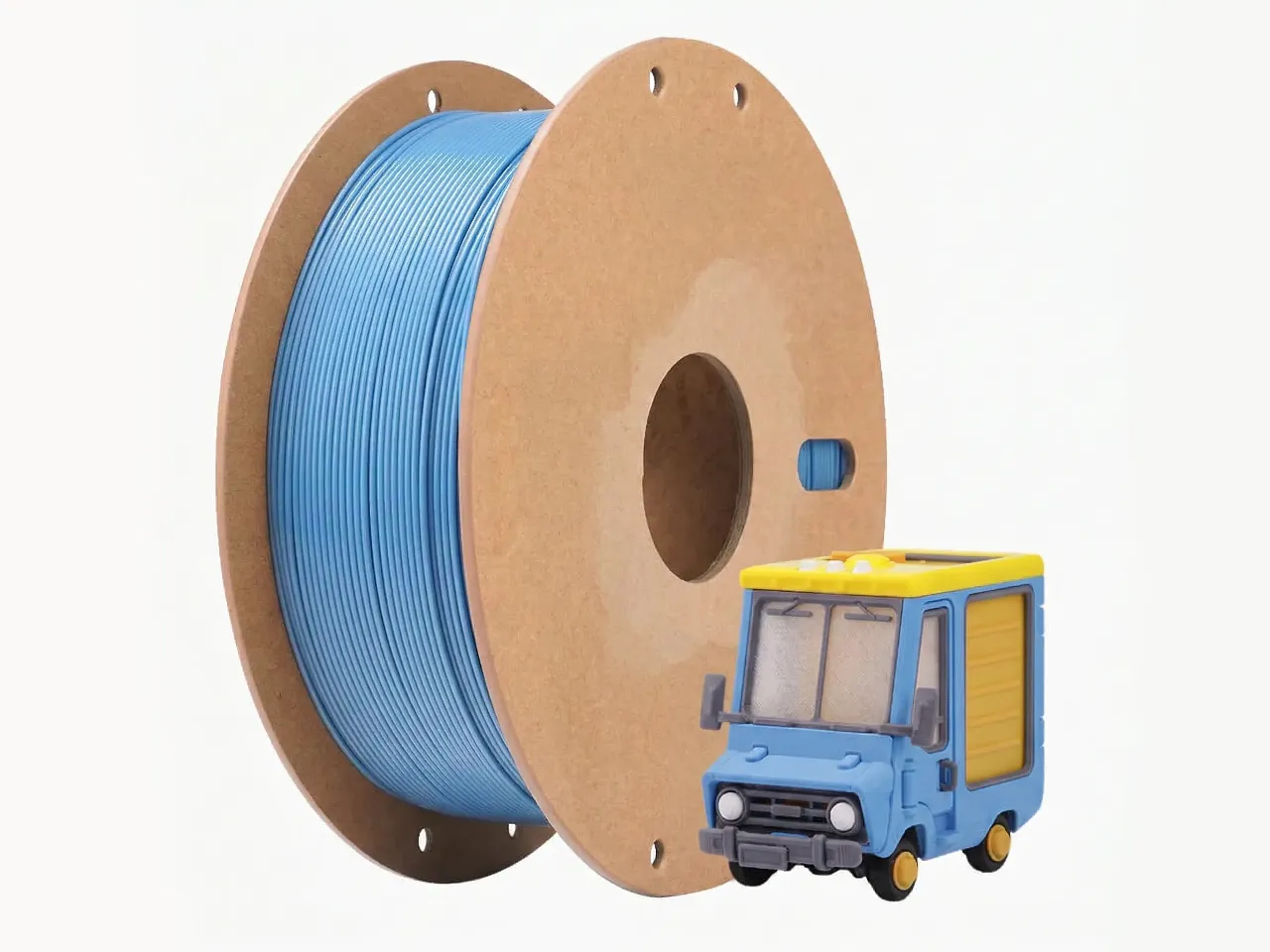
Output View: Spool Quality and Material Condition

Filament buyers care about printable output, not only whether resin melts. Spool consistency, roundness, and surface stability are the quality checkpoints that determine whether the line is actually working.

  • Supports spool-level QC before print validation
  • Makes diameter stability and surface finish easier to judge
  • Connects material preparation directly to final filament usability
Recycled 3D printing filament sample

Filament Extrusion Demo

A compact extrusion route still depends on stable feed preparation, cooling, and spool control.

Typical Filament Line Use Cases

The topic cluster around this page usually separates lab development, recycled-material trials, and small commercial output. Those are the same routes buyers actually compare.

University and Research Labs

For polymer testing, recycled-material studies, and teaching the full route from pellets or qualified regrind to printable filament.

Closed-Loop Print-Scrap Reuse

For teams that want to convert controlled in-house print waste into usable filament after screening, drying, and process validation.

Material and Color Trials

For masterbatch evaluation, blend development, and spool-level print validation before larger-scale production decisions.

Pilot Filament Commercialization

For startups or product teams moving from bench experiments to more repeatable 1.75 mm or 2.85 mm pilot output.

Educational Makerspaces and Training Cells

For compact systems where footprint, operator simplicity, and safe process visibility matter as much as output capacity.

Engineering-Grade Material Validation

For PETG, PA, PC, and other moisture-sensitive or less forgiving polymers that need tighter prep and process control.

Reference Configurations

These are planning references. Real output and tolerance depend on polymer, moisture, particle consistency, filtration, and line tuning.

ConfigurationBest FitTypical Output*Key Notes
Bench R&D LineTeaching, formulation trials, very small-batch development0.3-1.0 kg/hBest for dried pellets and controlled trials; manual handling may still be acceptable
Compact Filament LineLabs and makerspaces running 1.75 mm or 2.85 mm output1-3 kg/hCooling, puller, and winding become part of the core package, not accessories
Pilot Filament LineSmall commercial runs and recycled-material validation3-8 kg/hLaser gauge, stronger downstream control, and better changeover discipline matter more here
Engineering-Grade OptionPETG, PA, PC, and moisture-sensitive materialsCase-specificDrying, venting, and filtration often become mandatory for stable filament quality

The exact route depends on whether the feed is virgin pellet, qualified recycled pellet, screened regrind, or a blend. Claims about tolerance should always be tied to material condition and line configuration.

Filament Line Checklist Before RFQ

These inputs matter more than screw diameter alone when you are choosing a filament extrusion route.

Material Profile

State the polymer family, whether the feed is virgin pellet, recycled pellet, or screened regrind, and whether the resin is moisture-sensitive or filled.

Feed Preparation Route

Clarify if you already dry the material, whether melt filtration is needed, and if the input is consistent enough for direct extrusion or should move through a pellet-first route.

Diameter and Quality Target

Define 1.75 mm or 2.85 mm, tolerance expectation, spool quality standard, and whether the output is for internal print testing, education, or commercial sale.

Output and Utilities

Share required kg/h, changeover frequency, available footprint, voltage, cooling method, and whether you need a compact bench line or a more controlled pilot package.

Why Generic Filament Extruder Quotes Miss the Real Problem

Decision CriteriaBasic Extruder-Only QuoteRumtoo Filament Line Route
Feed PreparationOften assumes clean, dry pelletsDefines pellet, regrind, drying, and filtration requirements first
Diameter ControlTreated as manual operator correctionBuilt around cooling, puller, gauge, and winding behavior
Line ScopeFocuses on barrel and heater zones onlyTreats the full spool-quality process as one engineered block
Scale PathBlurs hobby, lab, and pilot use casesSeparates desktop validation from repeatable pilot production

Frequently Asked Questions

Can this line run recycled pellets?

Yes, if the recycled pellets are clean enough and dried correctly for the polymer. The more variable the feed is, the more important drying, filtration, and process tuning become.

Can I extrude directly from shredded failed prints?

Sometimes, but only when particle size, contamination, and moisture are controlled well enough. Many projects become more stable after screening, filtration, or a pellet-first preparation route.

Do I always need drying before filament extrusion?

Not every polymer has the same drying demand, but for hygroscopic and recycled materials drying is often critical. Recent official manufacturer guidance also stresses that poor drying leads to bubbles, degradation, and inconsistent diameter.

What diameter and tolerance should I realistically expect?

That depends on material stability and the line package. A laser-measured, properly tuned line can target common commercial standards, but the tolerance claim should always be matched to the real feed condition.

What data should I send before model selection?

Send the polymer type, feed form, drying method, target diameter, required kg/h, spool standard, available utilities, and whether the project is bench R&D, education, or pilot production. Those inputs decide the route before the model.

Need a Realistic Filament Extrusion Route?

Share your polymer, feed form, target diameter, and output goal. Rumtoo will tell you whether you need a compact bench line, a more controlled pilot setup, or more feed preparation before extrusion.

Request Filament Line Proposal