
Ancillary Equipment

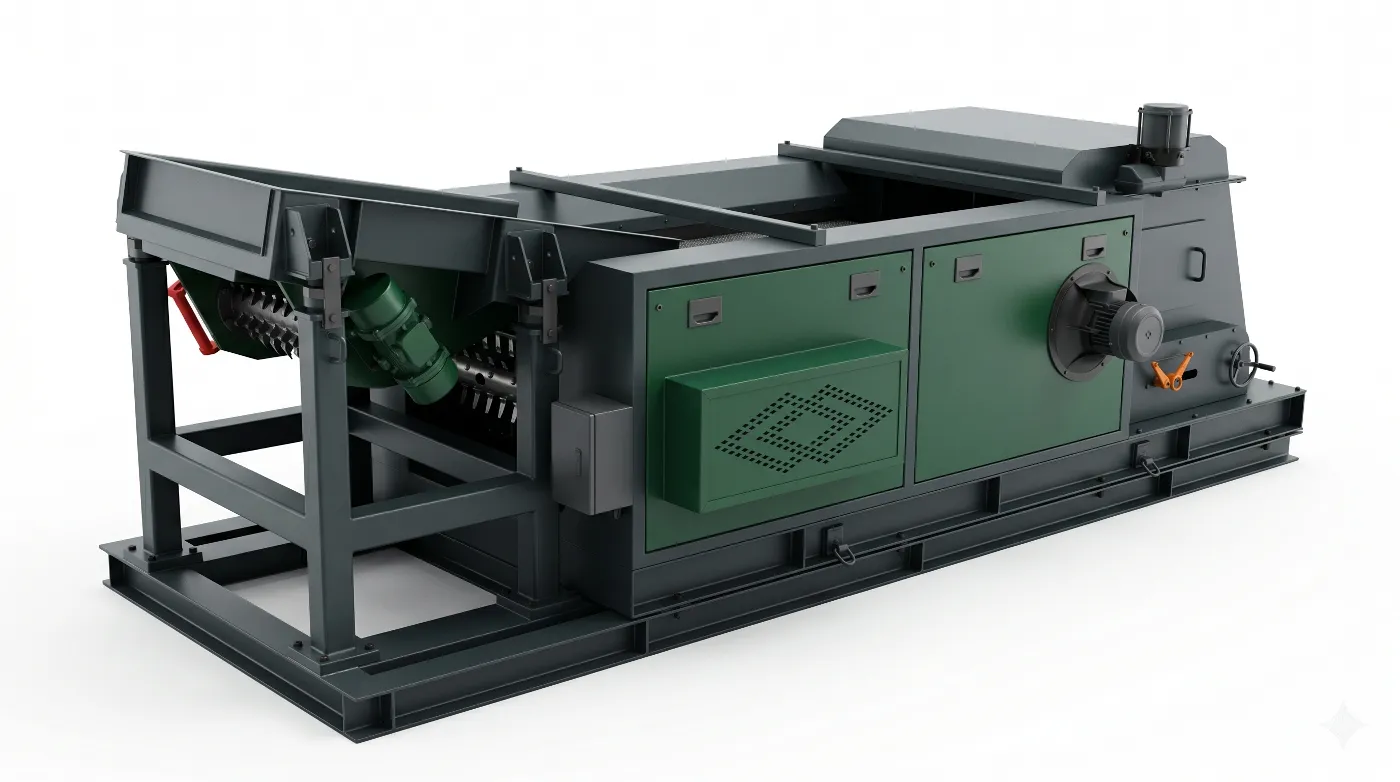
Eddy Current Sorting Machine for WEEE & Non-Ferrous Metal Recovery

An eddy current separator (ECS) uses a high-speed rotating magnetic rotor to induce eddy currents in non-ferrous particles, throwing aluminum, copper and brass forward while inert plastics and circuit board fragments fall short. Rumtoo configures the rotor type, belt speed and splitter geometry around your specific WEEE fraction so recovery and purity are stable across the whole line — not just on a single test sample.

  • Matched to your feedstock and output target
  • Stable throughput with controlled discharge size
  • Layout, controls, and service support customized
View Specifications
Scroll
Eddy Current Sorting Machine for WEEE
  • Matched to your feedstock and output target
  • Stable throughput with controlled discharge size
  • Layout, controls, and service support customized

Step-by-Step Commissioning SOP

Most recovery and purity problems on an ECS are not hardware faults — they are set-up faults. These are the four checks Rumtoo runs on every commissioning, in order, before signing off on a guaranteed recovery rate.

1

Step 1 — Verify feed condition before powering the rotor

Confirm the feed is mono-layered (single-particle thickness), dry (<2% surface moisture), and screened to a narrow size band. Pre-classify with a vibrating screen into at least two cuts — e.g. 5–25 mm fines and 25–80 mm coarse — and process each band on its own pass with matching settings.

2

Step 2 — Set rotor speed to the dominant particle size

Start at 3,000 RPM for typical WEEE fines, then adjust. Aluminum chips and fine copper need higher RPM (3,500–4,000) for sufficient eddy-current force; coarse aluminum extrusions and cans separate cleanly at 2,000–2,500 RPM. Belt speed should sit around 1.5–2 m/s so particles arrive at the rotor as a thin curtain, not a pile.

3

Step 3 — Position the splitter using a calibration sample

Feed a known mix of metal/non-metal at target rate and walk the splitter (the V-shaped divider plate after the rotor) toward the rotor in small steps until non-ferrous yield peaks. Stop the moment plastic carry-over in the metal fraction starts to climb — this is the optimal cut point. Lock the splitter and record the angle for future restarts.

4

Step 4 — Validate, then integrate downstream

Run a 30-minute steady-state batch and assay both output streams. Confirm recovery against the specs-table targets, and confirm the metal-fraction purity is high enough for your downstream buyer. Only then wire the discharge chutes into the next stage (electrostatic separator, optical sorter, or baler).

Why Rumtoo Builds ECS Around the Line, Not the Other Way Around

Most ECS catalogs sell the rotor first and ask about the line later. Rumtoo reverses that — we ask where the machine sits in your process before quoting a configuration.

Configured for Your WEEE Fraction

Concentric, eccentric, or high-frequency rotors are matched to actual particle size and metal type in your feed — not to a generic catalog default. Eccentric design is standard for shredded WEEE under 60 mm.

Maintenance Schedule Built In

Every machine ships with a written daily/weekly/monthly/quarterly checklist with measurable thresholds (bearing temp, rotor-to-shell gap, magnetic field strength), not vague advice to "inspect regularly".

Designed for Line Integration

Discharge chutes, conveyor heights and PLC interlocks are pre-configured to mate with Rumtoo shredders, vibrating screens, and electrostatic separators — and to retrofit cleanly into existing plant lines.

Maintenance & Troubleshooting Reference

The four issues below cause the majority of unplanned downtime on eddy current separators. Each has a measurable threshold so the operator knows when to act, not just that something might be wrong.

Problem

Excessive vibration during operation (most common symptom — usually appears within the first 6 months).

Rumtoo Solution

Check rotor balance first (ISO 1940 G0.4 at operating RPM), then bearing condition, then belt tracking alignment. If vibration starts suddenly, suspect a metal slug wedged at the rotor-belt interface — stop and clear before restart.

Problem

Recovery rate drops 10–15% with no change in feed material.

Rumtoo Solution

In order: (1) check feed uniformity — pile-fed material is the #1 cause; (2) measure rotor field strength with a gaussmeter and compare to commissioning baseline (replace rotor when below 80%); (3) verify splitter has not drifted from its locked position; (4) confirm rotor RPM has not dropped due to drive belt slippage.

Problem

Bearing temperature climbs above 70 °C during normal operation.

Rumtoo Solution

70–85 °C is a warning; above 85 °C requires immediate shutdown. Re-grease with 2–3 pumps of NLGI #2 grease per bearing on the weekly schedule (over-greasing is as harmful as under-greasing). If temperature persists after greasing, replace the bearing — heat permanently degrades the magnetic rotor if allowed to soak through.

Problem

Belt cover damage or holes appearing repeatedly.

Rumtoo Solution

A wear-through usually means a small ferrous particle is making it past your overband magnet. Verify the upstream magnet is energized and clean, inspect the rotor-to-shell gap monthly and replace the shell once the gap exceeds 8 mm, and keep a spare belt cover on hand — replacement is a 2-hour planned-maintenance task, not an emergency.

Where the ECS Sits in a WEEE & Plastic Recycling Line

An eddy current separator is rarely a standalone machine. It belongs after coarse shredding and ferrous magnetic separation, and before any optical or density-based purification stage — its position determines how clean your final metal and plastic fractions can get.

Eccentric high-frequency rotor for an eddy current separator

Equipment View: Eccentric Rotor Geometry for Fine WEEE Fractions

For shredded WEEE and ASR fines, Rumtoo uses an eccentric (off-centered) rotor that concentrates the maximum magnetic field intensity at the discharge point. This makes the machine effective on conductive particles down to about 5 mm — the typical lower limit for valuable copper wire and aluminum chips in e-waste streams.

  • Eccentric rotor design extends usable recovery range down to 5 mm particles
  • High-frequency 22-pole rotor option for aluminum chips and cable shavings
  • Quick-change splitter and adjustable belt cover for easy product-mix changes

Process View: Position After Shredder and Ferrous Magnet

In a typical Rumtoo WEEE line, material moves: industrial shredder → overband magnet (iron) → vibrating screen (size classification) → eddy current separator (non-ferrous metals) → electrostatic or optical sorter (final plastic purification). Placing the ECS after size classification, not before, is what makes the recovery numbers in the specs table actually achievable.

  • Always preceded by a ferrous magnet — iron particles damage the rotor
  • Best fed by a vibrating screen so the feed is mono-layered and sized
  • Discharge fractions feed forward into electrostatic or sensor-based sorters
WEEE recycling line layout showing eddy current separator position

Eddy Current Separator in a WEEE Line

See how the rotor field ejects non-ferrous metal forward while inert material drops straight down at the discharge end.

WEEE & E-Waste Application Examples

These are the fractions where an ECS contributes the most economic value in an e-waste or shredded-plastic line.

  • Shredded WEEE (Mixed E-Scrap)

    Recovers aluminum casings, copper wire fragments, brass connectors and zinc die-castings from a mixed shredded e-waste stream before optical or density sorting.

  • Printed Circuit Board (PCB) Fines

    After granulation of waste PCBs, the ECS pulls copper-rich metallic fines away from epoxy resin and fiberglass non-metallics, feeding a downstream chemical or hydrometallurgical recovery step.

  • Cable & Wire Granulation Residue

    Separates copper or aluminum conductor chips from PVC and XLPE jacket regrind — the classic eddy-current application, with recovery rates above 95% when feed is properly sized.

  • Automotive Shredder Residue (ASR)

    Targets the non-ferrous metal fraction in light ASR (the "fluff") after iron removal, recovering aluminum and copper alongside plastics destined for further sorting.

  • Small Domestic Appliance (SDA) Recycling

    Recovers non-ferrous parts from shredded vacuum cleaners, toasters, hairdryers and similar — typically a high-aluminum mix with good ECS economics.

  • Aluminum-from-Plastic Flake Purification

    Final cleanup pass on rigid plastic regrind that still carries aluminum fragments from caps, label foils or co-extruded layers, before pelletizing.

Reference Configurations & Recovery by Particle Size

The recovery percentages below are achievable when feed is mono-layered, dry and pre-screened into a single size band. Rumtoo confirms targets in writing after reviewing your actual fraction sample.

ModelBelt WidthThroughputRecovery (Al / Cu / Brass) by Feed Size
RT-ECS-600600 mm1–3 t/h5–25 mm: Al 90% / Cu 82% / Brass 78% — fines & PCB regrind
RT-ECS-10001000 mm3–6 t/h20–60 mm: Al 95% / Cu 90% / Brass 85% — typical shredded WEEE
RT-ECS-12001200 mm5–10 t/h40–120 mm: Al 97% / Cu 92% / Brass 88% — SDA & ASR coarse fraction
RT-ECS-15001500 mm8–15 t/h60–150 mm: Al 97% / Cu 93% / Brass 90% — bulk recycling lines

Standard rotor is eccentric, 12-pole at 3,000 RPM for general WEEE. High-frequency 22-pole option available for aluminum fines below 10 mm. Recovery falls sharply if feed is fed in a pile rather than a mono-layer, so the upstream vibrating screen sizing matters as much as the rotor choice.

RFQ Checklist — Information We Need to Size Your ECS

These six inputs are enough to lock in the rotor type, belt width, splitter geometry, and a written recovery commitment.

  1. Feed Source & Pre-Treatment

    State whether the feed is shredded WEEE, ASR fluff, cable regrind, PCB fines, or rigid plastic — and confirm whether a ferrous magnet sits upstream (it must).

  2. Particle Size Distribution

    Share the size range after your shredder and screen. If you have only one size band, say so — the rotor type and RPM depend heavily on this.

  3. Metal Content & Target Recovery

    Approximate mass-percent of aluminum, copper, brass and other non-ferrous metals in the feed, and which one is the primary economic driver for the project.

  4. Throughput & Operating Hours

    Average and peak t/h, plus hours per day. Belt width and motor sizing scale linearly with continuous-duty throughput, with a safety margin for surge.

  5. Downstream Process

    What follows the ECS — an electrostatic separator, NIR sorter, baler, or buyer specification? This sets the required purity of each output fraction.

  6. Plant Constraints

    Floor space available, conveyor heights you must match, voltage and frequency on site, and any ATEX or dust-emission requirements at the install location.

Maintenance Schedule at a Glance

IntervalActionThreshold / Specification
DailyVisual check, listen for unusual noise, clear stray metal at rotor-belt interfaceNo standing material at discharge; no abnormal vibration
WeeklyGrease bearings (NLGI #2)2–3 pumps per bearing — never more
MonthlyMeasure rotor-to-shell gap, belt cover wear, motor current drawReplace shell if gap > 8 mm; replace belt cover at 50% wear
QuarterlyMeasure rotor magnetic field with gaussmeter; check bearing temperature trendReplace rotor if field < 80% of commissioning baseline; bearings must stay < 70 °C

Frequently Asked Questions

What is an eddy current separator and why do I need one for WEEE?

An eddy current separator uses a fast-rotating magnetic rotor to induce circulating electrical currents (eddy currents) in conductive non-ferrous particles. Those currents create their own magnetic field, which the rotor repels — ejecting aluminum, copper and brass forward while plastic and inert material falls short. For WEEE it is the only practical bulk-recovery technology for non-ferrous metals between coarse hand-sorting and fine chemical recovery.

How small a particle can an eddy current separator actually recover?

With an eccentric high-frequency rotor (22-pole, 3,500+ RPM), particles down to about 5 mm can be recovered with acceptable yield. Below 3 mm, induced currents become too weak relative to particle mass and recovery falls off quickly. For sub-3 mm fines, a downstream electrostatic separator or wet density step is more economical.

Why do I need a ferrous magnet before the eddy current separator?

Ferrous particles are pulled directly into the rotor face by the magnetic field. They damage the belt cover, can permanently demagnetize the rotor through heat and impact, and contaminate the non-ferrous product fraction. An overband or drum magnet upstream is mandatory — not optional.

What recovery and purity should I expect?

On properly classified shredded WEEE in the 20–60 mm range, expect 95%+ aluminum recovery, 90%+ copper recovery, and 85%+ brass recovery — at metal-fraction purity above 90%. Recovery drops by 5–10 percentage points if feed is piled rather than mono-layered, so the upstream vibrating screen is part of the recovery system.

How long does an eddy current separator last with proper maintenance?

With the weekly bearing greasing, monthly gap measurement, and quarterly rotor field check we ship with every Rumtoo machine, 15–20 years of service is realistic. Without that schedule, bearing failure and rotor demagnetization can shorten life to 2–5 years — almost always preventable.

Can the ECS be retrofitted into an existing WEEE line?

Yes. The most common retrofit is between an existing shredder + magnet stage and an existing optical or density sorter. Rumtoo matches discharge heights, conveyor takeaway, and PLC interlocks to your current plant so the new stage drops in without re-routing the whole line.

Plan an Eddy Current Separator Around Your WEEE Line

Share your feed type, particle size range, target throughput and downstream process. Rumtoo will return a configured ECS proposal — including written recovery targets, the integration drawing, and the maintenance schedule we ship with every machine.

Expert response within 24 hours. No obligation quote.