
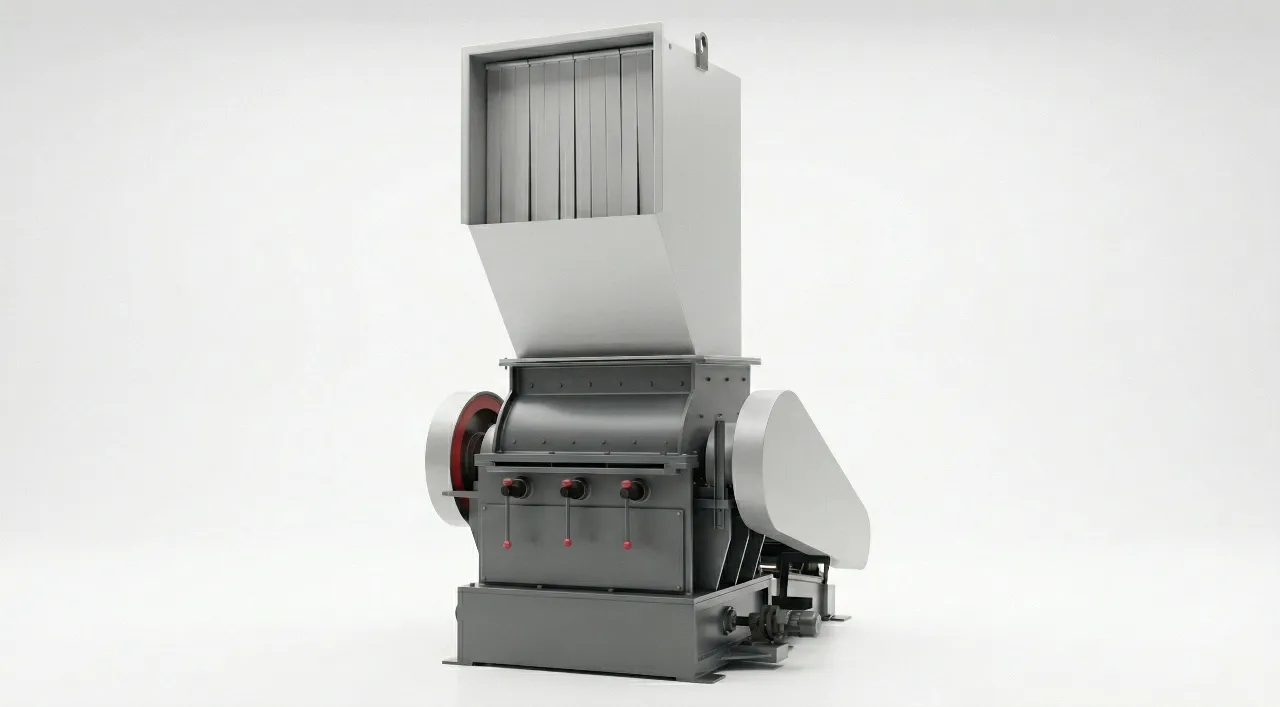
Material Feeding
Rigid plastics are fed via conveyor or cyclone into the cutting chamber. A hopper curtain prevents flyback.
Precision Size Reduction
High-speed wet or dry crushing system designed to refine plastic scrap into uniform flakes with minimal fines, ideal for washing and pelletizing lines.
High-speed shear cutting for precise particle sizing.
Rigid plastics are fed via conveyor or cyclone into the cutting chamber. A hopper curtain prevents flyback.
The open rotor spins at 450-600 RPM. Angled knives shear material against fixed bed knives with a scissor-like action.
Material circulates until it is small enough to pass through the screen (typically 8-12 mm), ensuring defined flake size.
Sized flakes are pneumatically extracted or washed out (wet crusher) to preventing overheating and dust buildup.
Scissor-cut geometry and precise screen sizing deliver dust-free, consistent granules.
Open rotor design maximizes airflow and cooling, allowing sustained high-capacity operation.
Hydraulic hopper opening and screen cradle access make knife changing and cleaning rapid.
Excessive fines and dust reduce material value.
Optimized cutting angles and low rotor-to-knife gap minimize dust generation during crushing.
Machine overheating melts plastic, blocking screens.
Open rotor design and optional water-flush system keep the chamber cool during continuous runs.
Vibration and noise levels are too high.
Heavy-duty welded frame and optional soundproof enclosure reduce operational noise significantly.
Blade wear requires frequent downtime.
Knives are made from D2/SKD11 tool steel and can be resharpened multiple times.
Visual references for machine layout and downstream-ready material condition.
This view helps teams evaluate how core equipment is arranged between feeding, cleaning, and transfer stages in real plant layouts.
A consistent and manageable output condition improves control in washing, drying, and pelletizing workflows after this stage.
See the heavy duty granulator processing HDPE bottles and crates.
Crushing user post-consumer bottles into 12mm flakes for washing.
Reducing rigid industrial packaging into clean regrind.
Grinding offcuts and demolition scrap for re-extrusion.
Reclaiming sprues, runners, and defective parts.
Processing skeletal waste and punch residues.
Size reduction of PP bumpers and fascia.
| Parameter | Specification | Notes |
|---|---|---|
| Rotor Diameter | 400 - 800 mm | Depending on capacity |
| Rotor Width | 600 - 1600 mm | Matches feed size |
| Motor Power | 37 - 160 kW | High Torque Drive |
| Rotor Knives | 3 or 5 Rows | V-Cut Arrangement |
| Stationary Knives | 2 Rows | Adjustable Gap |
| Screen Size | 8 - 12 mm | Interchangeable |
| Throughput | 500 - 2000 kg/h | Material Dependent |
Standard screen is 10mm. Throughput varies by bulk density and feeding method.
| Feature | Heavy Duty Granulator | Single Shaft Shredder |
|---|---|---|
| Rotor Speed | High (450+ RPM) | Low (60-80 RPM) |
| Output Size | Small Flakes (10-12mm) | Coarse Chunks (40-100mm) |
| Primary Goal | Final Sizing / Refining | Volume Reduction |
| Input Material | Thin-wall / Pre-shredded | Heavy Lumps / Bales |
Yes, we offer wet granulator configurations with water inlets to pre-wash material and reduce friction heat/blade wear.
Depending on material cleanliness, knives typically run 40-80 hours before sharpening. They can be sharpened multiple times.
Yes, due to high-speed operation, we recommend our integrated soundproofing cabin to keep noise levels below 85 dB.
This granulator uses high speed impacts to cut small flakes. A shredder uses low speed torque to tear big chunks.
Contact us for a granulator that delivers consistent, dust-free flake.
Get a Quote