Recycling Pelletizing Lines
Compare pelletizing routes when densified foam will later be converted into pellets.

Foam Recycling and Volume Reduction
Mechanical cold pressing system for EPS, EPE, EPP, XPS, and PUR foam waste. Reduce bulky foam volume into dense, easy-to-handle blocks without thermal melting or chemical additives.
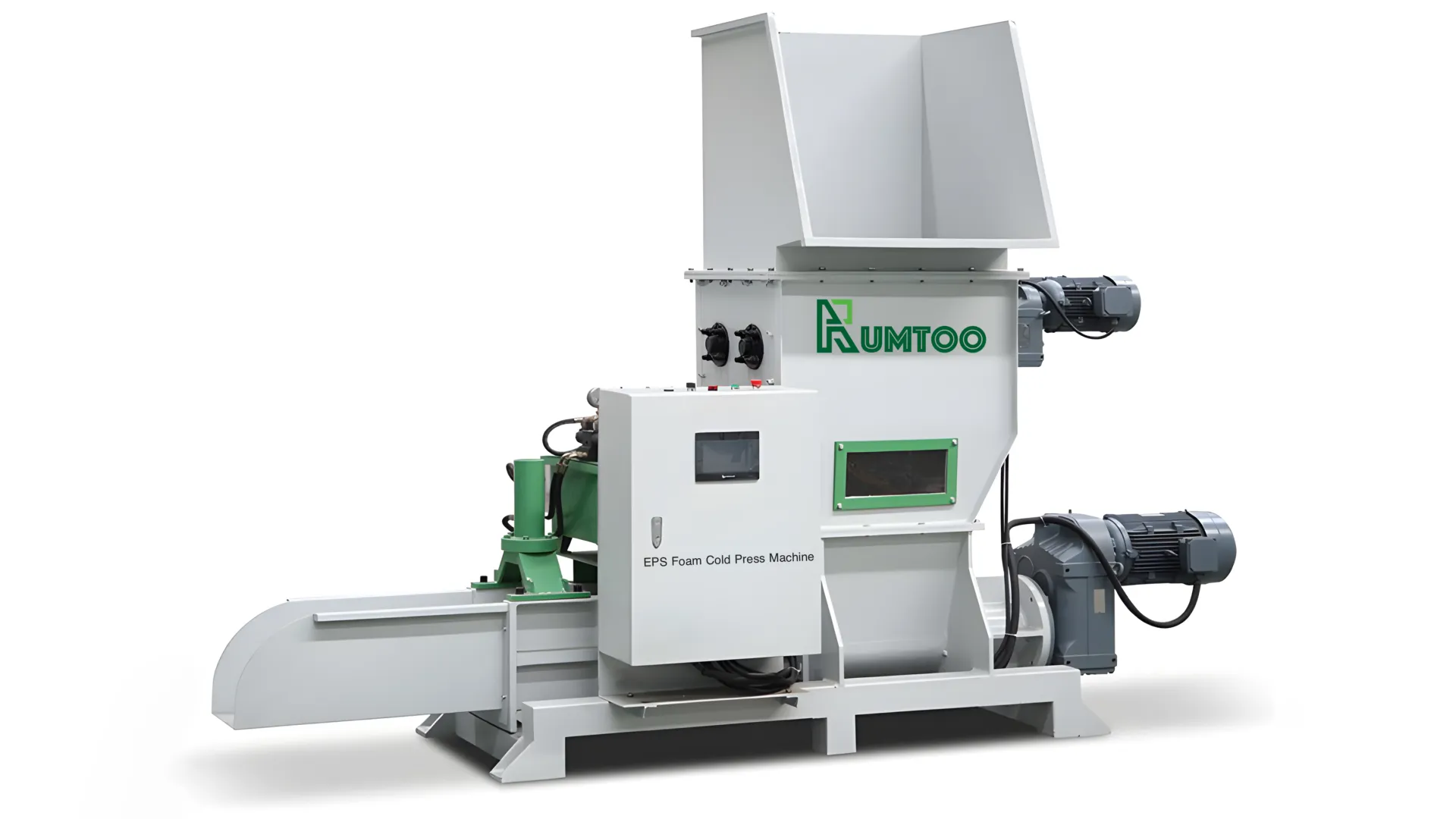
Foam projects often begin with volume reduction before pelletizing or downstream remanufacturing.
Compare pelletizing routes when densified foam will later be converted into pellets.
Review other conditioning equipment used between washing, dewatering, and extrusion.
Use primary shredding when oversized foam or mixed bulky waste needs reduction before compression.
The cold press route reduces transport and storage cost while preserving recyclable material value.
EPS boxes, trays, boards, cups, or similar foam scrap enter the hopper for controlled feeding.
Integrated crushing blades break large foam pieces into manageable fragments before compression.
A high-torque screw conveys and compresses the foam, pushing out trapped air without heat.
Foam exits through a forming die as compact blocks that are easier to store, ship, and sell.
The main value is reducing an extremely low-density waste stream before transport or further recycling.
Typical compression ratios from 30:1 to 50:1 can cut storage space and freight cost dramatically.
Mechanical pressure avoids melting odors and keeps the process simpler for many collection sites.
Suitable for EPS and similar foam streams such as EPE, EPP, XPS, and PUR, depending on condition.
For foam recyclers, the machine view and compressed block output are both important buying signals.
The cold press combines size reduction and screw compression so bulky foam becomes a consistent block stream.
Compressed foam blocks are easier to warehouse, load, and sell to downstream recyclers or processors.

Watch bulky foam waste become dense, manageable recycling blocks.
Use cold pressing wherever foam volume is the practical bottleneck.
Compress EPS boxes, appliance packaging, trays, and protective inserts before transport.
Turn loose foam from collection points into dense blocks for cleaner logistics.
Prepare bulky foam waste before downstream densifying, extrusion, or remanufacturing routes.
Reference configuration for CP250. Final capacity depends on foam type, density, and infeed condition.
| Parameter | Specification | Notes |
|---|---|---|
| Screw Diameter | 240 mm | Compression screw |
| Input Size | 900 x 600 mm | Reference feed opening |
| Screw Rotation Speed | 42 rpm | Low-speed compression |
| Crusher Blades | 9 + 10 sets | Pre-crushing section |
| Blade Rotation Speed | 120 rpm | Foam pre-size reduction |
| Main Motor Power | 7.5 kW | Compression drive |
| Auxiliary Power | 2.2 kW x 2 + 1.5 kW | Crusher and hydraulic motors |
| Output Block Size | 250 x 250 mm | Reference formed block |
| Output Capacity | 80-120 kg/h | Material dependent |
Compression ratio and throughput vary with foam grade, contamination, moisture, and feeding method.
Concise points for buyers comparing EPS compactors, cold press machines, and hot-melt densifiers.
An EPS foam cold press compresses bulky foam with screw pressure into dense blocks. It reduces volume without melting the polymer.
Use it when storage, transport, and loose foam handling are the limiting costs before sale or downstream pelletizing.
Define foam type, loose density, daily volume, contamination, target block size, available floor space, and whether pre-crushing is required.
Cold pressing and hot melting solve different foam recycling problems. The right choice depends on logistics, odor control, and downstream buyer requirements.
| Criteria | EPS Cold Press | Hot-Melt Densifier |
|---|---|---|
| Process Method | Mechanical screw compression | Thermal melting and extrusion |
| Output Form | Dense foam blocks or ingots | Melted densified lumps or strands |
| Operating Profile | Lower heat load and simpler odor control | Higher heat load and more ventilation attention |
| Typical Use | Collection sites, logistics reduction, block resale | Facilities that need higher densification before reprocessing |
It is designed for EPS and can also process similar foam materials such as EPE, EPP, XPS, and PUR when the material condition fits the machine configuration.
No. A cold press uses mechanical screw pressure instead of heat, so it compresses foam into dense blocks without thermal melting.
Many projects achieve about 30:1 to 50:1 volume reduction, depending on foam density, shape, moisture, and contamination.
Blocks can be stored, shipped, and sold more efficiently, then used by recyclers for pelletizing or remanufacturing applications.
Share foam type, daily volume, available space, and target block handling method. Rumtoo can recommend the right cold press configuration.
Request EPS Cold Press Quote