
Drying & Densifying Units

Thermal Dryer for Final Moisture Control in Plastic Recycling

This page is for recycling lines that already remove bulk water mechanically but still need lower, tighter residual moisture before extrusion or high-spec discharge. Rumtoo helps define when thermal drying is required, what final moisture window is realistic, and how to size airflow, heater stages, and duct routing around the actual line.

Thermal Dryer

How Thermal Dryer Selection Should Actually Work

Top-ranking pages and related searches repeatedly frame this topic around the handoff from dewatering to final moisture control, not around heater power alone. This page follows that structure.

1

Start with the dewatering stage before it

A thermal dryer should be sized with the real upstream centrifugal or screw-press dewatering result already defined, because it is usually not solving bulk free water alone.

2

Define the final moisture target

The buyer should already know whether the line needs a general sub-3% window, a stricter extrusion target, or a high-spec dry flake discharge.

3

Match airflow, heaters, and residence time

Drying performance depends on hot-air velocity, line length, heater staging, cyclone behavior, and the actual material flow, not only on total installed kW.

4

Size around the real downstream process

The final design must follow the extrusion route, flake packaging target, or other downstream requirement that defines how tight the moisture window needs to be.

What Buyers Actually Need From a Thermal Dryer

The strongest topic clusters treat the thermal dryer as the final moisture-control block after dewatering. That is the correct engineering lens here too.

Lower Final Moisture After Mechanical Dewatering

The system evaporates residual moisture that centrifugal or mechanical drying leaves behind, especially when extrusion quality is still sensitive to water carryover.

Better Extrusion Stability

A matched thermal route can reduce steam-related defects, pressure drift, and moisture-driven quality variation in downstream extrusion.

Configurable for Different Dryness Targets

Heater stages, airflow, and residence time can be matched to film, PET flakes, or rigid regrind instead of forcing all materials through one generic drying tunnel.

Common Final Drying Problems

People-also-ask style questions around this topic usually focus on why thermal drying is still needed after dewatering, what moisture is realistic, and how to avoid wasted energy.

Problem

Rumtoo Solution

Plants expect centrifugal drying to reach the final extrusion moisture target by itself.

Rumtoo defines thermal drying as the stage that removes residual moisture after bulk dewatering, especially when the downstream process still reacts to water carryover.

Problem

Rumtoo Solution

Thermal dryers are sized on installed kW only and then run inefficiently.

Rumtoo sizes the route around airflow, residence time, and line integration instead of treating heater power as the whole answer.

Problem

Rumtoo Solution

The line has unstable final moisture because the upstream dewatering result changes.

Rumtoo reviews the actual inlet condition after the centrifuge or screw press first, then configures the thermal stage around that real inlet window.

Problem

Rumtoo Solution

Teams do not know when one heater stage is enough and when two or three are justified.

Rumtoo ties the number of stages to the final moisture target, material type, and the actual downstream sensitivity of extrusion or dry-flake handling.

Machine and Drying Route Reference

Top pages in this topic usually show the hot-air tunnel and explain why thermal drying follows centrifugal dewatering. That sequence is the key buying decision.

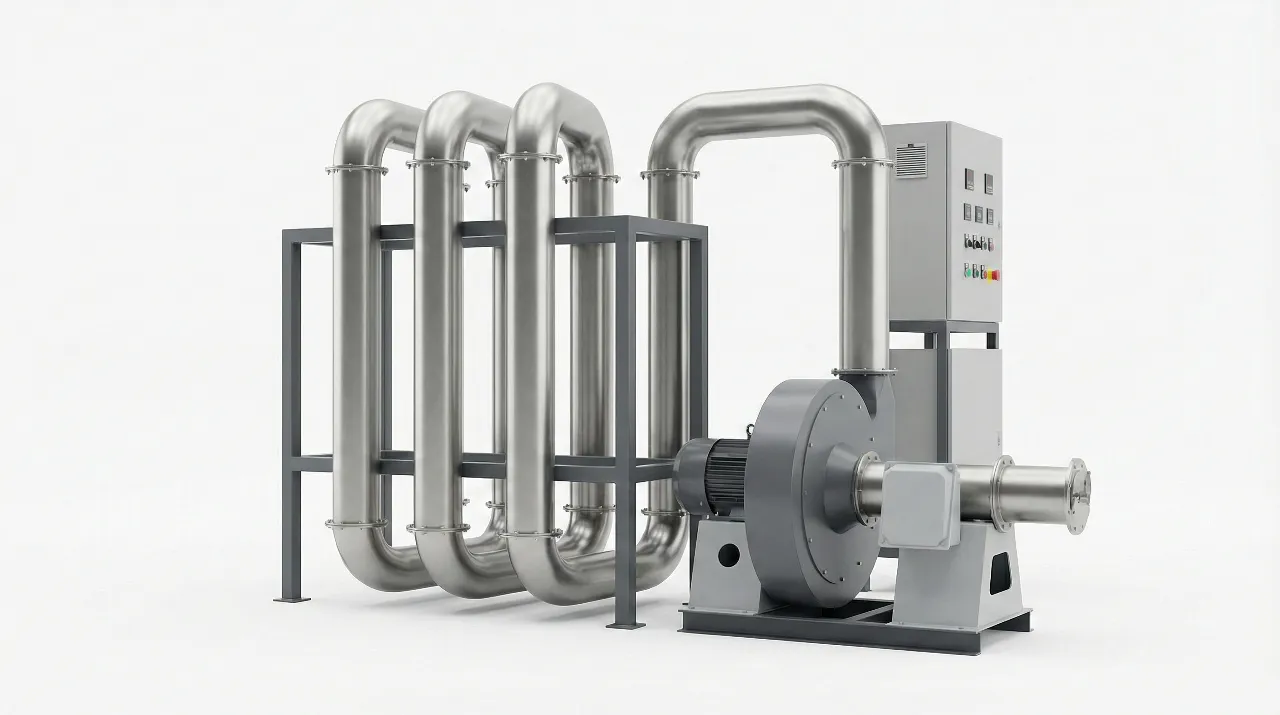
Thermal dryer hot-air tunnel and ductwork

Machine View: hot air, ductwork, and residence time

A thermal dryer is an airflow and residence-time system, not just a heater. The real engineering decision is how hot air, conveying speed, and duct length interact with the material.

  • Clarifies why blower capacity and duct routing matter
  • Shows thermal drying as the final quality gate after dewatering
  • Useful when comparing one-heater and multi-heater routes

Process View: residual moisture down to the extrusion window

The thermal dryer is usually chosen when centrifugal dewatering has already removed bulk water but the line still needs lower, more stable residual moisture for extrusion or high-grade flake output.

  • Useful for final moisture reduction after mechanical dewatering
  • Supports steadier extrusion pressure and fewer moisture defects
  • Can be configured for stricter targets with multiple heater stages
Prepared dry recycled plastic material after thermal drying

Thermal Dryer Demo

A thermal dryer is most useful when it is understood as the final moisture-control stage after dewatering, not as a standalone heater tunnel.

Typical Thermal Dryer Use Cases

Related searches in this topic usually connect thermal dryers to washed film, PET flakes, strict extrusion targets, and retrofit upgrades after centrifugal drying. Those are also the practical buying routes.

Film Washing Lines

For film fractions that still need lower, tighter moisture after centrifugal or squeezing stages before extrusion.

PET Flake Drying

For PET lines that need a final drying block before extrusion or high-spec flake transfer.

Rigid Regrind Conditioning

For washed rigid HDPE or PP fractions where mechanical dewatering reduces bulk water and thermal drying closes the remaining moisture gap.

Extrusion-Focused Retrofits

For existing lines that already dewater mechanically but still see steam-related quality issues at the pelletizer or extruder.

Higher-Spec Moisture Targets

For projects that need a tighter final moisture window than a single mechanical dewatering stage can provide.

Continuous Recycling Lines

For longer-hour operations where stable residual moisture matters more than a headline dryer model number.

Reference Configurations

These are planning references. Real final moisture depends on inlet condition after dewatering, material type, airflow tuning, and the downstream quality target.

ConfigurationBest FitTypical Final Moisture*Key Notes
Single-Stage Thermal DryerGeneral post-dewatering drying<3% in many standard routesOften enough when the line already has effective mechanical dewatering
Enhanced Thermal RouteMore demanding film or flake dryingLower and more stable than a basic single-stage routeUseful when downstream extrusion is more moisture-sensitive
Multi-Heater Thermal DryerStricter moisture targetsProject-specificSelected when one stage cannot hold the target moisture window reliably
Centrifugal + Thermal PackageMost common integrated drying routeCase-specificThe upstream dewatering result defines how hard the thermal stage has to work

The final moisture target must always be matched to the real inlet condition after dewatering and to the extrusion or discharge quality requirement.

Thermal Dryer Checklist Before RFQ

These inputs matter more than heater kW alone when you are choosing a final drying route.

Material and Inlet Condition

State whether the feed is washed film, PET flakes, or rigid regrind and share the moisture range after the upstream dewatering stage.

Final Moisture Requirement

Clarify the final moisture window needed for pelletizing, extrusion, packaging, or another downstream process.

Existing Line Layout

Send the upstream dewatering equipment, discharge method, cyclone arrangement, and available duct routing so the thermal path is not sized in isolation.

Utilities and Energy Priorities

Share power supply, available footprint, airflow constraints, and whether the project prioritizes lower kWh, tighter moisture, or easier retrofit integration.

Why Generic Thermal Dryer Quotes Miss the Real Decision

Decision CriteriaHeater-Only QuoteRumtoo Thermal Drying Route
Inlet conditionIgnores the result of upstream dewateringStarts with the real moisture window after mechanical dewatering
Drying logicTreats installed kW as the main sizing factorUses airflow, residence time, and target moisture together
Moisture promiseMakes a generic final dryness claimLinks the promise to material type and full line configuration
Retrofit fitQuotes a dryer as a standalone machineSizes the ducting and blower route as part of the existing line

Frequently Asked Questions

Why is a thermal dryer still needed after a dewatering machine?

Because the upstream mechanical stage usually removes bulk free water first, while the thermal dryer evaporates the remaining residual moisture needed for tighter downstream quality control.

What final moisture level is realistic?

A common target is a low single-digit residual moisture range, but the real answer depends on the material, the condition after dewatering, and the downstream process target.

Can one thermal dryer handle both film and PET flakes?

Sometimes, but only when airflow, residence time, and line integration are configured for those materials. The route should be sized around the actual material mix, not assumed from a generic model list.

How do I keep thermal drying efficient?

The main controls are stable inlet condition, clean filters and ducts, matched airflow, and avoiding a thermal stage that is oversized for the actual line requirement.

What data should I send before model selection?

Send material type, inlet moisture after dewatering, target kg/h, final moisture requirement, current line layout, available utilities, and any retrofit constraints around duct routing or blower placement.

Need a Final Drying Stage After Dewatering?

Share your material, inlet moisture after dewatering, throughput, and final moisture target. Rumtoo will tell you whether a thermal dryer is required and how the airflow route should be configured.

Request Thermal Dryer Proposal