
Integrated Size Reduction System

Integrated Shredder & Crusher Machine for Bulky Plastic Waste

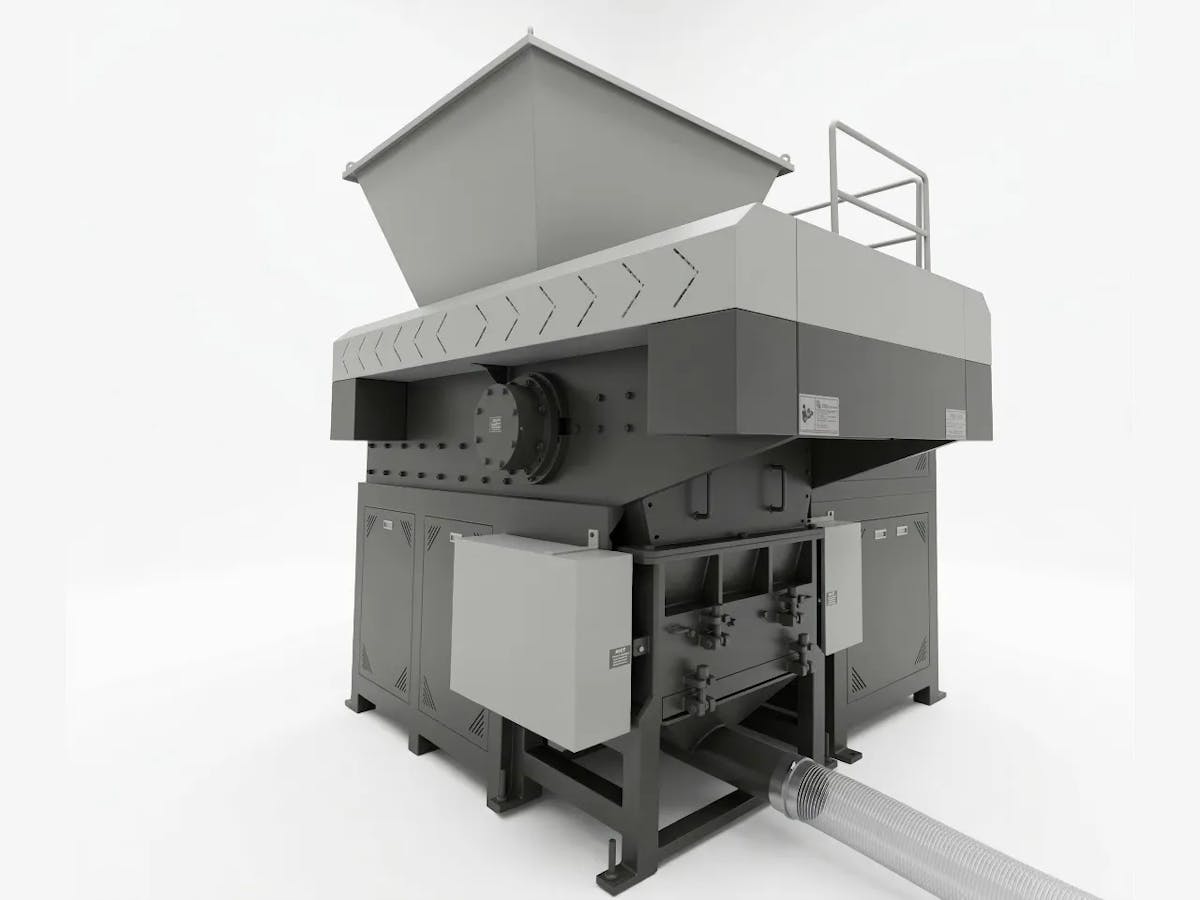
An integrated shredder-crusher combines low-speed primary shredding and high-speed final crushing in one compact machine body. It handles bulky, thick, and irregularly shaped plastic waste — purge lumps, thick sheets, drums, pipes, injection runners — that cannot be fed directly into a standalone crusher. Rumtoo sizes the shredder-crusher around the actual feedstock, target particle size, and downstream process so the two stages work together without bottlenecks.

Scroll
Integrated Shredder and Crusher Machine

Why Two-Stage Reduction in One Machine — Not a Single Granulator

A standalone granulator requires pre-sized input. Feed it a purge lump, thick drum, or long pipe and it jams, overheats, or produces oversized rejects. The integrated shredder-crusher solves this by splitting the job into two coordinated stages inside one frame.

1

Low-Speed Shredding — Break Down Bulk Without Jamming

The upper shredder rotor operates at low speed and high torque (typically 60–100 RPM), tearing bulky waste into coarse 40–80 mm pieces. Low-speed operation means less dust, lower noise, and no risk of the melting or smearing that high-speed cutters cause on soft plastics. This is why a shredder — not a granulator — must handle the first stage.

2

PLC-Coordinated Load Balancing

The PLC monitors current draw on both motors in real time. If the shredder encounters a hard object, it auto-reverses to clear the jam. If the crusher approaches overload, the PLC slows the shredder feed rate automatically. This coordination is the key advantage over running two separate machines with independent controls.

3

High-Speed Crushing — Controlled Final Particle Size

Pre-shredded material drops directly into the crusher chamber below. High-speed rotating blades cut material against fixed counter-knives, and an interchangeable screen (10 mm, 20 mm, or 30 mm) recirculates oversize until everything passes through. The result is a uniform regrind ready for pelletizing, washing, or extrusion.

4

Direct Discharge — No Intermediate Conveyor Needed

Sized regrind exits the screen and feeds directly into the next process stage — conveyor to washer, storage silo, or extruder. Eliminating the transfer conveyor between shredder and crusher saves floor space, reduces maintenance points, and cuts wiring and installation cost.

Key Advantages Over Separate Shredder + Crusher Setups

The integrated design is chosen when floor space is limited, installation budgets are tight, or operators cannot manage two independent machines. Here is what the combo delivers that separate units do not.

65%+ Floor Space Reduction

A separate shredder, transfer conveyor, and crusher typically occupy 8–12 m² of floor space. The integrated machine combines all three functions in a single footprint of roughly 3–4 m². For in-plant scrap recovery rooms and small recycling facilities, this difference often decides whether two-stage reduction is feasible at all.

Lower Energy Consumption per kg of Output

Because material drops directly from the shredder into the crusher by gravity — no conveyor motor, no second hopper, no re-acceleration — the integrated design eliminates the energy overhead of intermediate handling. Operators report measurable kWh/kg savings compared to equivalent separate-machine setups at the same throughput.

Single PLC — Coordinated, Not Just Connected

Two separate machines with independent PLCs can be wired together, but they still react to overloads independently. The integrated PLC sees both shredder and crusher current draw simultaneously and adjusts feed rate, reversal, and shutdown as a single system. This produces steadier crusher loading, more uniform regrind, and fewer manual interventions.

Problems the Integrated Machine Solves

Most of these issues come from trying to feed bulky plastic directly into a standalone granulator, or from running a shredder and crusher as two disconnected machines with separate controls.

Problem

Granulators jam, overheat, or produce oversized rejects when fed purge lumps, thick drums, or long pipes.

Rumtoo Solution

The integrated low-speed shredder pre-reduces bulky input to 40–80 mm pieces the crusher can handle cleanly — no bridging, no motor stalling, no melting of soft plastics from high-speed friction.

Problem

A separate shredder + conveyor + crusher setup takes too much floor space and installation budget.

Rumtoo Solution

The integrated design eliminates the transfer conveyor and combines both stages in roughly 3–4 m² — over 65% less floor space than the separate setup, with fewer electrical connections and a single foundation.

Problem

Two separate machines with independent PLCs respond to overloads independently, causing feed surges and inconsistent output.

Rumtoo Solution

The single integrated PLC monitors both motor currents simultaneously. If the crusher approaches overload, it slows the shredder — producing steadier output and fewer manual interventions than two disconnected controllers.

Problem

High noise levels from the crusher make the workshop environment uncomfortable and require hearing protection.

Rumtoo Solution

The shredder stage operates at low speed (60–100 RPM) with minimal noise. The crusher is enclosed within the integrated frame, reducing overall noise compared to a standalone open-frame granulator processing the same material.

Equipment and Material Reference

The shredder breaks down bulky input into manageable pieces; the crusher below refines them to a controlled final particle size through a sizing screen.

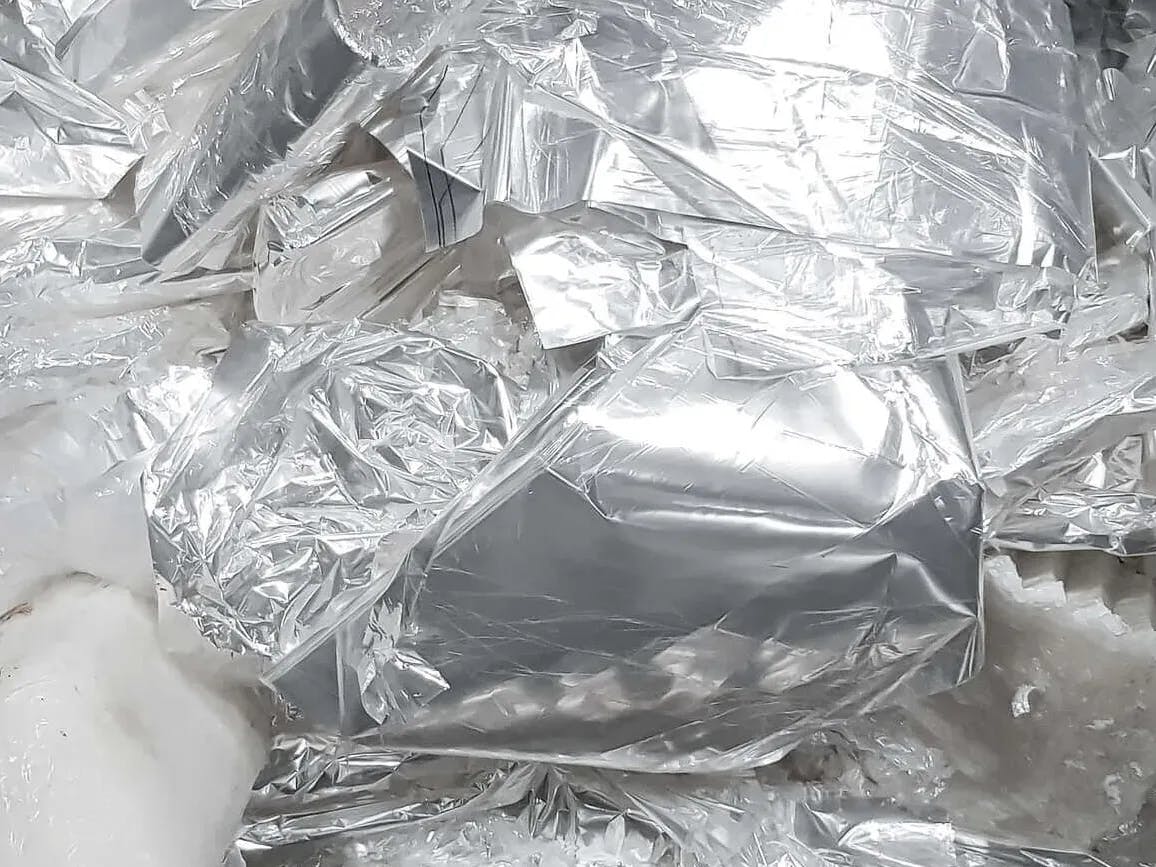
Waste BOPP film before shredding

Feedstock View: bulky waste BOPP film before processing

The integrated shredder-crusher is designed for feedstock that cannot be fed directly into a standalone crusher — thick sheets, large containers, purge lumps, film bales, and other bulky rigid or semi-rigid plastic waste that needs primary size reduction before final granulation.

  • Handles irregularly shaped and oversized plastic waste
  • Low-speed shredder prevents jamming on thick and bulky feedstock
  • No manual pre-cutting required before feeding
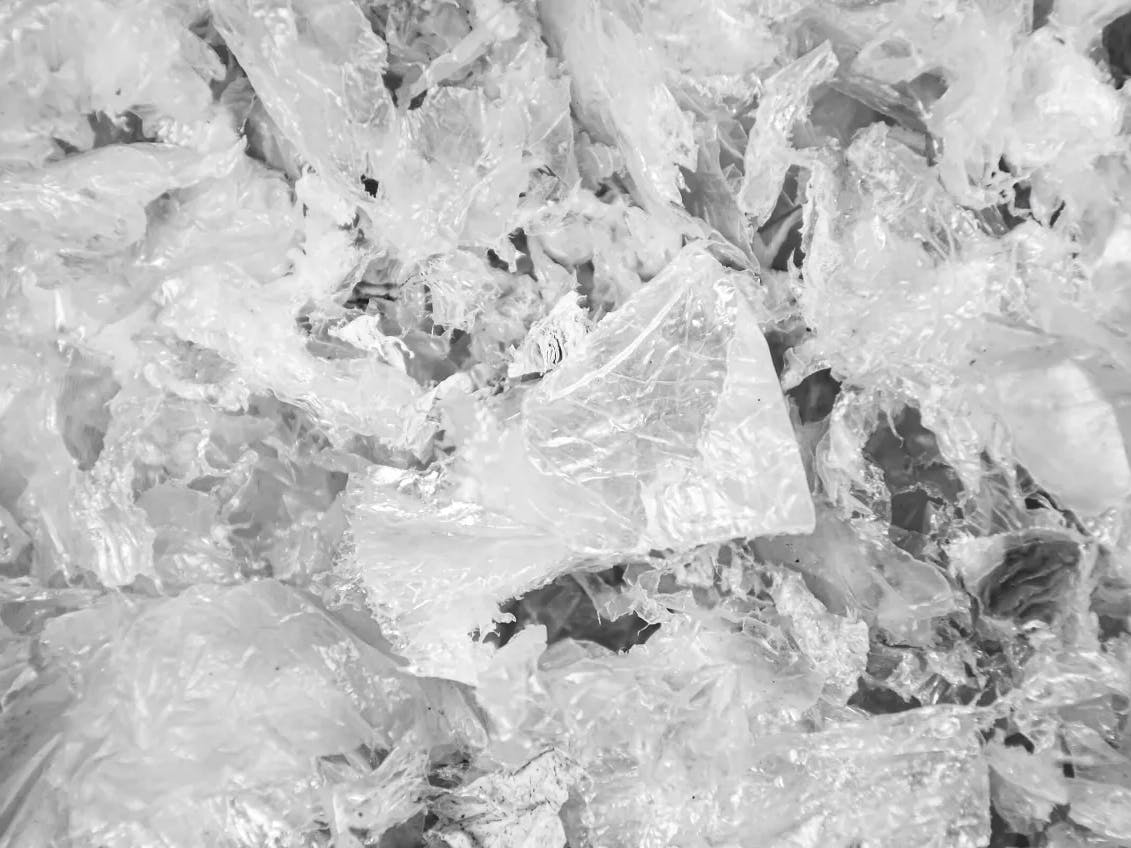
Output View: shredded material ready for downstream processing

After passing through both the shredder and crusher stages, the output is a uniformly sized regrind controlled by the crusher screen. This consistent particle size feeds directly into washing lines, pelletizers, or extruders without additional sizing steps.

  • Crusher screen controls final particle size (10–30 mm typical)
  • Consistent regrind size improves downstream washing and extrusion stability
  • Ready for direct feeding to pelletizing, washing, or reprocessing
Shredded BOPP film after integrated shredder-crusher processing

Wide Range of Applications

Designed for tough, bulky plastic materials that standard granulators cannot process efficiently on their own.

  • Purge Lumps

    Large compact masses from extrusion or compounding lines that are too dense and irregularly shaped for a standalone crusher.

  • Thick Sheets & Plates

    Thermoformed sheet scrap, offcuts, and heavy plate-like materials with wall thickness above 5–10 mm.

  • Drums & Barrels

    Rigid HDPE or PP containers that need primary breakdown before final granulation to controlled particle size.

  • Pipes & Profiles

    Long or hollow rigid PVC, PE, or PP sections that require staged size reduction to avoid crusher jamming.

  • Injection Runners & Sprues

    Heavy sprues and runner systems from injection molding operations that are too bulky for direct granulation.

  • Automotive & Large Molded Parts

    Bumpers, trims, housings, tanks, jerry cans, and other large blow-molded or injection-molded plastic scrap.

Technical Specifications

Combined drive power for bulky plastic scrap with controlled final output.

ModelMotor Power (Shredder + Crusher)Output Capacity (kg/h)Key Features
RTM-300-SG30 kW + 22 kW200–300Compact frame, ideal for in-plant scrap recovery and small recycling operations
RTM-500-SG45 kW + 22 kW400–600Higher throughput, suits medium-scale post-industrial and post-consumer recycling

Output varies based on material density, wall thickness, and selected screen size. Contact Rumtoo with your material data for a confirmed capacity estimate.

Checklist Before RFQ

These inputs help Rumtoo recommend the right model and screen configuration for your application.

Feedstock Type and Dimensions

Describe the material — purge lumps, drums, pipes, sheets, runners, etc. Include approximate maximum dimensions and wall thickness.

Target Particle Size

State the final regrind size your downstream process requires — typically 10 mm, 20 mm, or 30 mm for pelletizing or washing lines.

Throughput Requirement

Provide the target kg/h and daily operating hours so the motor power and feed system are sized with adequate margin.

Downstream Process

Specify what comes after the shredder-crusher — washing line, pelletizer, extruder, or storage — so the discharge and regrind size are matched.

Shredder vs. Crusher vs. Granulator vs. Integrated Machine

CriteriaStandalone ShredderStandalone Crusher / GranulatorRumtoo Integrated Shredder-Crusher
Operating speedLow speed, high torque (60–100 RPM)High speed (300–600 RPM)Low-speed shredder + high-speed crusher in sequence
Input materialAccepts bulky, thick, irregular shapesRequires pre-sized input (< 50–80 mm)Accepts bulky input directly — no pre-cutting needed
Output controlCoarse, no screen — output size variesScreen-controlled uniform regrindScreen-controlled uniform regrind from bulky feed
Floor space (typical)~4–6 m² (machine only)~3–5 m² (machine only)~3–4 m² (both stages combined)
Noise levelLow (low-speed tearing)High (high-speed cutting)Moderate — shredder stage is quiet, crusher stage enclosed
Blade wear patternSlow wear, infrequent changesFaster wear, frequent sharpeningShredder blades last longer; crusher blades follow standard schedule
Best forPrimary size reduction onlyPre-sized scrap to uniform regrindBulky scrap needing both stages in limited space

Frequently Asked Questions

What is the difference between a shredder, a crusher, and a granulator?

A shredder operates at low speed and high torque (60–100 RPM) to tear bulky material into coarse pieces — it handles irregular shapes but does not produce uniform output. A crusher or granulator operates at high speed (300–600 RPM) with blades cutting against counter-knives and a sizing screen to produce controlled, uniform regrind — but it needs pre-sized input and jams on oversized material. An integrated shredder-crusher combines both stages: the shredder handles the bulky feed, and the crusher below produces the final uniform particle size.

Why put a shredder in front of a crusher instead of using a crusher alone?

A standalone crusher requires relatively small, uniform input. If you feed it purge lumps, thick drums, or long pipes, the material bridges across the feed opening, overloads the motor, or jams the rotor. A shredder in front breaks these bulky items down to a size the crusher can process cleanly. The integrated machine does this in one frame without needing a separate transfer conveyor.

How much floor space does the integrated machine save compared to separate units?

A separate shredder, transfer conveyor, and crusher typically occupy 8–12 m² of combined floor space. The integrated design combines all functions in roughly 3–4 m² — a reduction of 65% or more. This is particularly important for in-plant scrap recovery rooms and small recycling facilities.

What materials can this machine process?

It is designed for bulky and thick plastic waste: purge lumps from extrusion or compounding, thick sheets and plates, drums, barrels, pipes, profiles, injection runners and sprues, automotive bumpers and housings, blow-molded containers, and other large rigid or semi-rigid parts that are too big to feed directly into a granulator.

How is the final particle size controlled?

By the crusher screen. Standard screen sizes are 10 mm, 20 mm, and 30 mm. Material recirculates in the crusher chamber until it passes through the screen holes, ensuring uniform output. Screens are interchangeable, so you can switch to a different size when the downstream process changes.

What blade material is used and how long do blades last?

Shredder blades are typically made from hardened alloy tool steel (e.g., SKD11 / D2) with hardness HRC 58–62. Crusher blades use similar or slightly tougher steel. Shredder blades last longer because of the low-speed operation — typical resharpening interval is 500–1000 operating hours depending on feedstock. Crusher blades require more frequent resharpening (200–500 hours) due to high-speed cutting. Both are designed for field resharpening and can be rotated to use all cutting edges before replacement.

How does noise compare to separate machines?

The shredder stage is inherently quiet (low-speed tearing creates much less noise than high-speed cutting). The crusher stage generates more noise but is enclosed within the integrated frame. Overall noise levels are comparable to or slightly lower than a standalone granulator of similar capacity, and significantly lower than running both machines side by side with open transfer.

What maintenance does the machine need?

Routine maintenance includes blade inspection and resharpening, screen condition checks, lubrication of bearings, belt tension checks, and PLC system diagnostics. The integrated design has fewer maintenance points than separate machines because there is no transfer conveyor, no extra hopper bearings, and no additional motor to service. Quick-access panels allow blade and screen changes without major disassembly.

Can it replace a separate shredder and crusher setup?

Yes, for moderate throughput applications (up to ~600 kg/h). For very high throughput lines (above 1000 kg/h) or operations that need to run the shredder and crusher on completely different material streams simultaneously, separate machines may still be preferred.

Need a Compact Two-Stage Size Reduction Solution?

Share your material type, target output size, and hourly capacity. Rumtoo will recommend a suitable integrated shredder-crusher configuration.

Request a Quote