
Additive Manufacturing Circularity

Recycle Failed 3D Prints into Regrind, Pellets, or Filament

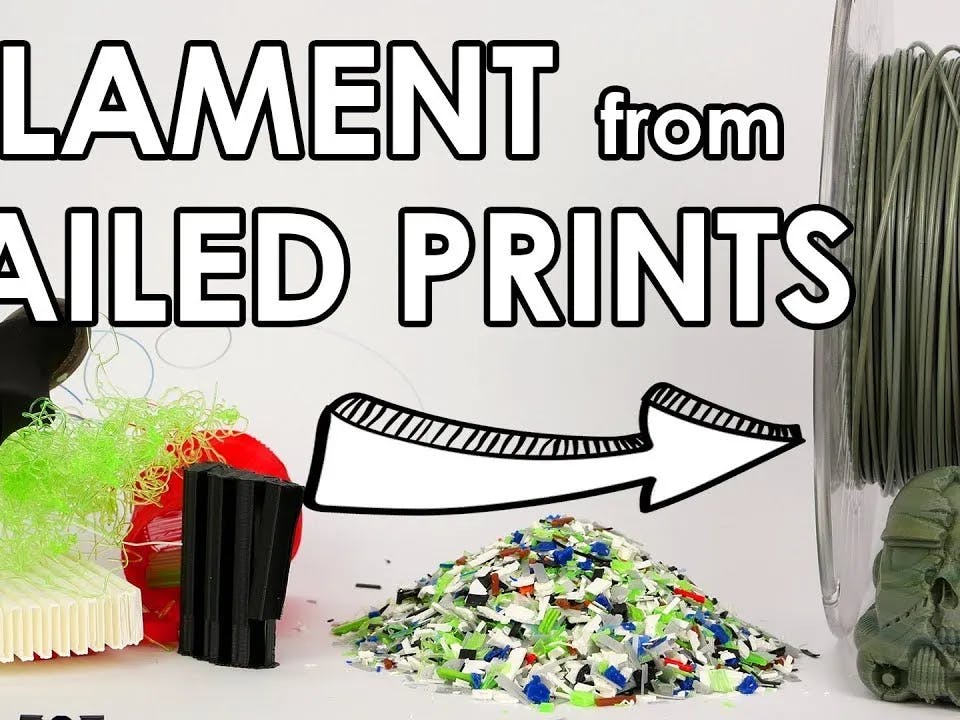
Build a practical recycling route for failed prints, supports, purge waste, and spool scrap from PLA, PETG, ABS, nylon, TPU, and selected engineering materials. Rumtoo matches shredding, screening, drying, blending, pelletizing, and filament extrusion to the material mix and your real quality target instead of promising a generic closed loop.

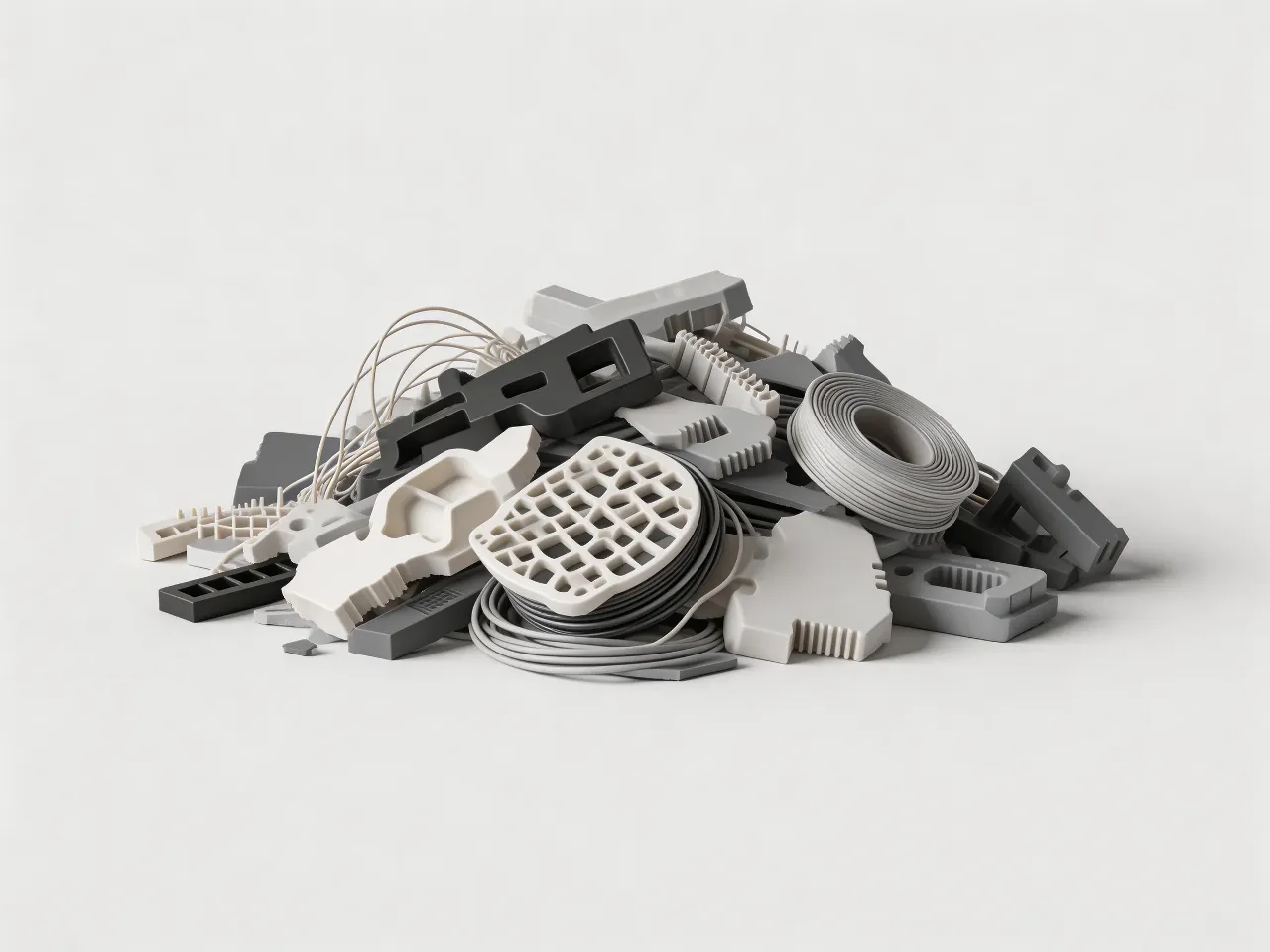
Failed 3D prints and plastic scrap prepared for recycling

3D Print Scrap Recycling Workflow

The winning route usually starts with material segregation and ends with a realistic quality-control plan.

1

Segregate by Polymer, Color, and Additives

Separate PLA, PETG, ABS, nylon, TPU, and filled grades before grinding. Mixed resin families, carbon-fiber blends, metal-filled grades, and dark-color carryover are the main reasons recycled filament becomes unstable.

2

Shred, Granulate, and Screen

Desktop or industrial shredders reduce failed prints and supports into repeatable regrind. Screening is added when the extruder needs tighter feed consistency than raw shred alone can deliver.

3

Dry and Condition the Regrind

Drying and fines control are sized to the polymer family and humidity exposure. Even when material looks dry, residual moisture can still create bubbles, brittle filament, or unstable melt flow.

4

Choose Direct Filament or Pellet-First

Direct scrap-to-filament routes work for some controlled lab loops, but pellet-first routes usually give better blending, filtration, and scale-up flexibility. The right answer depends on throughput, contamination, and diameter tolerance targets.

What Buyers Actually Need from a 3D Waste Recycling Route

Better Feed Traceability

Segregation by polymer, color, filler, and scrap source creates a more defensible recycled-content workflow than simply grinding everything together.

More Stable Extrusion and Diameter Control

Controlling regrind size, moisture, and blend ratio improves melt consistency before pelletizing or filament extrusion.

Clear Path from Lab to Pilot

Rumtoo can stage the route from desktop trials to pilot and industrial modules without forcing teams to overbuy too early.

Common Failure Modes in 3D Print Waste Recycling

Problem

Rumtoo Solution

PLA, PETG, ABS, nylon, and filled grades are mixed together, so the recycled output behaves unpredictably at the extruder and printer.

Rumtoo starts with segregation logic, batch labeling, and recipe-based blending so the process is built around one defined material window instead of mixed scrap.

Problem

Rumtoo Solution

Moisture in PETG, nylon, TPU, and even ambient-exposed PLA leads to bubbles, stringing, brittle filament, and poor layer appearance.

Drying and buffer handling are matched to the resin family, exposure history, and output route so the extruder sees a controlled feed condition rather than wet regrind.

Problem

Rumtoo Solution

Large shards, powder fines, and uneven chips cause feeder surging and make direct filament extrusion difficult to stabilize.

Configured shredding plus optional screening narrow the particle window before extrusion, which improves hopper flow and melt consistency.

Problem

Rumtoo Solution

Teams assume a 100% closed loop is always possible, then discover property loss, contamination, or color drift after repeated cycles.

Rumtoo frames the project around realistic reuse logic: controlled blends, testing, and quality windows instead of an unlimited-loop sustainability claim.

Machine and Material Reference

These views show the real handoff from failed prints to controlled feed preparation and recycled output.

Failed 3D prints collected for recycling

Input Stream: Failed Prints and Support Waste

Before any extrusion decision is made, the scrap stream has to be segregated and prepared. Failed prints, supports, purge material, and spool rejects should be assessed by polymer family, fillers, and visible contamination.

  • Segregation quality often matters more than nominal shredder throughput
  • Mixed filler grades and dark-color carryover reduce reuse consistency
  • Supports better planning for lab, pilot, and industrial recycling loops

Prepared Output: Regrind, Pellets, or Filament

Once the material is shredded, screened, dried, and optionally pelletized, the route can move into controlled filament extrusion or into pellet storage for later conversion. The target output state decides how much process control the line needs.

  • Regrind route for simple reuse or compounding trials
  • Pellet-first route for stronger blending and QA control
  • Direct filament route for smaller, highly traceable material loops
Filament extrusion line for recycled 3D printing material

Typical 3D Printing Waste Streams

Failed Prints, Supports, and Purge Waste

Internal print-room scrap that is relatively traceable by polymer family and suitable for closed-loop trials or controlled recycled-content programs.

University and Makerspace Programs

Educational circularity setups where students and researchers need visible material flow from print waste to regrind, pellets, or filament.

Industrial Additive Manufacturing Cells

Support waste and off-spec parts from service bureaus, prototype centers, and serial AM programs that need documented material handling.

Filament Development and Blend Validation

Pilot recycling programs that compare virgin and recycled content, verify printability, and test diameter control across different blend ratios.

Spool, Startup, and Changeover Scrap

Material discarded during grade changes, line startup, filament winding, or spool rejection, routed back into a controlled recovery loop.

Reference Process Configurations

Route FamilyTypical ThroughputTypical OutputConfiguration Notes
R3D-LAB2-15 kg/hRegrind or trial filamentDesktop shredder + screening option + dryer + mini extruder
R3D-PILOT15-80 kg/hRegrind, pellets, or pilot filamentPilot shredding + drying + pelletizing or filament module
R3D-FILAMENT5-40 kg/h filament1.75 mm or 2.85 mm filamentBest for sorted, conditioned feed and tighter diameter targets
R3D-PELLET30-150 kg/hPellets for later filament extrusionPreferred when blending, filtration, and QA hold points are important
R3D-CUSTOMProject-basedMatched to your loop objectiveConfigured around resin family, contamination, blending strategy, and scale plan

Actual performance depends on polymer segregation discipline, moisture control, filler content, contamination load, target blend ratio, and whether the final product is regrind, pellets, or finished filament.

3D Print Recycling Checklist Before RFQ

These inputs matter more than a generic throughput figure when the goal is stable recycled filament or pellets.

Material Segregation Plan

List each polymer family separately and note whether colors, carbon-fiber grades, glass-filled compounds, flexible materials, or support materials are mixed into the stream. If you cannot segregate them, say so early because it changes the viable process route.

Scrap Form and Contamination

Specify whether the input is failed prints, purge strands, supports, spool scrap, edge trim, or mixed workshop waste. Also note dust, labels, metal inserts, tape, adhesives, and whether prints carry paint or post-processing residue.

Output Route and Quality Target

Clarify whether you need reusable regrind, pellet output, or direct filament, and define the real acceptance window: target filament diameter, roundness, moisture, blend ratio, printability, or laboratory test criteria.

Utilities, Testing, and Scale-Up Plan

Provide power supply, ambient humidity, drying method preference, available footprint, and whether the project is a desktop trial, pilot validation, or a higher-throughput production route. That determines how much screening, drying, filtration, and buffering the line needs.

Direct Filament vs Pellet-First Route

Decision CriteriaDirect Scrap-to-FilamentPellet-First Route
Feed Consistency NeedNeeds a very narrow shred and moisture windowMore tolerant because pelletizing adds another stabilization step
Blending FlexibilityLimited room for recipe correctionBetter for adding virgin resin, color masterbatch, or tested recycled ratios
Filtration and Melt CleanupLess process margin before diameter controlUsually better when contamination or fines need stronger management
Scale-Up PathUseful for controlled lab loopsUsually stronger for pilot and production growth
Best FitSmall, sorted, traceable streams with tight operator controlPrograms that need repeatability, QA hold points, and broader material validation

Frequently Asked Questions

Can PLA, PETG, ABS, and nylon scrap be recycled together?

Not if you want consistent pellets or filament. Different resin families melt, dry, and print differently, so the practical route is to separate them first and only blend materials intentionally after testing.

Can failed prints go directly back into new filament?

Sometimes, yes, but only when the stream is well sorted, clean, dry, and close to one recipe. Many programs still use blending or a pellet-first route because repeated thermal history can change print behavior.

Do I need drying before recycled filament extrusion?

In many cases, yes. PETG, nylon, TPU, and moisture-exposed regrind usually need drying, and even PLA can benefit from controlled drying after storage or grinding. Skipping this step often shows up as bubbles, poor surface quality, or weak filament.

Is direct filament extrusion better than pellet-first recycling?

Neither route wins in every case. Direct filament can work for small, clean, well-controlled loops, while pellet-first recycling usually gives better blending, filtration, and scale-up flexibility.

What data should I send before equipment selection?

Send feed photos, polymer list, whether materials are mixed, scrap type, moisture exposure, target output, target kg/h, desired filament diameter if relevant, and any testing criteria. Those details determine whether the line needs screening, drying, pelletizing, or direct filament extrusion.

Need a Practical 3D Print Waste Recycling Proposal?

Share your polymer mix, scrap types, target output, and scale plan. Rumtoo will return a realistic route covering segregation, size reduction, drying, and pellet or filament conversion.

Request Recycling Proposal