Film Loading Into Hopper
Baled or loose film and woven bags are loaded into the wide hopper. The low hopper height makes loading easier with forklifts or by hand without extra conveyors.
Industrial Shredders
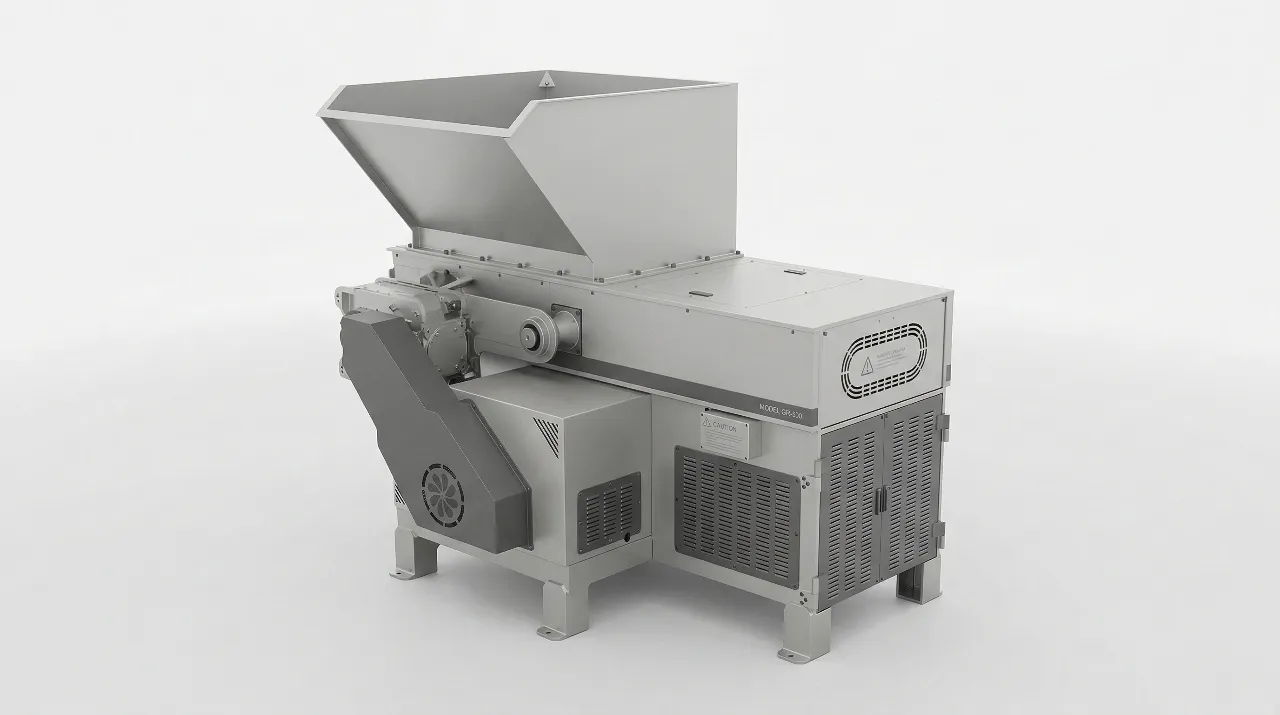
Film and woven bags tangle, wrap rotors, and stall standard machines. This shredder is configured for flexible feedstock: an anti-wrap rotor, adjustable knife spacing, and a hydraulic pusher that keeps light materials feeding steadily without stopping the line to clear jams.

The key difference is rotor geometry and pusher design — both calibrated for lightweight, flexible, and tangling feedstock.
Baled or loose film and woven bags are loaded into the wide hopper. The low hopper height makes loading easier with forklifts or by hand without extra conveyors.
The hydraulic pusher arm pushes light material into the cutting zone at a controlled rate. This prevents the rotor from spinning with material floating above it — the most common cause of low throughput on film.
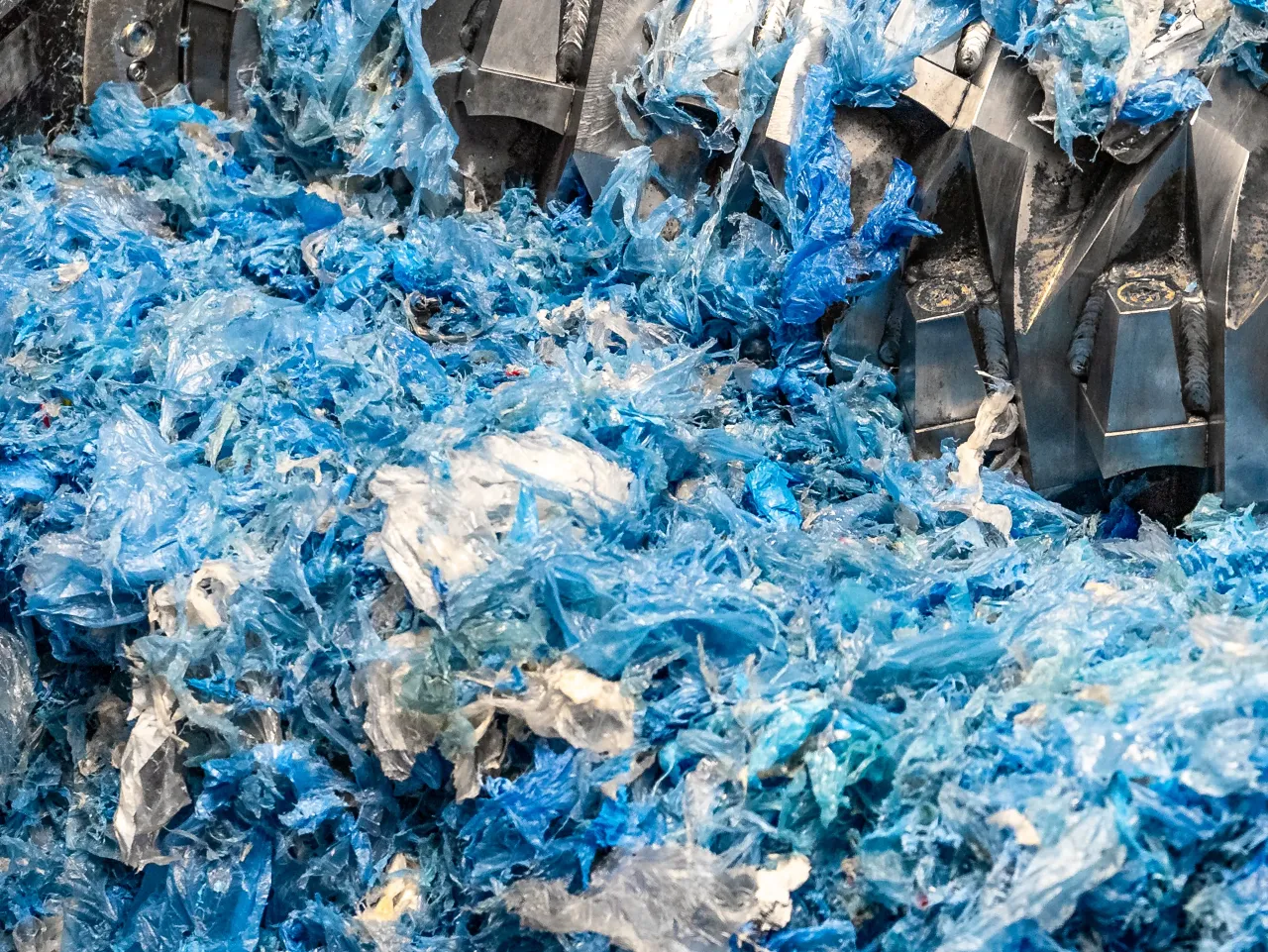
The rotor blade geometry and spacing are designed so film shreds rather than wraps around the shaft. Knife angle and screen gap are calibrated for flexible material to maintain consistent throughput.
Shredded film exits through a bottom screen into a blower, conveyor, or densifier inlet. Screen size is selected based on whether output feeds a washing line, compactor, or direct pelletizer.
Standard rotors accumulate film wrapping over time, requiring stops to clear. The anti-wrap geometry significantly reduces this issue and keeps the line running with fewer interruptions.
Film and woven bags don't gravity-feed well into a rotating rotor — they float and fold. The pusher forces material into the cutting zone consistently, matching actual film density.
Output can feed a densifier/compactor for agglomeration, a friction washer for cleaning, or a pelletizer directly — depending on the screen size selected and the contamination level.
Both baled agricultural film and loose flexible packaging scrap can be fed directly. Pre-opening of bales is not always required if the hopper and pusher configuration match the bale size.
Film wraps around the rotor and stalls the machine repeatedly.
The anti-wrap rotor blade geometry shreds rather than grabs flexible material, reducing wrapping frequency significantly compared to standard solid rotors.
Light baled film floats above the rotor and does not feed consistently.
The hydraulic pusher arm pushes material into the cutting zone at a controlled rate, solving the core feeding problem on low-density flexible feedstock.
Output size is too inconsistent for the downstream washing or compacting step.
Screen selection controls the output window. Rumtoo selects the screen based on whether output goes to a washer, densifier, or pelletizer.
The machine handles clean film but stalls on soil-contaminated agricultural film.
Knife configuration and screen gap are adjusted for post-harvest film with soil load. Heavily contaminated material may require pre-washing or trommel pre-separation first.
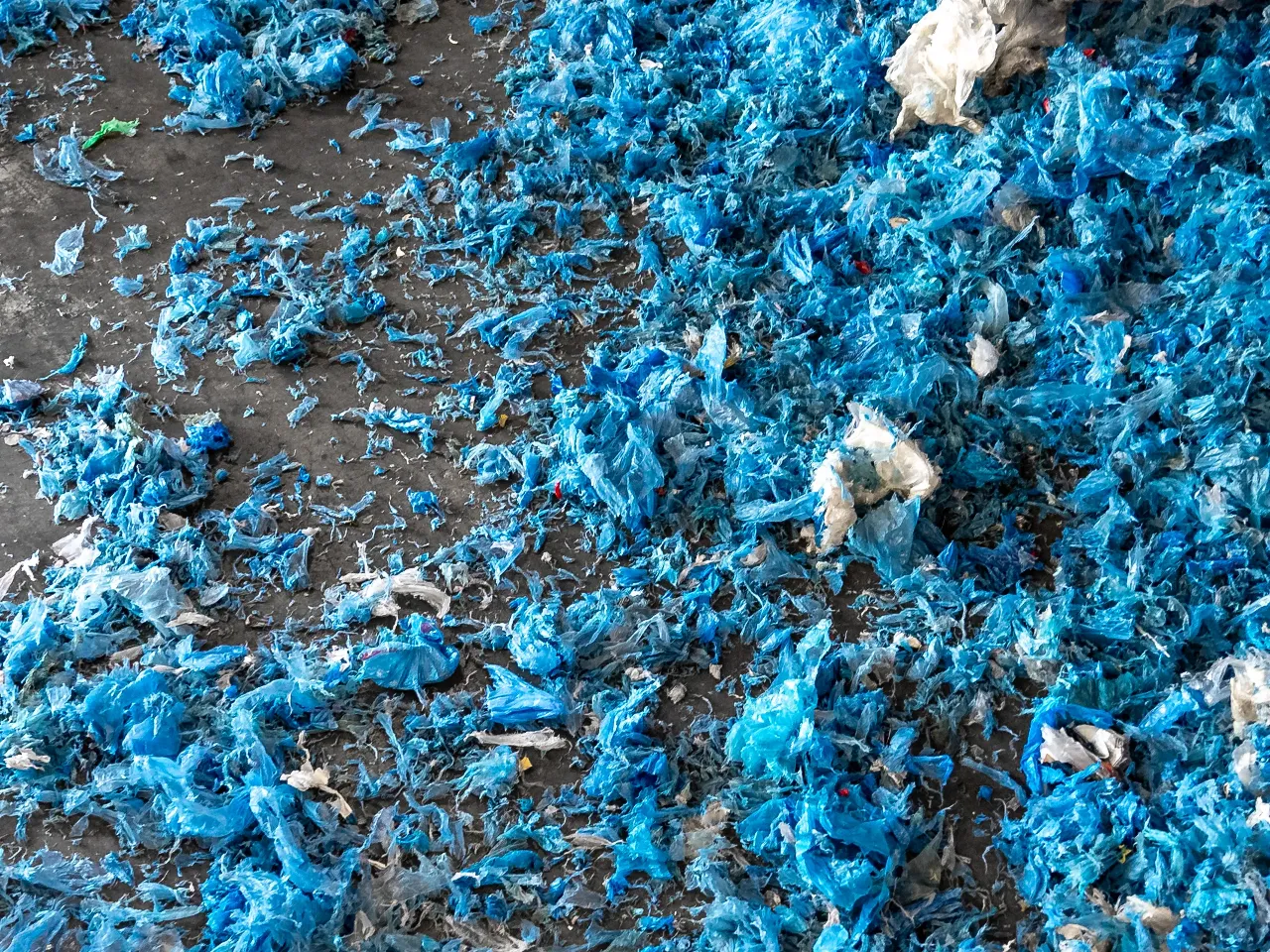
Visual references for flexible film and woven bag feedstock conditions and shredded output quality.

Use this reference to evaluate film bulk density, contamination type, and bale form before confirming the shredder model and pusher configuration.
Shredded strips are ready for a densifier/agglomerator, friction washer, or direct pelletizer inlet depending on the screen size and contamination level.

View the machine workflow under real operating conditions.
Greenhouse cover film, silage wrap, and mulch film — often with high soil and organic contamination — processed into pre-shred for a washing line.
Used PP woven bags, 1-ton big bags, and raffia scrap reduced into strips for densification, washing, or direct pelletizing.
Industrial stretch wrapping, pallet film rolls, and shrink film rejects processed into consistent output for a compactor or extruder.
Multi-layer or single-layer flexible packaging waste from FMCG lines and distribution centers, processed before separation or pelletizing.
Short fibre raffia, packaging rope, and mixed soft scrap that would tangle in standard machines is handled by the anti-wrap rotor configuration.
Used as a first-stage film size reducer before a friction washer, float-sink tank, or dryer — reducing bulk and improving washing efficiency at the downstream steps.
| Model | Typical Throughput | Sizing Reference |
|---|---|---|
| FS-Film-300 | 200–400 kg/h | Single shaft | 22 kW | Rotor ⌀400 mm | Feed 800×600 mm | Screen 30–50 mm |
| FS-Film-600 | 500–700 kg/h | Single shaft | 37 kW | Rotor ⌀500 mm | Feed 1000×800 mm | Screen 40–60 mm |
| FS-Film-1000 | 800–1200 kg/h | Single shaft | 55 kW | Rotor ⌀600 mm | Feed 1200×1000 mm | Screen 40–80 mm |
| FS-Film-2000 | 1500–2000 kg/h | Single shaft | 90 kW | Rotor ⌀800 mm | Feed 1500×1200 mm | Screen 50–80 mm |
Use these for planning only. Final model depends on film type, bale weight, contamination level, and whether output feeds a densifier, washing line, or pelletizer.
Film shredder sizing depends on material behavior, not just weight. These inputs determine the rotor, screen, and pusher configuration.
Specify LDPE agricultural film, LLDPE stretch film, PP woven bags, or mixed flexible packaging. Each has different cutting resistance, wrapping tendency, and bulk density after baling.
Tell us whether material is loose, lightly baled, or tightly compacted. Bale weight and density directly affect hopper design and pusher stroke selection.
Agricultural film with soil, wet silage residue, or embedded grit behaves differently than clean packaging film. Contamination changes knife wear rates and affects screen selection.
Confirm whether shredded output goes to a densifier/agglomerator, friction washer, or direct pelletizer. This determines the required screen size and output density.
| Criteria | Standard General-Purpose Shredder | Rumtoo Film Shredder |
|---|---|---|
| Rotor Design | Standard solid rotor — film wraps over time | Anti-wrap rotor geometry reduces film accumulation |
| Feed on Light Material | Film floats above rotor — throughput drops | Hydraulic pusher maintains constant feed on low-density material |
| Output Control | Output size varies with material flexibility | Screen size selected for downstream process (densifier, washer, pelletizer) |
| Selection Logic | Chosen by motor kW and general category | Chosen by film type, bale density, contamination, and downstream step |
This depends on bale weight and density. Lightly baled or hand-pressed film can often feed directly. Heavily hydraulic-pressed bales may need loosening first. Send bale dimensions and weight for a specific recommendation.
Output size depends on the screen selected. Typical screens are 30–80 mm for primary film shredding before a washing line or compactor. Smaller screens increase throughput time but give more uniform output.
Yes, mixed flexible feedstock is handled routinely. However, if the mix includes significant hard plastic contamination (clips, inserts, rigid packaging), knife wear and throughput should be reviewed.
The blade profile and spacing reduce the tendency of flexible material to accumulate around the shaft. It does not eliminate wrapping entirely but significantly reduces its frequency compared to solid standard rotors.
Film type, bale weight and form (loose or pressed), contamination description (soil, moisture, hard inclusions), required kg/h, and downstream process (densifier, washing, pelletizer).
Send your film type, bale form, contamination level, throughput target, and downstream process. Rumtoo will recommend the right model and configuration.
Request Film Shredder Proposal