Recycling Pelletizing Lines
Go back to the main pelletizing hub to compare rigid, film, PET, foam, and compounding-driven line families.

Recycling Pelletizing Lines
A rigid plastic pelletizing line for crushed hard flakes and regrind instead of fluffy film. Configure the PP pelletizing machine route with single-screw extrusion, progressive filtration, and strand or water-ring cutting.
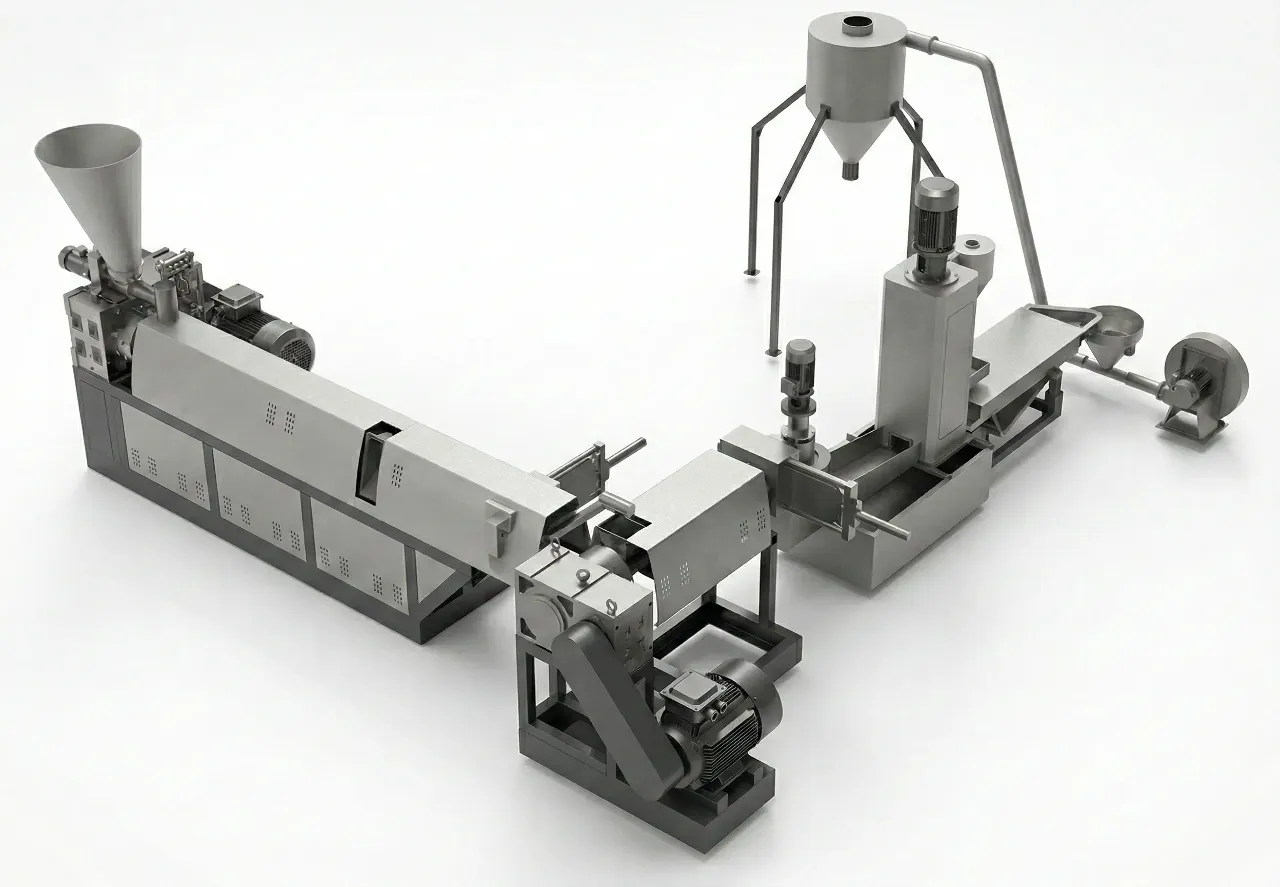
Rigid regrind buyers usually compare the hard plastic route against film pelletizing and broader recycling pelletizing line planning before requesting a final quotation.
Go back to the main pelletizing hub to compare rigid, film, PET, foam, and compounding-driven line families.
Use this page instead if your feedstock is washed PP PE film, raffia, or woven bags rather than dense rigid flakes.
Relevant when the real project is recipe development, additive loading, or higher-mixing compounding before production scale.
The best rigid plastic pelletizing line is chosen around flake behavior, filtration load, and pellet target rather than by extruder size alone.
Identify whether the line will run HDPE bottle flakes, PP regrind, ABS scrap, PS scrap, injection runners, or mixed rigid recycling streams with different bulk density and contamination patterns.
Dense rigid flakes need force-feeding and screw geometry designed for stable melting, while moisture or odor issues may justify stronger venting or a second stage.
Screen changer type, contamination tolerance, and strand versus water-ring cutting should all be selected around melt cleanliness and the target pellet application.
A rigid flakes pelletizing line should be specified according to whether the final pellets are for in-house molding, extrusion reuse, blending, or resale into the market.
Six model sizes from 100 to 1,200 kg/h covering small-workshop to large-factory capacity, all with matched screw, filtration, and pelletizing configuration.
Six standard models from SJ85 to SJ180 cover 100–1,200 kg/h. Choose the right model for your resin type, flake size, and production target without over-specifying.
Water-strand pelletizing for standard resins, water-ring pelletizing for higher throughput and softer materials — matched to your resin and pellet quality target.
Plate, column, or automatic screen changers selected by contamination level. Higher-contamination feeds use auto screen changers for continuous operation without shutdown.
Most pellet quality issues in rigid recycling come from mismatched feeding, filtration, or pelletizing method — not from extruder size alone.
Rigid flakes bridge and starve the extruder, causing uneven melt and pellet size variation.
Force-feeding systems with stirring or cramming hoppers ensure consistent flake intake, especially for low-bulk-density materials like HDPE and PP regrind.
Residual labels, fines, and dirt pass through filtration and contaminate the pellet.
Three screen changer options (plate, column, automatic) are matched to contamination load. Auto screen changers allow continuous filtration without stopping the line.
Moisture and volatiles in washed flakes cause bubbles, voids, or odor in pellets.
Atmospheric or vacuum venting removes moisture and gas before the die. Double-stage configurations provide additional degassing capacity for heavily washed or damp material.
Pellet shape, size, or surface quality is inconsistent and causes downstream feeding problems.
Strand pelletizing delivers uniform cylindrical pellets; water-ring pelletizing produces rounded pellets at higher throughput. Both methods are selected to match the target resin and reuse route.
Rigid pelletizing projects are usually evaluated on both machine configuration and whether the line can produce stable downstream-ready pellets.
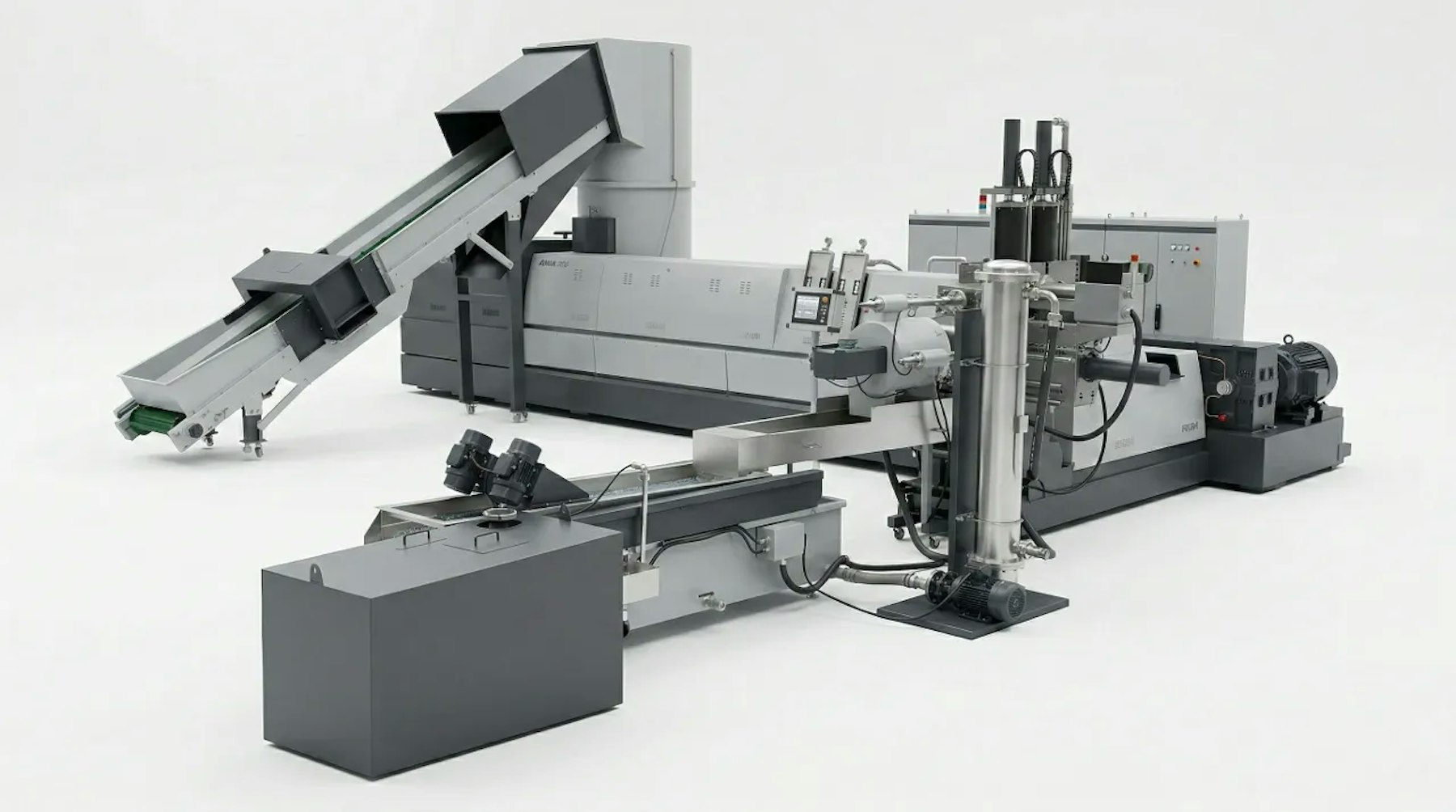
Rigid lines are typically specified around screw diameter, venting strength, filter change strategy, and the pelletizing method needed for the target resin family.
The real purchase target is a pellet stream with repeatable melt quality, pressure behavior, and pellet geometry for molding or extrusion reuse.
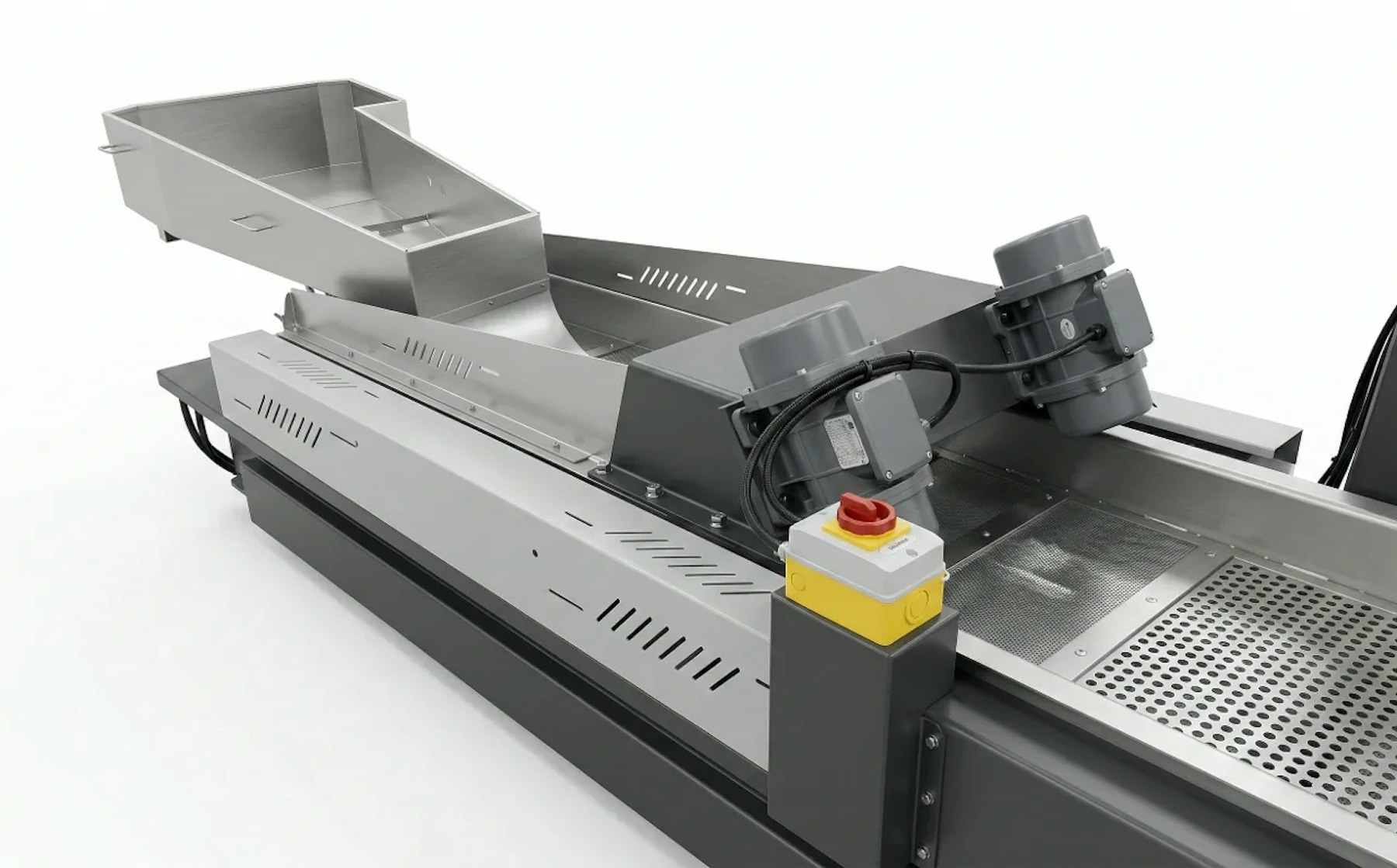
Watch how rigid flakes are processed through feeding, extrusion, filtration, and pelletizing into high-quality recycled pellets.
Repelletize HDPE, PP, ABS, and PS rigid flakes from post-industrial or washed post-consumer streams.
Stabilize melt quality and filter residual labels, fines, or dirt before pellet reuse.
Match pellet quality targets for molding, extrusion, or commercial sale of recycled pellets.
| Parameter | Specification | Notes | |||
|---|---|---|---|---|---|
| SJ85-100 | Water strands pelletizing | Plate screen changer | 85 mm (L/D 28-33:1) / 100 mm (L/D 10:1) | 55-75 kW | 100-200 kg/h |
| SJ100-120 | Water strands pelletizing | Plate screen changer | 100 mm (L/D 28-33:1) / 120 mm (L/D 10:1) | 90-110 kW | 200-350 kg/h |
| SJ130-150 | Water strands pelletizing | Column screen changer | 130 mm (L/D 28-33:1) / 150 mm (L/D 10-12:1) | 132-160 kW | 400-550 kg/h |
| SJ150-160 | Water strands / Water ring | Column screen changer | 150 mm (L/D 28-33:1) / 160 mm (L/D 12:1) | 185-200 kW | 500-650 kg/h |
| SJ160-180 | Water ring pelletizing | Automatic screen changer | 160 mm (L/D 28-33:1) / 180 mm (L/D 12:1) | 220-250 kW | 700-900 kg/h |
| SJ180-200 | Water ring pelletizing | Automatic screen changer | 180 mm (L/D 28-33:1) / 200 mm (L/D 12:1) | 280-315 kW | 900-1200 kg/h |
The above parameters are standard configurations. All specifications — including screw diameter, L/D ratio, pelletizing method, screen changer type, and motor power — can be customized to your specific material and output requirements.
| Decision Factor | Hard Plastic Pelletizing Line | Film Compacting Pelletizing Line |
|---|---|---|
| Feed Material | Rigid flakes, regrind, injection runners (HDPE, PP, ABS, PS) | Film, raffia, woven bags, stretch wrap |
| Feed Density | High bulk density — force feeding or gravity feed | Very low bulk density — requires compactor/cutter-compactor |
| Typical Throughput | 100–1,200 kg/h | 200–800 kg/h |
| Pelletizing Method | Strand or water-ring | Strand, water-ring, or die-face |
| Key Challenge | Melt filtration & contamination removal | Volume reduction & degassing of trapped air |
Strand pelletizing extrudes melt into strands cooled in a water bath, then cut into cylindrical pellets — best for standard resins like HDPE and PP. Water-ring pelletizing cuts at the die face and cools pellets in a water ring, producing rounded pellets and suited for higher-throughput models (SJ150 and above) and softer materials.
Plate screen changers are the most economical for clean, post-industrial regrind. Column screen changers suit moderate contamination levels. Automatic screen changers are recommended for post-consumer streams with labels, fines, and residual dirt — they allow continuous filtration without stopping the line.
Yes. The line handles washed HDPE, PP, ABS, and PS flakes. For post-consumer material with higher moisture or residual contamination, a double-stage layout with enhanced venting and automatic screen changer is recommended.
Model selection depends on resin type, flake bulk density, contamination level, and target pellet quality — not just kg/h alone. The SJ85 suits 100–200 kg/h for lighter operations; the SJ180 handles 900–1,200 kg/h for large-scale production. Contact Rumtoo with your material details for a matched recommendation.
Send your material type, flake size, contamination profile, target kg/h, pelletizing method preference, and reuse application for a matched rigid flakes pelletizing recommendation.