Direct Infeed of Bulky Hard Parts
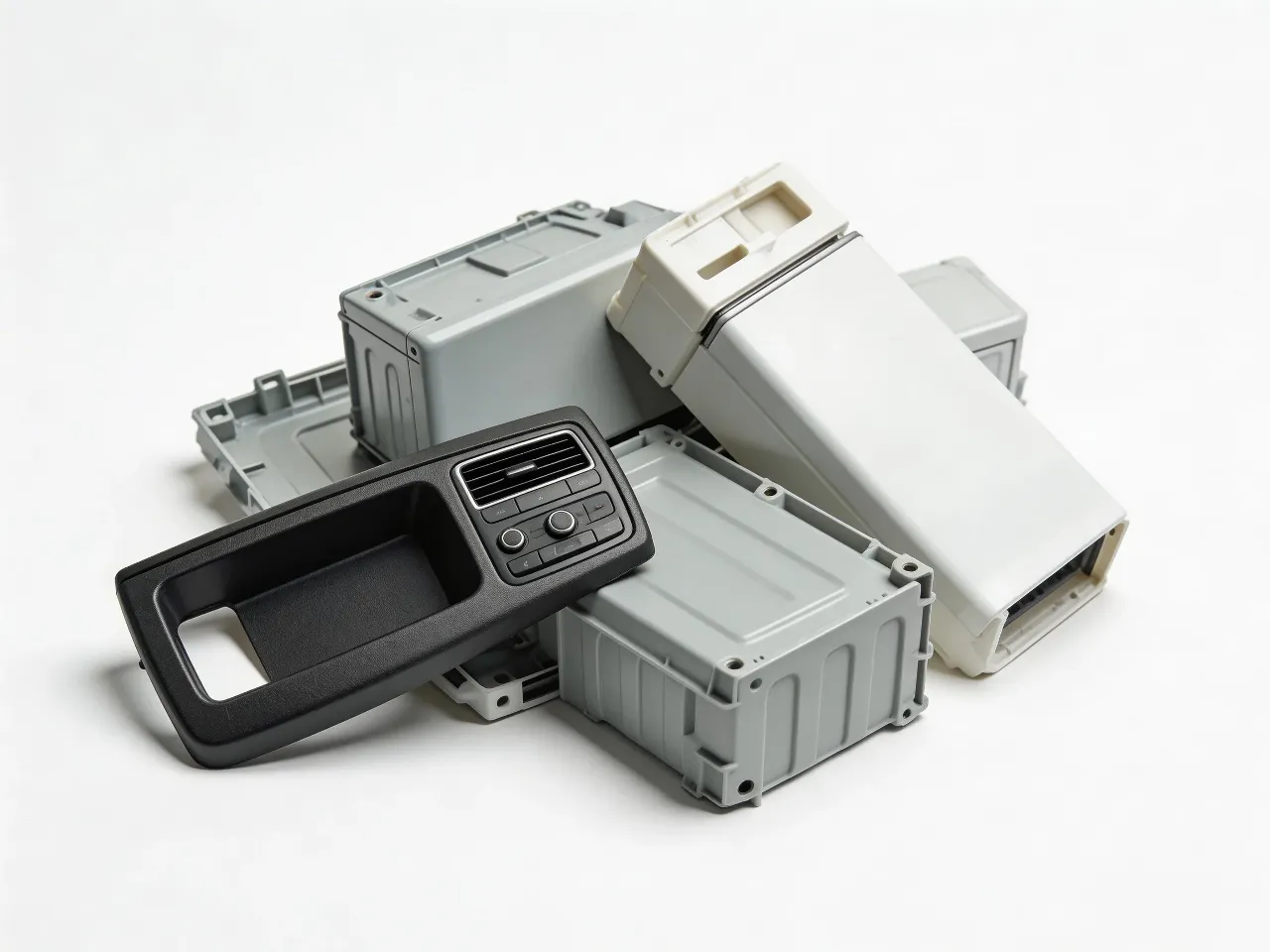
Thick-walled injection parts, bumpers, crates, and large blocks are loaded directly into the hopper. No manual pre-cutting is needed for most geometries within the machine capacity.
Industrial Shredders
Process thick-walled plastic parts, large automotive components, dense purgings, and mixed hard plastic scrap without a pre-cutting step. The high-torque single-shaft design handles bulky, awkward rigid feedstock and delivers screen-controlled output suitable for regranulation, washing, or resale.

The rotor, knife configuration, and screen are selected specifically for hard, dense feedstock — not adapted from a general-purpose shredder.
Thick-walled injection parts, bumpers, crates, and large blocks are loaded directly into the hopper. No manual pre-cutting is needed for most geometries within the machine capacity.
The low-speed, high-torque shaft drives hardened steel blades through the feedstock. Slow rotor speed (15–40 RPM) reduces noise, heat, and fines compared to high-speed granulators on the same material.
A bottom screen determines the output size range. Typical rigid plastic shredder screens are 50–120 mm, sized to the downstream process — coarser for a second-stage crusher, finer for direct regranulation.
Shredded regrind is conveyed by blower, belt, or gravity to a granulator for secondary size reduction, a washing line for contaminated material, or bulk storage for later processing.
Large bumpers, thick crates, and dense injection blocks cannot safely enter a granulator. The shredder reduces them to granulator-ready feedstock in one step.
High-speed granulators generate heat and fines on thick hard plastic. The low-speed shredder (15–40 RPM) produces chunky regrind with lower fines ratio, better for downstream melt quality.
Different geometries and grades — PP bumpers, PE crates, ABS panels — can be processed in the same batch without reconfiguration. Knife wear is reviewed against the material mix confirmed at sizing.
Shredder + granulator is the standard industrial architecture for large hard plastic. The shredder handles size reduction from bulky to coarse regrind; the granulator handles coarse to final particle size.
Large injection moulded parts and bumpers cannot fit into a standard granulator.
The shredder feed opening and rotor length are sized for the actual part geometry. Bumpers and crates that cannot enter a granulator feed directly into the shredder hopper.
High-speed granulators overheat and produce excessive fines on thick-walled rigid parts.
The low-speed high-torque design cuts through dense plastic without thermal degradation. Fines ratio is lower, which matters for melt quality in regranulation.
Mixed grades of hard plastic have inconsistent hardness, causing throughput variation.
Knife hardness and geometry are confirmed against the actual material mix at sizing. The model selection accounts for grade range, not just the softest or hardest material in the batch.
Users choose model by motor power alone without considering part geometry.
Rumtoo confirms model selection using part max dimensions, wall thickness, material grade, and required kg/h together — motor power is a result, not a starting point.
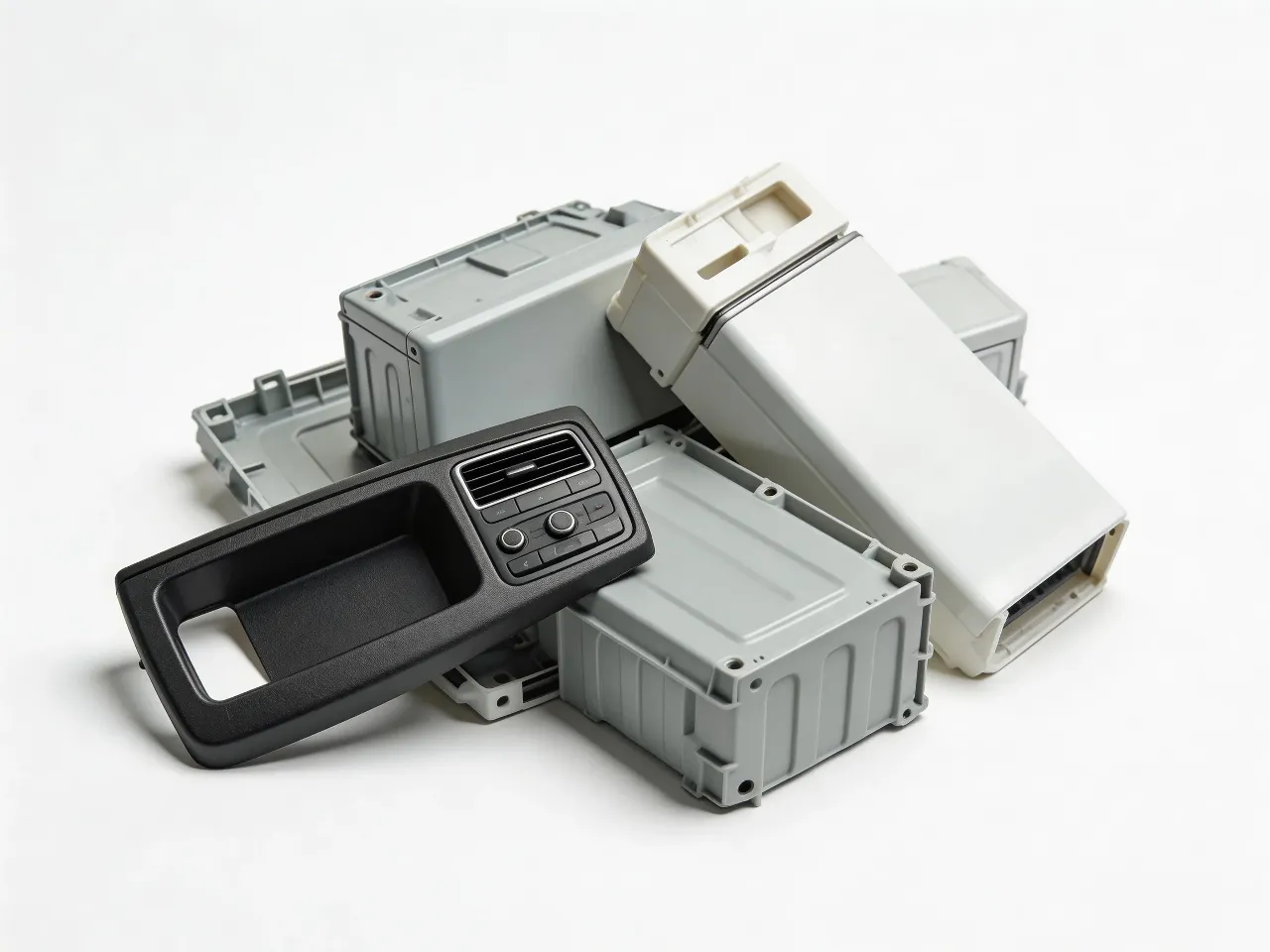
Visual references for rigid plastic feedstock conditions and primary-shredded regrind quality.

Reference for evaluating part geometry, wall thickness, and grade mix before confirming model selection and knife configuration.
Coarse regrind ready for a granulator, washing line, or bulk storage. Screen size is selected based on downstream process requirements.

View the machine workflow under real operating conditions.
PP, PE, ABS, PC, and PA injection moulded rejects, runner systems, and thick sprues processed into regrind for quality reuse loops.
PP and TPO automotive bumpers, dashboards, door panels, and overtrim processed without pre-cutting.
HDPE and PP solid crates, industrial pallets, IBC totes, and thick-wall containers reduced to manageable regrind.
Dense purging blocks, die head rejects, and startup lumps from extrusion and injection moulding lines processed without hammer-breaking first.
Mixed PP/PE/ABS post-consumer rigid packaging and consumer goods processed as a bulk stream where material separation comes downstream.
First-stage size reduction before a granulator for tight final particle sizing — the two-stage architecture used in most industrial rigid plastic recycling lines.
| Model | Typical Throughput | Sizing Reference |
|---|---|---|
| RPS-400 | 300–500 kg/h | Single shaft | 30 kW | Rotor ⌀500 mm | Feed 900×700 mm | Screen 50–80 mm |
| RPS-800 | 600–900 kg/h | Single shaft | 55 kW | Rotor ⌀650 mm | Feed 1200×900 mm | Screen 50–80 mm |
| RPS-1500 | 1200–1800 kg/h | Single shaft | 90 kW | Rotor ⌀800 mm | Feed 1500×1000 mm | Screen 60–100 mm |
| RPS-2500 | 2000–2500 kg/h | Single shaft | 132 kW | Rotor ⌀1000 mm | Feed 1800×1200 mm | Screen 60–120 mm |
Use these for planning. Final model is confirmed by maximum part dimensions, wall thickness, material grade mix, and downstream process (granulator input size, washing line, or storage).
Hard plastic shredder sizing depends on part size and material density — not just throughput weight. These inputs define the model.
Provide the maximum part length, width, and height, and the typical wall thickness. These determine the minimum feed opening size and rotor length required.
Specify PP, PE, ABS, PC, PA, or mixed grades. Harder materials (PC, glass-filled PA) increase knife wear rate and may require specific blade geometry or more frequent maintenance.
Specify any metal inserts, labels, paint coatings, foam cores, or rubber over-mould. These affect knife wear and may require pre-sorting upstream.
Confirm the maximum shred size needed. For feeding a granulator: typically 50–80 mm. For feeding a washing line or storage directly: screen selection adjusts accordingly.
| Criteria | High-Speed Granulator Only | Rumtoo Rigid Plastic Shredder |
|---|---|---|
| Feed Capability | Limited to small pre-cut parts; large parts cannot enter | Handles large bulky parts (bumpers, crates, thick blocks) in direct infeed |
| Heat & Fines on Thick Wall | High-speed cutting overheats and generates fines on dense rigid plastic | Low-speed high-torque produces chunky regrind with fewer fines and less heat |
| Mixed Grade Processing | Varies by material; hard grades may stall or overheat machine | Knife and screen confirmed against material mix at sizing |
| Selection Logic | Chosen by particle size requirement only | Chosen by part geometry, material grade, contamination, and downstream step |
Yes, for most standard bumper geometries within the model capacity. The key dimension is the maximum part length and width relative to the feed opening. Send bumper dimensions for a specific confirmation.
Typical output screens for rigid plastic are 50–80 mm. This is the standard input size for a secondary granulator in a two-stage architecture. If the granulator has a specific feed requirement, screen selection is adjusted accordingly.
Yes, mixed hard plastic loads are processed routinely. The knife hardness is selected against the hardest grade in the expected mix. If the mix includes glass-filled grades, blade maintenance intervals are adjusted.
Metal inserts cause knife damage and are not recommended. A metal detector upstream is strongly advised for post-consumer material with unknown contamination. Painted parts and rubber over-mould do not normally require special handling.
Maximum part dimensions (L×W×H), typical wall thickness, material grade or grade mix, contamination type, required kg/h, and whether output goes to a granulator, washing line, or storage.
Send your part dimensions, material grades, contamination profile, throughput target, and downstream process. Rumtoo will recommend the right model.
Request Rigid Plastic Shredder Proposal