
· Rumtoo Engineering Team · Buying Guides · 8 min read
Hot Air Dryer vs Centrifugal Dryer: Final Moisture Control in Plastic Recycling
A centrifugal dryer spins off free surface water mechanically; a hot air (thermal) dryer evaporates the residual moisture a spin dryer physically cannot reach. They are sequential stages, not competitors. This guide explains which moisture each one removes, the energy gap between them, and when a recycling line actually needs the thermal stage versus when centrifugal drying alone is enough.
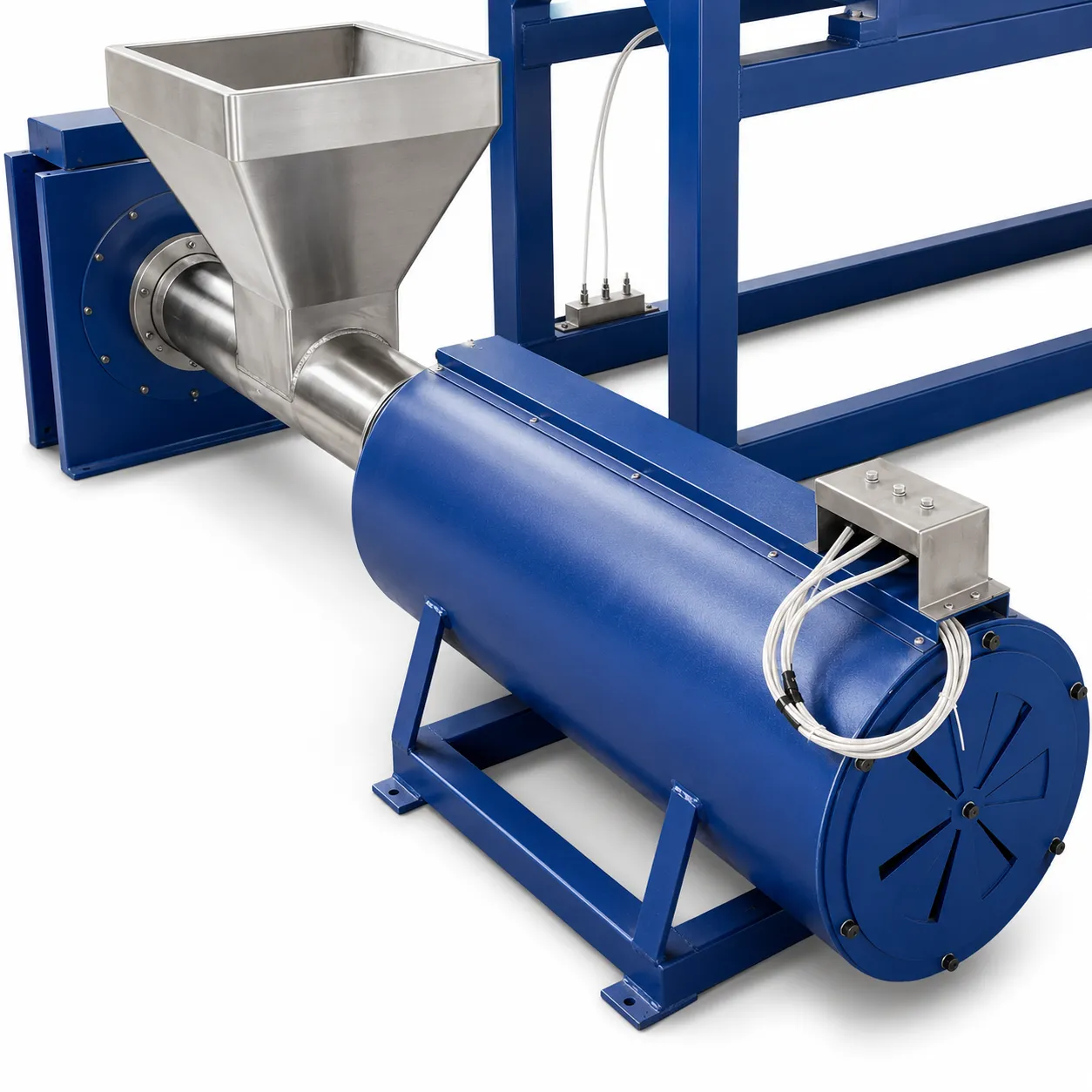
“Hot air dryer vs centrifugal dryer” is the wrong way to frame the drying stage for most recycling lines. The two machines remove different water from the same flakes at different points in the line — a centrifugal dryer throws off bulk surface water mechanically, and a hot air (thermal) dryer evaporates the thin residual film that mechanical force can no longer reach. On almost every wet washing line they run in sequence, not as alternatives. The real question is not which one to buy — it is whether your moisture target needs the thermal stage at all.
This guide explains what each dryer physically does, where each one hits its floor, the energy cost of pushing moisture lower, and how to decide by material and downstream process.
What a Centrifugal Dryer Does
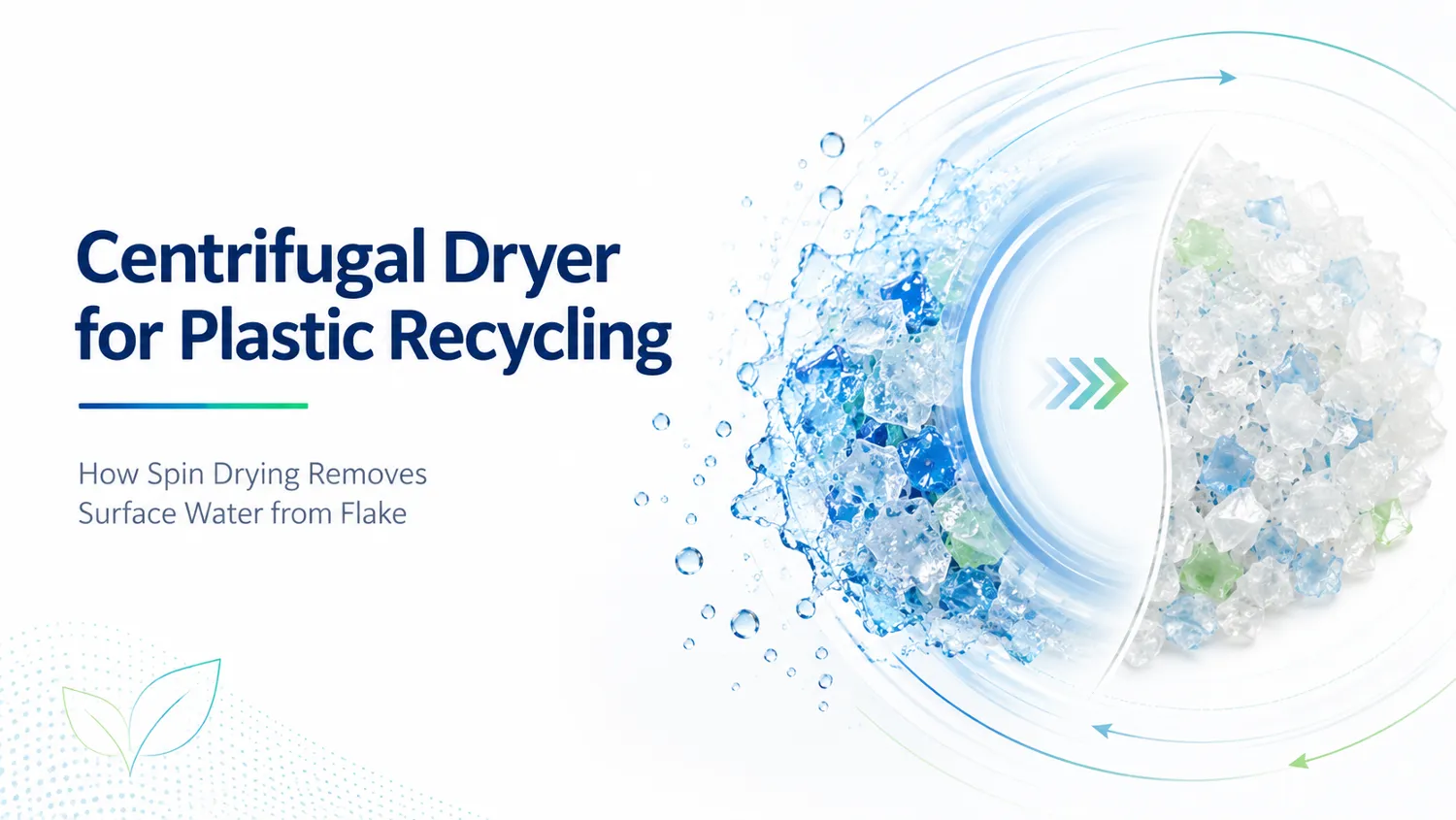
A centrifugal dryer (also called a spin dryer or mechanical dewatering dryer) drives washed flakes up a vertical or horizontal rotor at high speed. Centrifugal force throws the water outward through a perforated screen while the flakes are conveyed up and out. It is purely mechanical — no heat, no evaporation.
That makes it fast, high-throughput, and cheap to run: a centrifugal dryer typically consumes on the order of 45–65 kWh per ton of material. It is the standard dewatering step after the wash tanks and friction washers on virtually every line.
But a centrifugal dryer can only remove water that mechanical force can fling off — free and surface water. It cannot remove the thin boundary film that clings to the flake surface by capillary action, and it cannot touch moisture absorbed into the polymer itself. So it has a floor:
- Rigid flake (HDPE, PP, PET): down to roughly 1–2 % residual moisture — usually sufficient for pelletizing.
- PP woven / raffia: roughly 8–12 %, because the fibrous structure traps water.
- Thin film (PE, LDPE): a centrifugal dryer struggles here — film mats into a “filter cake” that shields inner layers, leaving moisture around 10 %. Film lines generally use a mechanical squeezer/densifier for dewatering instead.
For most rigid-flake lines, that 1–2 % floor is the end of the story. The centrifugal dryer alone is enough.
What a Hot Air (Thermal) Dryer Does
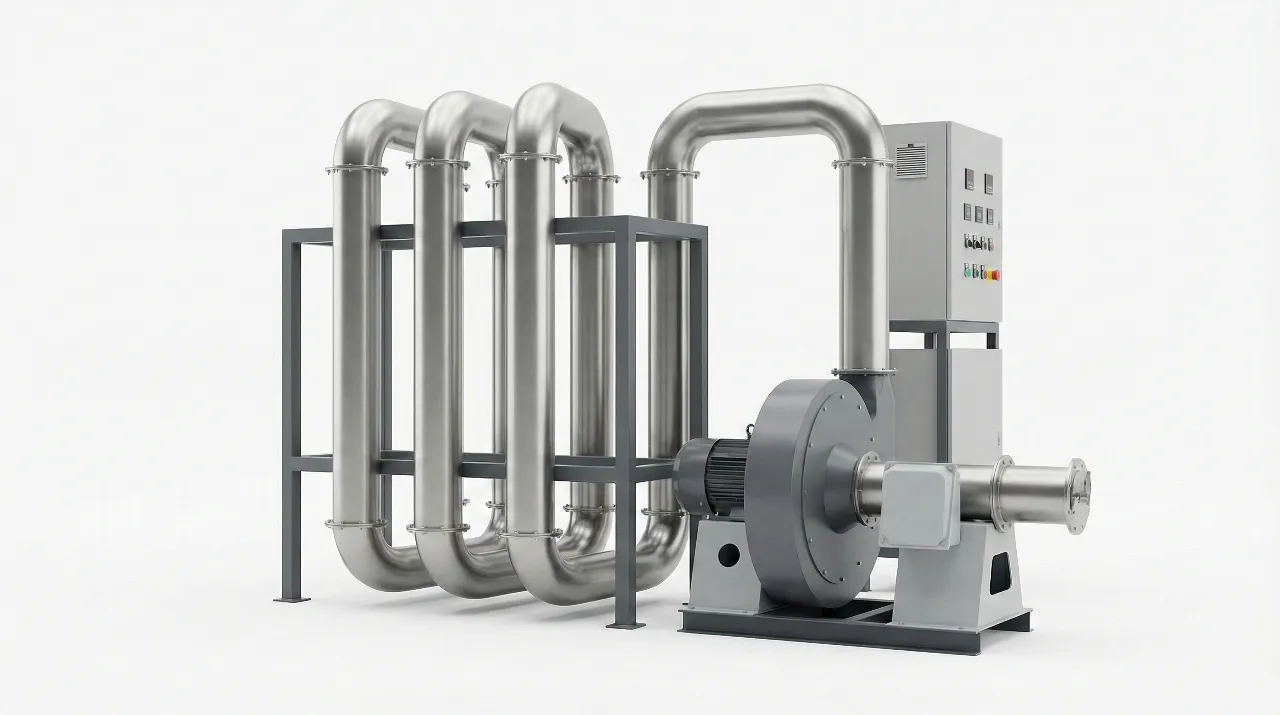
A hot air dryer — the thermal dryer — is not a dewatering machine. It is an evaporative finishing stage. Flakes that have already been mechanically dewatered are conveyed through a stream of heated air (typically electric, gas, or thermal-oil heated) in a tunnel or pipe loop. The hot air raises the flake surface temperature and carries away the residual boundary moisture that a spin dryer left behind.
This is the only way to reach the sub-1 % and sub-0.5 % moisture targets that high-spec output demands:
- Food-grade rPET flake: centrifugal dewatering brings flakes to ~1–2 %; a thermal dryer then takes them to below 0.5 % for high-quality pelletizing or sheet extrusion.
- Extrusion-sensitive lines: lower, more stable residual moisture means steadier melt pressure, fewer hydrolysis defects, less splay and fewer voids.
As one German recycling-equipment builder puts it plainly, a thermal dryer is “the logical subsequent step which follows the mechanical drying stage” — it reduces residual surface moisture from rigid or film flakes for the steps that come after, such as extrusion. That is the consensus position across the industry: thermal drying is a polish, applied after mechanical dewatering, not instead of it.
The cost of that polish is energy. Evaporating water takes far more energy than flinging it off mechanically — a thermal drying stage runs on the order of 165 kWh per ton, roughly three times the energy of centrifugal dewatering. You pay that premium only on the fraction of moisture the spin dryer could not remove.
Side-by-Side at a Glance
| Factor | Centrifugal Dryer | Hot Air (Thermal) Dryer |
|---|---|---|
| Mechanism | Mechanical — centrifugal force | Thermal — hot-air evaporation |
| Water removed | Free + surface water | Residual boundary / surface moisture |
| Typical floor | 1–2 % rigid; ~10 % film | Below 0.5 % |
| Energy use | ~45–65 kWh/t | ~165 kWh/t |
| Throughput | High | Moderate (residence-time limited) |
| Position in line | After wash tanks / friction washer | After centrifugal dewatering |
| Capital + operating cost | Lower | Higher (heat + airflow) |
| When you need it | Always — primary dewatering | Only for sub-1 % targets |
The Decision: Centrifugal Alone, or Centrifugal + Thermal?
The choice is rarely “either/or.” It is “do I add the thermal stage on top of mechanical dewatering?” Decide by material and downstream target:
Centrifugal dryer alone is enough if you run rigid HDPE or PP flake headed straight to pelletizing. A 1–2 % residual is well inside the window most extruders with proper venting can handle, and the thermal energy would be wasted.
Add a hot air dryer if any of these apply:
- Food-grade rPET — bottle-to-bottle and sheet lines need sub-0.5 % moisture going into the extruder or SSP step to control hydrolytic IV loss.
- Strict extrusion or fine-gauge output — when residual moisture is causing splay, voids, foaming, or pressure instability you cannot tune out.
- Hygroscopic or high-spec dry flake sold as feedstock — buyers who specify a guaranteed moisture ceiling.
Once you have decided the thermal stage belongs on your line, our thermal dryer sizing guide walks through how to size it from your inlet moisture, throughput, and final-moisture target.
You may need neither dedicated dryer if your line is a PE/PP film operation. Film does not dewater well in a centrifugal dryer; those lines typically rely on a mechanical squeezer or a thermal/plastic densifier that combines dewatering with agglomeration. For the full film-side decision, see our guide on how to choose dewatering equipment for plastic film recycling.
Why They Run in This Order
The sequence is not negotiable: mechanical first, thermal second.
A thermal dryer is built to evaporate a thin residual film, not to boil off bulk free water. Feeding wet flakes straight into a hot air dryer — skipping centrifugal dewatering — forces the thermal stage to evaporate water that a spin dryer would have flung off for a third of the energy. You would oversize the heater, balloon the energy bill, and bottleneck throughput, all to do mechanically cheap work with expensive heat.
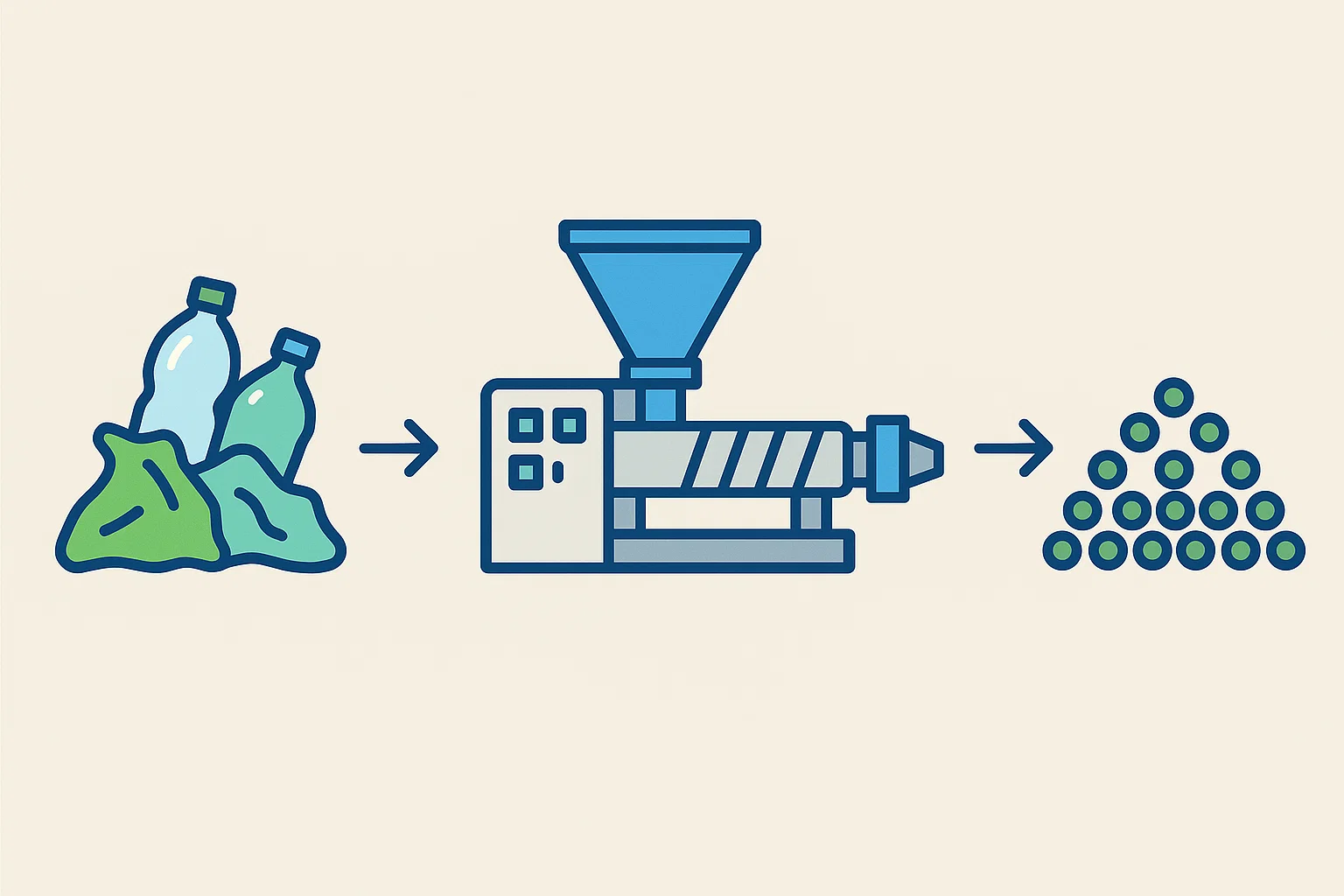
So the standard wet-line drying train is: wash tanks → friction washer → centrifugal dryer (bulk dewatering) → thermal dryer (residual polish, if required). Each stage hands the next a drier, easier feed. The centrifugal dryer does the heavy lifting cheaply; the thermal dryer spends energy only on the last fraction of a percent that actually needs heat.
Energy and Cost Framing
The economics follow the physics. Mechanical dewatering is cheap per ton and should always run first. Thermal drying is the expensive stage, so you size it around only the moisture gap you actually need to close, not the whole job.
That is why over-specifying the thermal stage is a common and costly mistake. If your output is rigid pelletizing-grade flake that is fine at 1–2 %, a thermal dryer adds capital cost and roughly triples your drying energy for moisture reduction your process does not require. Conversely, under-specifying it on a food-grade rPET line means hydrolysis defects, IV loss, and rejected lots — a far more expensive failure than the energy bill.
The right framing is target-driven: define the final moisture specification your downstream extrusion, pelletizing, or buyer demands, confirm what your mechanical dewatering already delivers, and add thermal capacity only to bridge the difference.
Measuring Moisture — So You Are Specifying to a Number
Both “1–2 %” and “below 0.5 %” only mean something against a test method. Residual moisture in recycled flake is typically verified by loss-in-weight methods such as ASTM D6980, and APR’s design guidance references moisture acceptance for rPET feedstock. Before you decide whether you need a thermal stage, pull a flake sample off your existing centrifugal discharge and have it tested against the method your buyer or extruder specifies. If the measured number already clears your target, you do not need a hot air dryer. If it does not, the thermal stage closes the gap.
Summary and Next Steps
“Hot air dryer vs centrifugal dryer” almost always resolves to centrifugal first for bulk dewatering, hot air after for the residual polish — and only when your moisture target requires it. A centrifugal dryer is mandatory and cheap; it gets rigid flake to 1–2 %. A hot air dryer is optional and energy-intensive; it gets you below 0.5 % when food-grade rPET, fine-gauge extrusion, or a buyer’s spec demands it. Skip the thermal stage when 1–2 % is fine; add it when it is not.
Tell us your material (rPET flake, HDPE/PP rigid, PP woven, film), what your current dewatering delivers, and the moisture target your downstream process needs — Rumtoo will tell you whether centrifugal drying alone is enough or where a thermal stage pays off. Start from our hot air dryer / thermal dryer page or share your line layout for a drying-stage review.
- hot air dryer
- thermal dryer
- centrifugal dryer
- plastic recycling drying
- residual moisture control