
· Rumtoo Engineering Team · Buying Guides · 5 min read
How to Choose Dewatering Equipment for Plastic Film Recycling
A practical guide to choosing dewatering equipment for plastic film recycling. Compare centrifugal dryers, squeeze dryers, and thermal dryers by moisture target, feedstock type, and pelletizing requirements.
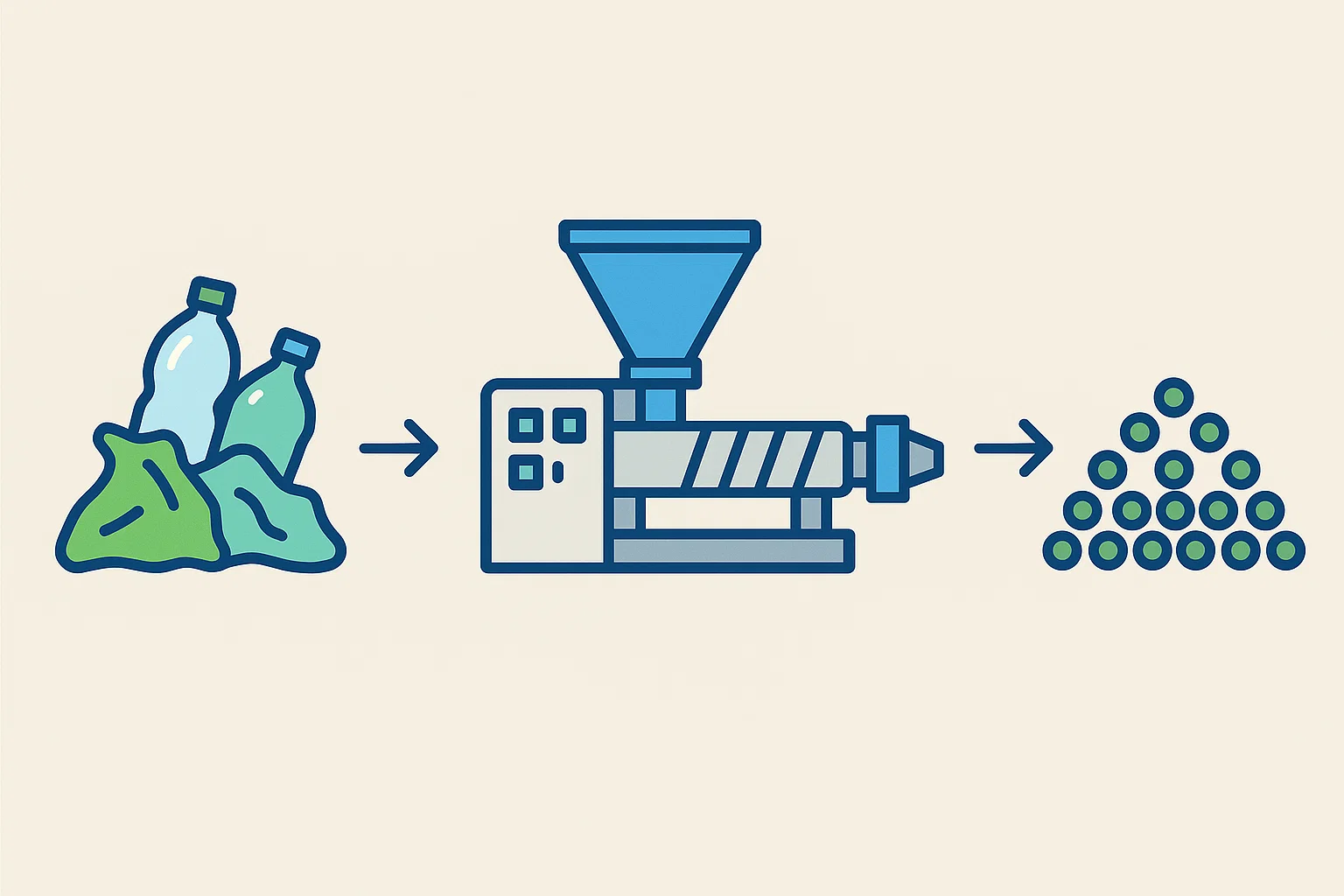
Choosing dewatering equipment for plastic film recycling is really a question about moisture control. If washed film enters the pelletizing section too wet, the line loses throughput, the extruder runs unstably, and pellet quality drops fast. The right drying route depends on your material, your target moisture level, and the equipment downstream.
For most Rumtoo projects, dewatering is not handled by one machine alone. It is built as a sequence inside a plastic film and bag recovery line or an integrated washing system.
Why moisture control matters so much for film
Film is harder to dry than rigid flake because it is:
- lightweight
- flexible
- high in surface area
- easy to fold over and trap water
That trapped water affects more than the drying section. It also reduces pellet quality by causing:
- bubbles and voids in the melt
- unstable vacuum degassing
- output fluctuations at the pelletizer
- higher energy use in the thermal stage
The three main dewatering options
Centrifugal dryer
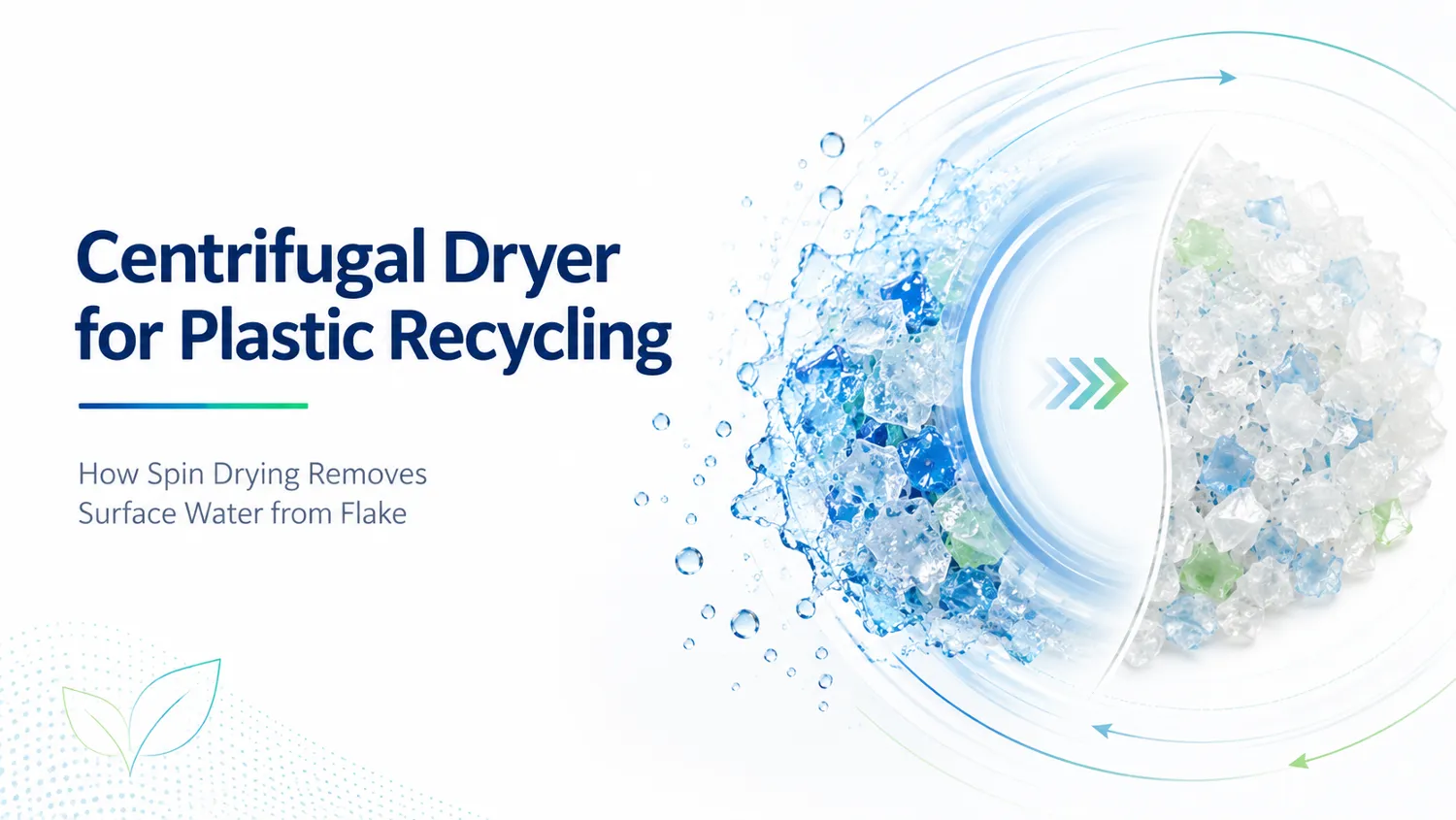
A film centrifugal dryer removes surface water efficiently and is often the first mechanical drying step after washing.
Best for:
- removing bulk free water
- medium to high throughput lines
- projects where material is already well shredded
Limits:
- film often still exits with too much residual moisture for direct pelletizing
- clingy or thin film can retain water in folds and layers
Squeeze dryer or film densifier
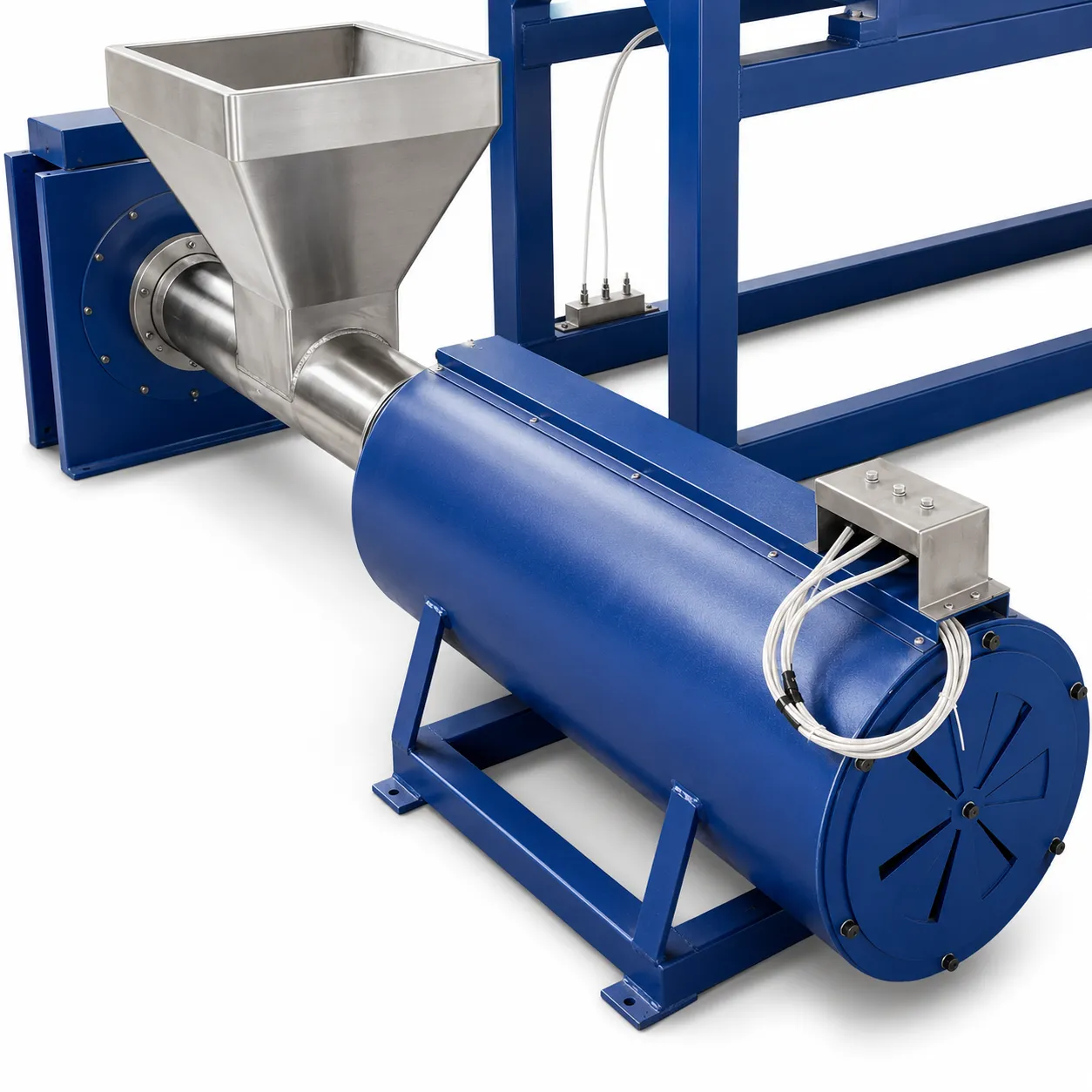
A film densifier and squeezer mechanically presses water out while also increasing bulk density. This is usually the most important upgrade for washed film lines that need stable pelletizing.
Best for:
- PE and PP film after washing
- reducing both moisture and fluffiness
- improving extruder feeding stability
Limits:
- requires correct sizing and screw design
- does not replace all thermal drying in every project
Thermal dryer
A thermal dryer is used when the final moisture target must be lower than mechanical drying alone can achieve.
Best for:
- projects with strict pellet-quality requirements
- materials that still hold residual moisture after squeezing
- lines where the downstream extruder has a narrow moisture tolerance
Limits:
- higher energy use
- should not be used to compensate for poor mechanical dewatering design
A simple selection rule by downstream process
If your next step is densifying or compaction, a moderate moisture level may still be acceptable. If your next step is direct pelletizing, you need a lower and more stable moisture window.
Use this rule of thumb:
- after washing only: too wet for pelletizing
- after centrifugal drying: often improved, but still risky for film
- after squeeze drying: usually suitable for stable film feeding
- after squeeze drying plus thermal drying: best for demanding pellet quality
That is why many Rumtoo film lines combine a film centrifugal dryer with a film densifier and squeezer, and then add a thermal dryer only when the application requires it.
How to choose by feedstock
Clean post-industrial film
If contamination is low and the film is relatively uniform, centrifugal drying plus squeeze drying is often enough.
Post-consumer film
This usually needs a stronger moisture-management strategy because contamination, labels, and fines make water removal harder. A squeezer is often essential.
Agricultural film
Agricultural film is one of the hardest materials to dry consistently. Expect more washing load, more contamination, and a stronger need for densifying before pelletizing.
Common buying mistakes
Mistake 1: buying only by rated capacity
A dryer matched to nameplate throughput can still become the bottleneck if the material is thinner, dirtier, or wetter than the supplier assumed.
Mistake 2: ignoring density as well as moisture
For film, you do not just need dry material. You need denser material that will feed consistently into the extruder. That is why squeeze drying is often more valuable than adding more hot air.
Mistake 3: expecting thermal drying to fix everything
Thermal drying is the finishing step, not the rescue plan. If free water is still too high, the line should be redesigned upstream.
What to ask before you request a quote
Ask suppliers for these numbers:
- Moisture in at the dewatering stage.
- Moisture out after each drying step.
- Bulk-density change after squeezing.
- Real throughput range for your material mix.
- Power consumption by each drying section.
Those five numbers tell you far more than a brochure paragraph.
Recommended drying sequences by project type
| Project type | Recommended sequence |
|---|---|
| Clean post-industrial film | Washing -> centrifugal dryer -> squeeze dryer |
| Mixed post-consumer PE/PP film | Washing -> centrifugal dryer -> squeeze dryer -> optional thermal dryer |
| Agricultural film | Washing -> centrifugal dryer -> squeeze dryer -> thermal finishing stage |
| Film line feeding pelletizing directly | Strong mechanical dewatering plus final moisture confirmation |
Frequently asked questions
Is a centrifugal dryer enough for washed plastic film?
Sometimes for cleaner material, but often not for post-consumer film. Centrifugal drying removes free water well, yet film may still retain enough trapped moisture to cause feeding and pellet-quality issues downstream.
When should I add a thermal dryer?
Add a thermal dryer when the target moisture level is lower than mechanical drying alone can reliably achieve, or when your extrusion stage is highly sensitive to residual moisture.
What matters more for film recycling: moisture or density?
Both matter. Moisture affects melt quality, while density affects conveying and feeding stability. That is why a film densifier and squeezer is often more valuable than simply extending hot-air drying time.
Final takeaway
The best dewatering equipment for plastic film recycling is usually a system, not a standalone machine. Centrifugal drying removes free water, squeeze drying removes trapped moisture and increases density, and thermal drying finishes the job when the pelletizing target demands it.
If you want help matching the correct drying route to your film line, contact Rumtoo. We can help define the right sequence before you overspend on the wrong drying stage.
- dewatering equipment
- plastic film recycling
- centrifugal dryer
- squeeze dryer
- thermal dryer