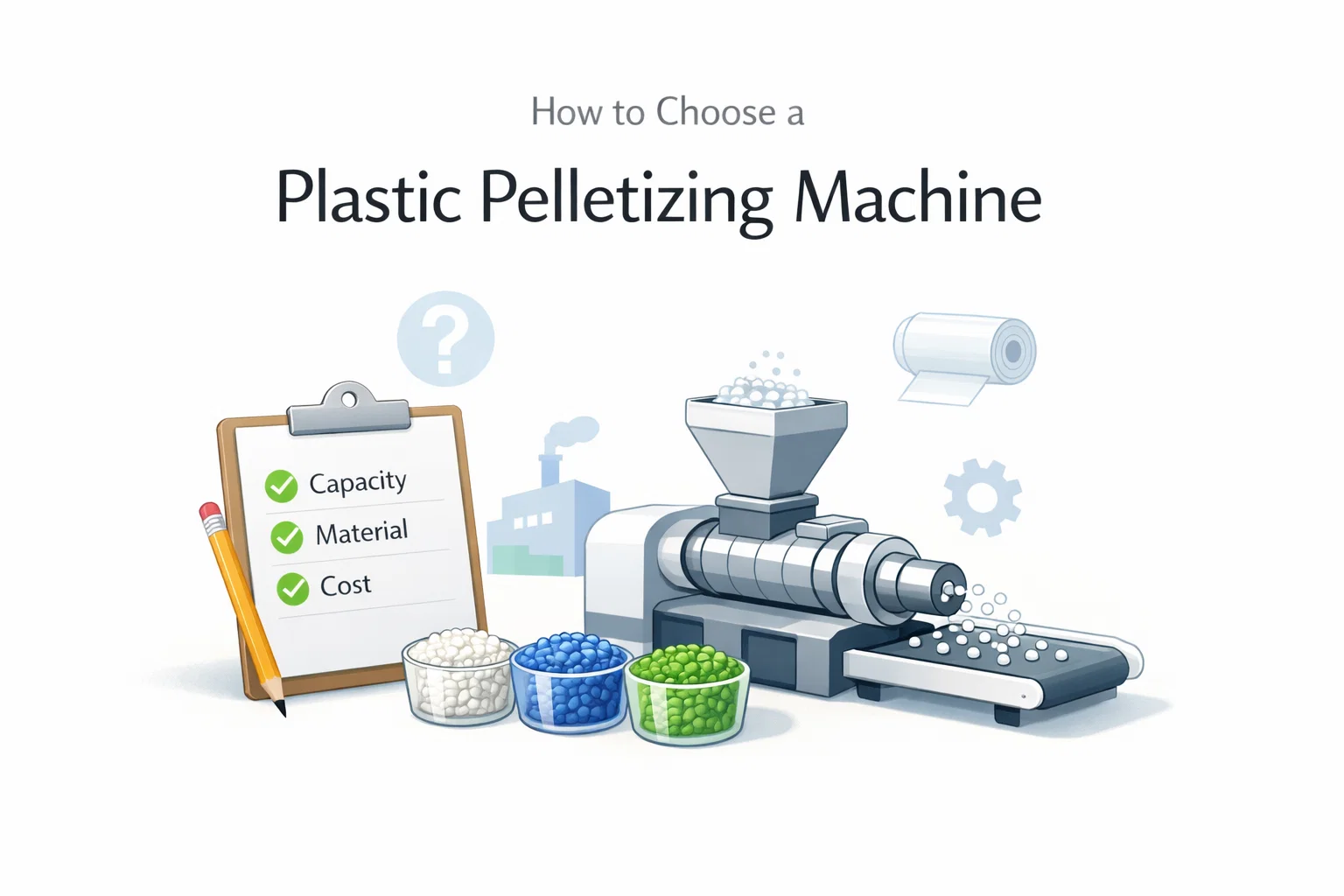

· Rumtoo Engineering Team · Buying Guides · 6 min read
Water Ring Plastic Pelletizers: Complete Buyer's Guide for PE, PP Film and Raffia Recycling
A practical buyer's guide to water ring plastic pelletizers for PE film, PP raffia, woven bags, and soft plastic recycling. Learn where water ring systems outperform strand lines, where they do not, and how to size the right configuration.
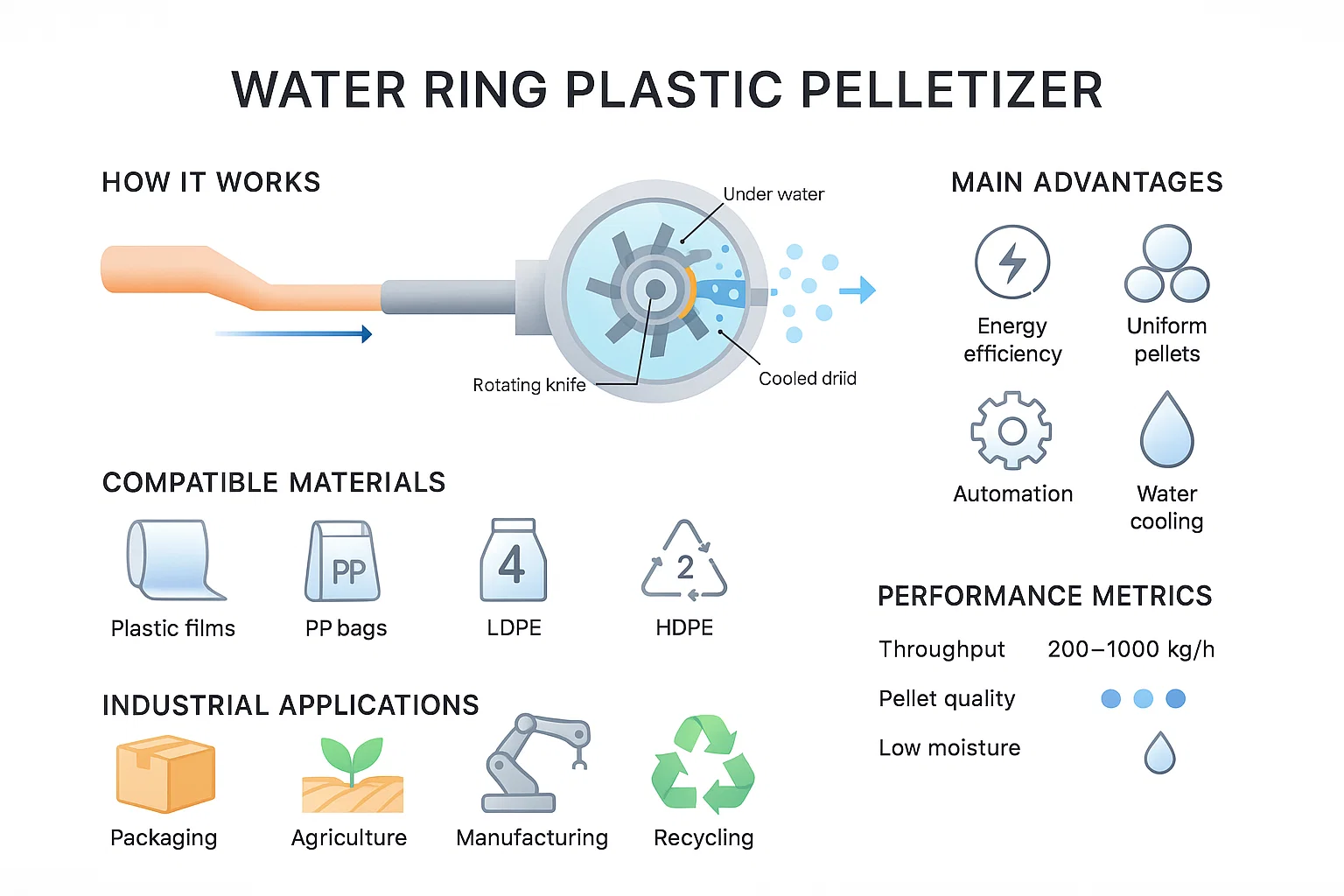
A water ring plastic pelletizer is usually the best choice when your feedstock is PE film, PP woven bags, raffia, or other soft plastics that do not behave well in a conventional strand-cut system. For Rumtoo’s target customers, the question is rarely “Is water ring pelletizing good?” The real question is whether it is the right fit for your material, throughput, and pellet-quality target.
If you are still comparing complete line layouts, start with our recycling pelletizing lines overview. If your main material is washed film, you should also review our film compacting pelletizing line, because the feeding method matters just as much as the pelletizing method. For a stage-by-stage breakdown of the full pelletizing plastic process, including how water-ring fits into the broader workflow and which materials it does not suit, start with our pillar guide.
What a water ring plastic pelletizer does
In a water ring system, molten plastic exits the die face and is cut immediately by rotating knives while a circulating water ring cools and conveys the pellets away from the cutting chamber. That makes the process compact, stable, and especially suitable for polymers that tend to sag, stick, or break when run as long cooled strands.
For most PE and PP recycling projects, buyers choose water ring pelletizing for four reasons:
- better handling of soft polyolefin melts
- fewer strand-break problems than a strand line
- a smaller footprint
- easier operation for plants that want stable day-to-day output
When water ring pelletizing is the right choice
Water ring pelletizers are usually the best fit when you are processing:
- washed or densified PE film
- PP woven bags and raffia
- post-industrial soft regrind
- compacted film flakes feeding a recycling extruder
This is why water ring systems are common on film recycling projects. After washing, squeezing, or compacting, the material is still light and difficult to feed evenly. Pairing a water ring pelletizer with a film compacting pelletizing line gives you a more stable path from low-bulk-density scrap to saleable pellets.
Where water ring systems outperform strand pelletizers
Soft materials are easier to run
Soft PE and PP melts can stretch, stick, or deform before they reach a strand cutter. A water ring system cuts at the die face, so you avoid the long cooling path that often causes strand instability.
The system footprint is smaller
A strand line needs space for strand travel, water troughs, air knives, and the pelletizer itself. A water ring design is more compact, which matters when you are retrofitting an existing plant.
Daily operation is simpler
In practice, many recycling plants prefer water ring systems because operators spend less time rethreading strands or dealing with inconsistent startup behavior. That matters more than brochure specifications when your line is supposed to run continuously.
Where water ring pelletizing is not the best option
A water ring system is not automatically the best answer for every polymer or every product target.
You may prefer a strand system when:
- your material is rigid and stable after extrusion
- you need easy material changeovers
- your product specification prefers strand-cut pellet geometry
- you are running engineering plastics or compounds that do not suit hot die-face cutting
If you are processing rigid washed flakes rather than film, compare against Rumtoo’s hard plastic pelletizing line. The correct line architecture depends on feedstock behavior, not just on final capacity.
Material preparation still decides pellet quality
Many buyers overfocus on the pelletizer and underfocus on upstream preparation. A water ring cutter cannot compensate for:
- unstable feed rate
- high residual moisture
- poor melt filtration
- mixed polymers with incompatible melt behavior
For post-consumer film, the upstream system should usually include washing, dewatering, and densifying. That is why film projects are often built around either a plastic film and bag recovery line or a broader integrated washing system before pelletizing.
What to check before you ask for a quote
When evaluating a supplier, ask for these five items before comparing prices:
- The real feedstock range, not just the ideal material.
- The moisture window the line can handle at the extruder inlet.
- The expected throughput range for your actual resin mix.
- The filtration configuration and screen-change method.
- The pellet shape and bulk-density target after drying.
Without these details, two quotes can look similar on paper while delivering very different results in production.
A simple selection rule
Use a water ring plastic pelletizer if most of the following are true:
- your main feedstock is PE or PP film, raffia, or woven bag scrap
- you want a compact line layout
- you need easier operation than a classic strand system
- your plant values stable pellet output more than maximum material flexibility
If those points match your project, a water ring system is often the lowest-risk choice.
Water ring vs. strand pelletizing at a glance
| Decision factor | Water ring system | Strand system |
|---|---|---|
| Best-fit materials | PE film, PP film, raffia, woven bags | More stable strands, rigid regrind, some engineering materials |
| Operator workload | Lower in daily operation | Higher during startup and strand handling |
| Footprint | More compact | Usually larger |
| Material flexibility | Moderate | Often broader |
| Soft-plastic performance | Strong | Can be unstable |
| Best buyer profile | Film recycler focused on consistent output | Buyer needing flexibility or lower upfront cost |
Frequently asked questions
Is a water ring pelletizer better than a strand pelletizer for PE film?
In most PE film recycling projects, yes. Water ring systems are usually easier to run because the material is cut at the die face instead of being pulled into long cooled strands. That reduces the strand instability that often slows down PE film lines.
Can a water ring pelletizer handle washed post-consumer film?
Yes, but only if the upstream washing, dewatering, and densifying stages are correctly specified. A water ring pelletizer can form pellets efficiently, but it cannot compensate for excessive moisture, contamination, or inconsistent feeding.
What throughput range is typical for water ring film recycling lines?
The practical range depends on resin, moisture, filtration setup, and feed stability. Buyers should always ask suppliers for realistic throughput on their actual material, not on ideal test material.
Final takeaway
For PE and PP soft-plastic recycling, the best pelletizer is usually the one that keeps material moving predictably from feeder to die face. That is exactly where water ring technology shines. It reduces strand-handling problems, simplifies operation, and fits naturally into Rumtoo’s film-focused recycling solutions.
If you want help matching water ring pelletizing to your feedstock, line size, and target pellet quality, contact the Rumtoo engineering team. We can help map the right combination of washing, densifying, extrusion, and pelletizing equipment before you issue an RFQ.
- water ring plastic pelletizer
- water ring pelletizing
- PE film recycling
- PP raffia pelletizing
- recycling pelletizing line