· Rumtoo Process Team · Technical Guide · 12 min read
Densifier for Recycling: Foam, Film, and Plastic Waste Guide
Choose a densifier for recycling foam, film, and plastic waste. Compare EPS cold press, film squeezer, cutter compactor, output form, and RFQ checks.
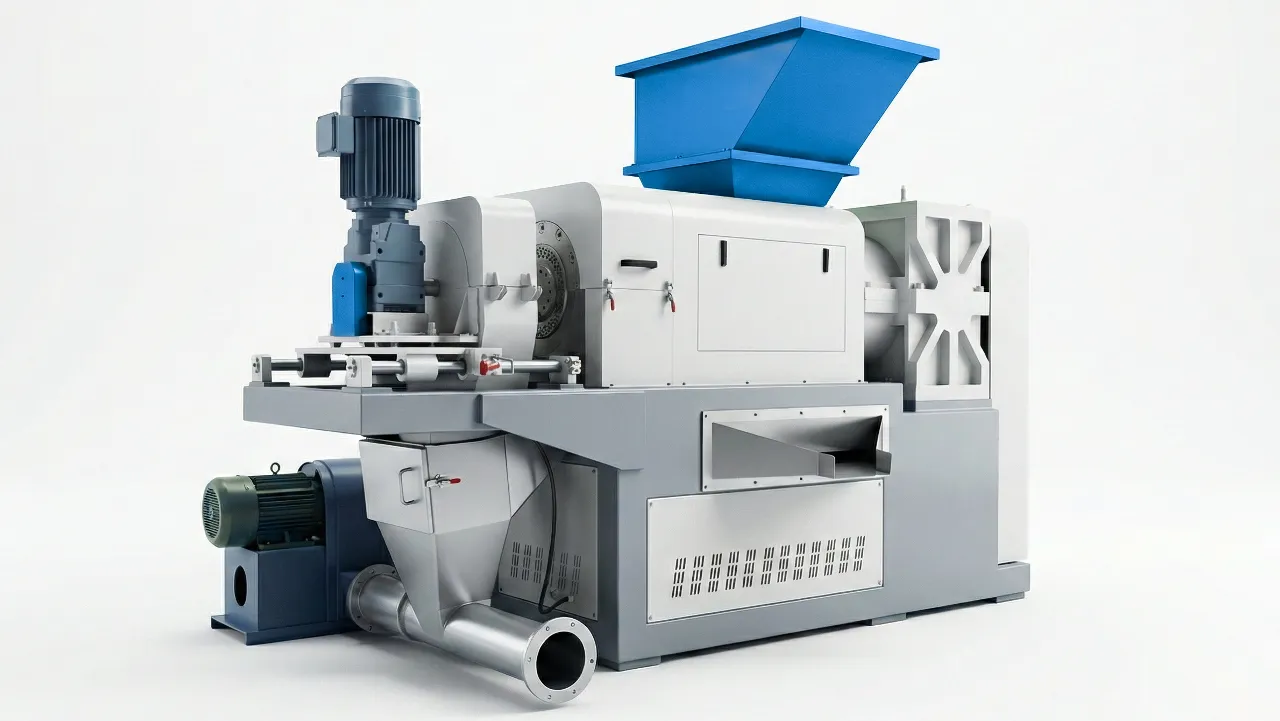
A densifier for recycling turns bulky, lightweight waste into a denser form that is easier to store, transport, sell, or feed into the next machine. The right densifier depends on the material: EPS foam needs compression into blocks or logs, washed PE film often needs squeezing and densifying, and soft film before pelletizing may need a cutter compactor.
This guide explains how to choose a densifier for recycling without mixing up different machine types. It covers foam, plastic film, woven sacks, flexible packaging, and low-density plastic waste, then shows where each machine fits in a real recycling line.
If you already know your material is washed film, start with Rumtoo’s film densifier and squeezer. If your problem is bulky foam packaging, compare the EPS foam cold press machine. Use this article when you need the broader decision framework first.
What is a Densifier for Recycling?
A densifier for recycling is a machine that increases the bulk density of lightweight material so the recycler stops paying to move air, water, or unstable fluff. In practical terms, it changes hard-to-handle waste into blocks, logs, agglomerates, granules, or compacted feedstock.
That definition matters because “densifier” is not one fixed machine. A foam densifier, film squeezer, agglomerator, cold press, and cutter compactor may all increase density, but they solve different process problems.
According to the U.S. EPA, mechanical recycling commonly includes sorting, cleaning, shredding, and melting plastics without changing the polymer building blocks. Densifying usually sits inside that mechanical route as a handling, drying, or feeding step before extrusion, storage, or shipment.
Why Low-Density Waste Needs Densification
Low-density waste needs densification because it creates cost before it creates value. Foam fills trucks with air, film holds water after washing, and loose flexible plastic feeds poorly into pelletizing equipment.
In our experience, buyers usually consider a densifier for recycling when one of four problems appears:
- High transport cost: Bulky EPS, EPE, EPP, or film scrap fills containers before it reaches a useful payload.
- Poor storage efficiency: Loose foam, bags, and film bales consume floor space and create handling delays.
- Unstable feeding: Fluffy film bridges in hoppers and surges at the extruder feed throat.
- Moisture carryover: Washed film stays wet inside folds and layers even after basic centrifugal drying.
According to the Foam Recycling Coalition, recyclers sell foam polystyrene in densified or pelletized form to brokers and reclaimers for end uses such as picture frames and molding products. That buyer reality explains why output form, cleanliness, and density affect the value of the material.
Main Types of Densifiers for Recycling
The main types of densifier for recycling projects are foam cold presses, hot-melt foam densifiers, film squeezer densifiers, agglomerators, and cutter compactors. Each type fits a different material and downstream process.
| Machine type | Best material | Typical output | Main benefit |
|---|---|---|---|
| EPS foam cold press | EPS, EPE, EPP, XPS, selected PUR foam | Dense blocks or logs | Reduces foam volume without thermal melting |
| Hot-melt foam densifier | Clean EPS and similar foam | Ingots or melted blocks | Higher volume reduction when heat is acceptable |
| Film densifier and squeezer | Washed PE film, PP film, woven sacks, raffia | Squeezed granules or agglomerates | Reduces water and raises bulk density |
| Plastic film agglomerator | Dry thermoplastic film scrap | Irregular agglomerates | Makes film easier to dose and reprocess |
| Cutter compactor | Soft film before pelletizing | Warm compacted feed | Stabilizes extruder feeding |
Do not choose the machine by the word “densifier” alone. Choose it by material behavior, moisture level, output target, and the next process.
EPS Foam Densifier: Cold Press or Hot Melt?
An EPS foam densifier compresses bulky foam so it can be handled as dense blocks, logs, or ingots. A cold press uses mechanical pressure, while a hot-melt densifier uses heat to soften or melt the foam before discharge.
An EPS foam cold press machine is usually the safer densifier for recycling foam when the recycler wants volume reduction without melting the polymer. It suits packaging foam, appliance protection foam, EPS boxes, trays, and similar bulky material.
A hot-melt densifier can reach a higher compression result on clean foam, but it adds heat, odor control, power demand, and polymer degradation risk if the process is poorly controlled. It also needs closer attention to food residue, labels, tape, and mixed foam types.
When to Choose EPS Cold Pressing
Choose EPS cold pressing when your main problem is foam volume, not melt preparation. The machine reduces transport and storage cost while keeping the output easy to stack, weigh, and sell.
Cold pressing fits these cases:
- Packaging plants with clean EPS scrap
- Appliance, electronics, and furniture packaging recovery
- Seafood box or produce box recycling after sorting and drying
- Transfer stations that need lower hauling frequency
- Foam collection programs that need simple block handling
According to NSW EPA, EPS has historically taken large landfill volume compared with its weight, and equipment grants helped make EPS transport and recycling more economic. The same logic applies in plant selection: densification only works if the output can move to a buyer or downstream process.
Plastic Film Densifier and Squeezer
A plastic film densifier and squeezer mechanically presses water out of washed film while increasing bulk density. It is most useful after washing, before storage, thermal drying, or pelletizing.
Washed film behaves differently from rigid flake. PE bags, stretch wrap, agricultural film, greenhouse film, PP woven sacks, and raffia trap water inside folds and layers. A simple dryer removes free surface water, but it may not make the material stable enough for extrusion.
That is why many Rumtoo film projects combine a plastic film and bag recovery line with a film densifier and squeezer. As a densifier for recycling washed film, the squeezer creates a denser, lower-moisture output that downstream equipment can meter more consistently.
When a Film Squeezer is the Right Densifier
A film squeezer is the right densifier for recycling when the material is already washed and still carries moisture or low bulk density. It solves a process problem, not just a storage problem.
Choose this route when:
- Washed PE or PP film remains wet after centrifugal drying
- Fluffy film causes hopper bridging or uneven conveying
- The pelletizing line needs a steadier feed form
- Thermal drying alone would add too much energy cost
- The plant handles woven bags, raffia, or flexible packaging
For a narrower article on this process, see what densifying means in PP and PE film recycling. That page should stay focused on washed film, while this guide covers the wider densifier category.
Cutter Compactor vs Densifier
A cutter compactor increases film density inside the pelletizing feed section, while a standalone densifier for recycling usually prepares material before storage, shipment, drying, or downstream feeding. The difference is location and purpose.
In a film compacting pelletizing line, the cutter compactor cuts, mixes, warms, and compacts film before it enters the extruder. It does not mainly create a product for storage. It creates a stable feed for continuous pelletizing.
Use a cutter compactor when the feedstock is dry or partly conditioned soft film and the main failure is poor extruder feeding. Use a film squeezer when the feedstock is washed film and the main failure is moisture plus low bulk density.
| Question | Film squeezer densifier | Cutter compactor |
|---|---|---|
| Where it fits | After washing and dewatering | At the pelletizing feed stage |
| Main job | Remove trapped water and increase density | Stabilize extrusion feed |
| Typical feed | Wet PE/PP film, woven sacks, raffia | Dry or conditioned film scrap |
| Output destination | Dryer, silo, storage, or pelletizing | Direct extruder feed |
| Buyer mistake | Expecting it to replace every dryer | Expecting it to dewater wet film |
For more detail, compare this guide with why film recycling lines need a cutter compactor.
Agglomerator vs Plastic Densifier
An agglomerator is a densifier for recycling dry thermoplastic film because it uses cutting, friction, and controlled heat to turn light film into heavier irregular pieces. It is common in film recycling, but it is not the right answer for every low-density material.
Agglomerators fit cleaner and drier film streams where the goal is easier dosing or reprocessing. They are less suitable when the material carries high moisture, heavy contamination, mixed non-melting items, or a downstream line that needs a more controlled discharge form.
A buyer should ask whether the machine must remove water, raise density, cut film, prepare extrusion feed, or create saleable blocks. One machine rarely does all of those jobs well.
How to Choose a Densifier for Recycling
Choose a densifier for recycling by defining the material, moisture, output form, and next machine before comparing motor power or price. A correct densifier for recycling specification starts with the waste stream.
Use this decision path:
- Identify the polymer and form: EPS foam, EPE, PP film, PE film, woven sacks, raffia, flexible packaging, or mixed low-density plastic.
- Check moisture level: Dry foam, wet washed film, damp flexible scrap, or unknown post-consumer material.
- Define the output: Blocks, logs, ingots, agglomerates, squeezed granules, or compacted extruder feed.
- Map the next step: Storage, transport, sale to reclaimer, thermal drying, pelletizing, or direct extrusion.
- List contamination: Tape, labels, food residue, metals, sand, paper, PET, rubber, and non-melting fractions.
- Set capacity in real units: kg/h, tons/day, truckloads/week, or cubic meters/day before densification.
- Confirm buyer requirements: Density, block size, moisture range, polymer purity, and acceptable contamination.
If your material also needs size reduction before densifying, compare the upstream industrial shredders first. A densifier cannot fix a feed size that the hopper, screw, or compression chamber cannot accept.
Output Form Matters More Than the Machine Name
Output form matters because the densified material still has to move, sell, or feed. A densifier for recycling with a high compression ratio still fails if the output breaks apart, traps moisture, or misses buyer specifications.
Common output forms include:
- Foam blocks or logs: Easy to stack, strap, weigh, and ship.
- Hot-melt ingots: Dense and compact, but dependent on heat control and clean feed.
- Squeezed film granules: Better for conveying, drying, and pelletizing than wet fluffy film.
- Agglomerates: Useful for dosing dry film into downstream processing.
- Warm compacted feed: Designed for immediate extrusion, not long-term storage.
Ask suppliers to describe the discharge form with photos, videos, density data, and downstream examples. “Volume reduction” by itself is not enough.
Common Buying Mistakes
Most densifier for recycling buying mistakes happen when the buyer describes the material too broadly. “Plastic waste” or “foam scrap” does not give enough information to size the machine.
Avoid these mistakes:
- Treating all densifiers as the same machine: Foam, film, and cutter compactor systems solve different problems.
- Ignoring moisture: Wet film needs dewatering logic, not only compression.
- Skipping contamination checks: Tape, food residue, sand, metal, and mixed polymers change the specification.
- Buying by compression ratio alone: Output quality and buyer acceptance matter more than a headline number.
- Overheating sensitive material: Poor heat control can lower recycled polymer value.
- Forgetting the next machine: A densifier should match the dryer, silo, extruder, pelletizer, or baler after it.
- No spare parts plan: Screws, cutters, screens, compression parts, and wear plates need maintenance access.
The safest RFQ includes photos, a material sample, input size, moisture range, target capacity, and output target. Without those details, supplier quotations often compare different machines under the same name.
RFQ Checklist for a Recycling Densifier
An RFQ checklist helps a supplier choose the right densifier for recycling and prevents under-specified proposals. Send this information before asking for a final quote.
- Material: EPS, EPE, EPP, XPS, PE film, PP film, woven sacks, raffia, mixed flexible packaging, or another stream.
- Input condition: Loose pieces, bales, rolls, washed film, wet flakes, foam boxes, trays, or mixed scrap.
- Largest input size: Foam block size, film bale size, roll width, or maximum piece length.
- Moisture: Dry, damp, washed, free water present, or measured percentage.
- Contamination: Food residue, tape, labels, sand, metal, paper, PET, rubber, and color mix.
- Throughput: kg/h, tons/day, or weekly volume before densification.
- Output target: Blocks, logs, ingots, squeezed granules, agglomerates, or direct extruder feed.
- Downstream step: Storage, transport, sale, thermal drying, pelletizing, extrusion, or another process.
- Utilities: Voltage, frequency, available power, compressed air, water, and floor space.
- Safety and maintenance: Guarding, emergency stops, access doors, cleaning routine, and spare part plan.
When Rumtoo reviews a densifier for recycling project, we look at the full line instead of the densifier alone. That includes upstream shredding or washing, densifier discharge, buffer storage, and downstream recycling pelletizing lines.
FAQ: Densifier for Recycling
Is a densifier the same as a compactor?
No. A compactor mainly compresses material to reduce volume, while a densifier for recycling is usually selected for a specific material and downstream purpose. Foam cold presses, film squeezers, agglomerators, and cutter compactors can all densify material in different ways.
What materials can a plastic densifier process?
A plastic densifier can process selected low-density plastics such as EPS foam, EPE foam, PE film, PP film, woven bags, raffia, and flexible packaging. The exact machine depends on whether the material is dry, wet, clean, contaminated, rigid, flexible, or foamed.
Does a densifier replace a shredder?
No. A densifier does not always replace a shredder. Many lines need size reduction before densification, especially when foam pieces, bales, rolls, or large film bundles exceed the densifier feed opening.
Does a film densifier remove all moisture?
No. A film densifier and squeezer can reduce moisture and increase density, but some projects still need thermal drying before pelletizing. The target depends on polymer, extruder design, venting, and pellet quality requirements.
What is the best densifier for EPS foam?
The best densifier for recycling EPS foam is usually a cold press when the goal is low-temperature volume reduction and stackable blocks. A hot-melt densifier may fit clean foam streams that need higher density and can manage heat, odor, and stricter contamination control.
Summary and Next Steps
A densifier for recycling should be chosen by material behavior, not by a generic machine name. EPS foam usually needs cold pressing or hot-melt densification, washed film often needs a film squeezer, and dry soft film before pelletizing may need a cutter compactor.
If you are planning a densification project, define the material, moisture level, output form, buyer requirement, and downstream process first. Then contact Rumtoo with photos and target capacity so our process team can recommend the right densifier, shredder, dryer, and pelletizing configuration for your line.
- densifier for recycling
- plastic densifier
- foam densifier
- EPS foam densifier
- plastic film densifier