· Rumtoo Process Team · Technical Guide · 5 min read
PVC Pipe Recycling Process: A Mechanical Recovery Guide
The PVC pipe recycling process is a mechanical system to recover rigid plastics. Learn how cutting, crushing, and washing stages create clean PVC pipe regrind.
The PVC pipe recycling process is a mechanical method that converts large, rigid plastic waste into uniform, clean material. Manufacturers face constant challenges when handling bulky pipe offcuts or contaminated municipal pipes. Without a proper mechanical recovery system, this heavy waste occupies valuable factory space and incurs high disposal fees.
By implementing the correct PVC pipe recycling machine configuration, operators solve this problem directly. The process physically breaks down the plastic, removes contaminants, and produces consistent PVC pipe regrind. This regrind feeds directly back into pipe extruders, saving material costs immediately.
What Are the Main PVC Pipe Scrap Sources?
PVC scrap sources dictate the required recycling equipment. Understanding your input material prevents unexpected machine failures and ensures high final yield.
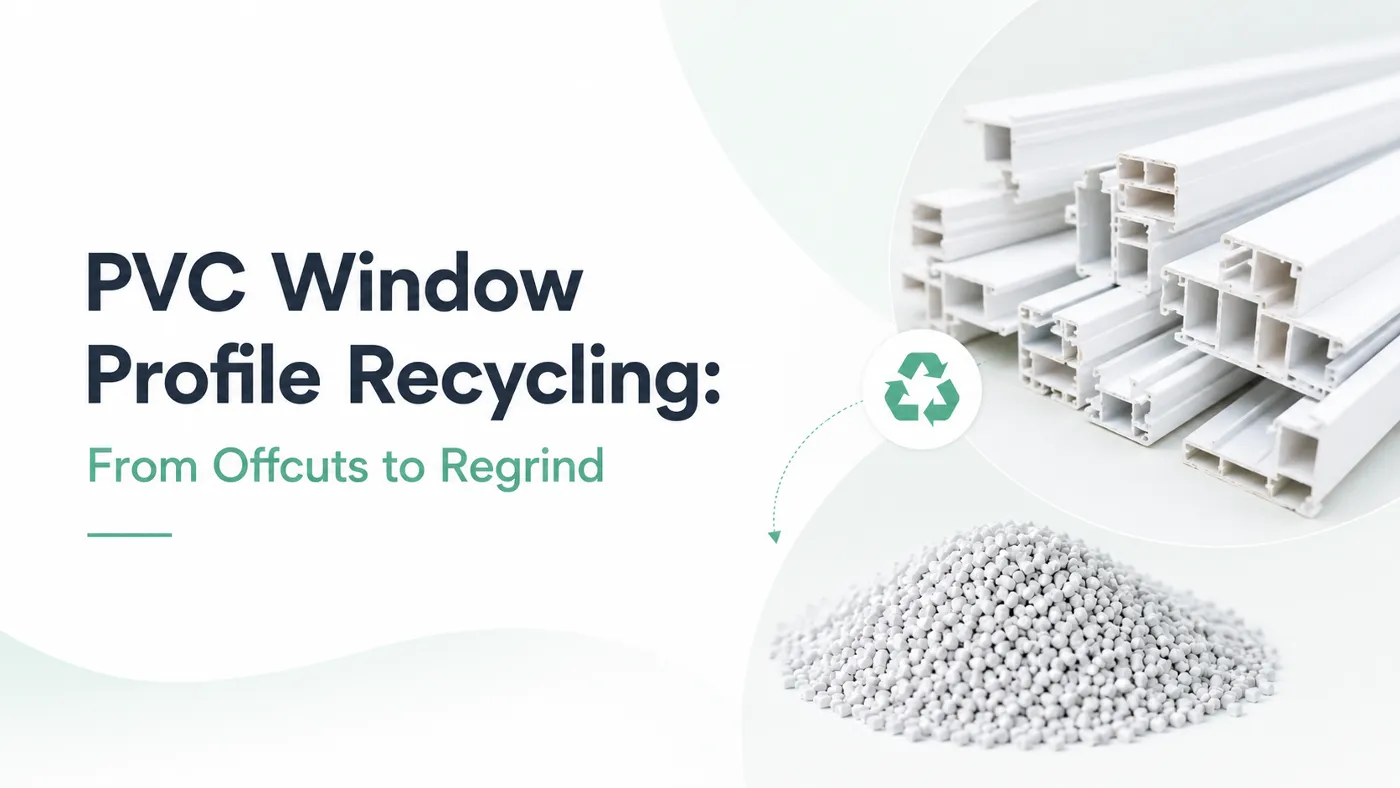
PVC pipe extrusion scrap recycling involves processing clean, post-industrial waste directly from the production line. This includes off-spec pipes, thick cut-offs, and rejected window profiles. According to industry production averages, internal scrap accounts for up to 5% of total factory output. This material requires size reduction but usually skips the washing stage.
Conversely, post-consumer scrap includes underground water pipes and conduits recovered from construction sites. This waste contains heavy soil, sand, and metal fittings. Processing this material demands an aggressive PVC pipe washing line to separate the polymer from external contamination.
Pre-Cutting: Handling Long Rigid Pipes Efficiently
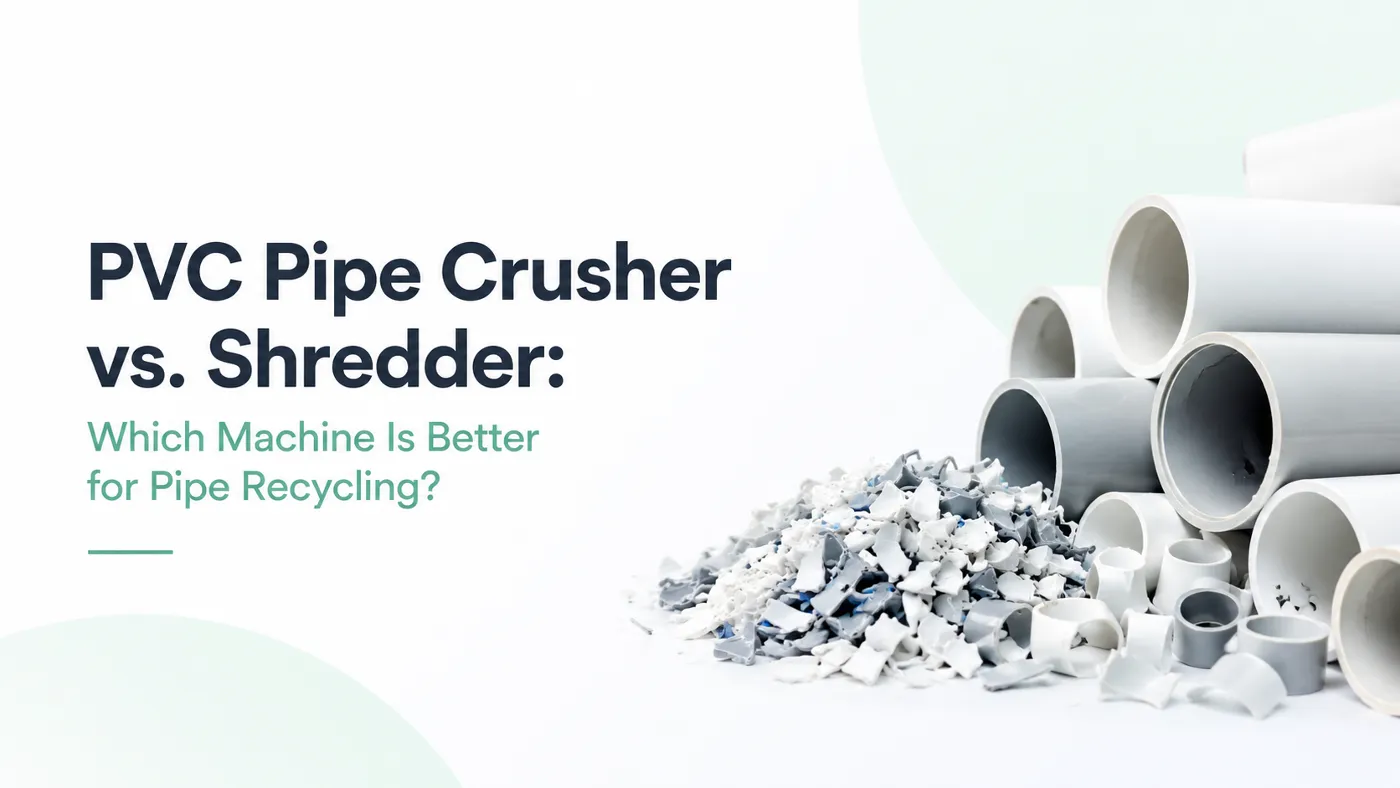
Pre-cutting is the mechanical reduction of oversized pipes into manageable lengths before fine crushing. Standard crushers fail when operators try to force three-meter pipes into small feed hoppers.
For thick-walled municipal pipes, operators must use heavy-duty pre-cutting equipment. Specialized industrial shredders bite into the thick plastic walls safely. They shear the long pipes into short, coarse chunks. This prevents motor overload in the secondary stages.
If your factory processes thin-walled conduits, you can often skip the shredding step. A specialized vertical crusher accepts long lengths directly. In our experience, skipping the shredder on thin pipes reduces energy consumption by up to 30%.
Crushing: Controlling Particle Size
Crushing is the critical size reduction phase that determines the usability of the final product. The goal is to generate uniform particles without creating excessive dust.
To achieve a consistent 10–18 mm chip, the primary crusher uses a specialized rotor. The V-shaped blade design grips the hollow pipes steadily, preventing them from bouncing. If the chips exceed 18 mm, they risk blocking the extruder feed throat later in the process.
PVC pipe regrind with a uniform particle size ensures stable melting. When processors blend this controlled regrind with virgin resin, the extruder maintains a steady pressure. This prevents surface defects on the newly formed pipes.
Dust Control and Fines Separation
Crushing brittle plastics at high speeds inevitably generates airborne dust. Fine PVC particles cause major feeding issues in extruders because they melt prematurely and block the screw.
A dedicated dust separation unit removes these micro-particles immediately after the crushing stage. A zig-zag classifier uses opposing air currents to separate lightweight dust from the heavier, clean chips. Removing dust increases the overall quality of the regrind and protects workers from respiratory hazards.
According to standard plant safety protocols, controlling airborne dust reduces the risk of factory incidents significantly. It also prevents material loss, keeping your yield rates high.
Metal Detection to Protect Equipment
Metal contamination destroys crusher blades instantly and causes catastrophic extruder damage. PVC profiles frequently conceal hidden screws, steel brackets, or brass fittings.
Overband magnets sit above the conveyor belts to extract all ferrous metals automatically. For non-ferrous contaminants like brass or aluminum, a high-sensitivity metal detector scans the feed belt. If it senses metal, it stops the belt immediately before the material reaches the cutting chamber.
In our testing, combining both magnetic separation and electronic metal detection prevents 99% of foreign objects from entering the machine. This step is mandatory for processing any post-consumer scrap.
Washing and Drying Post-Consumer PVC
A PVC pipe washing line is a mechanical cleaning sequence designed to remove dirt, adhesives, and minor impurities. Clean factory scrap bypasses this step entirely, but construction waste requires aggressive scrubbing.
The process begins with a sink-float tank. Because PVC has a high density, it sinks immediately, while lighter floating plastics like PE skim off the top. Next, a high-speed friction washer scrubs the sunken PVC chips violently. This mechanical friction breaks down stubborn mud and glue residues.
Finally, a mechanical centrifugal dryer spins the wet chips at high speeds. The moisture content drops below 1%, which is the strict requirement for stable re-extrusion. Wet regrind causes foaming and structural weakness in the final product.
Direct Re-Extrusion and Final Usage
Re-extrusion is the final manufacturing step where the recovered regrind becomes a new product. Clean, dry regrind flows easily into standard hoppers.
Many pipe manufacturers blend 20% to 30% regrind directly into their virgin material mix. This direct recycling loop requires no pelletizing stage, cutting energy usage drastically. For specialized applications, operators melt the regrind in a low-shear compounding extruder to form uniform pellets.
When you configure your line correctly, the final product exhibits the same mechanical strength as virgin PVC. You eliminate waste, lower raw material costs, and build a sustainable manufacturing cycle.
- PVC pipe recycling process
- PVC pipe recycling machine
- PVC pipe regrind
- PVC pipe washing line
- PVC pipe extrusion scrap recycling