
· Rumtoo Engineering Team · Technical Guide · 4 min read
What Is Densifying in PP and PE Film Recycling?
Densifying turns washed PP and PE film into a drier, denser feedstock that pelletizing lines can run more consistently. Learn what densifying does, where it fits in the process, and when your film line needs it.
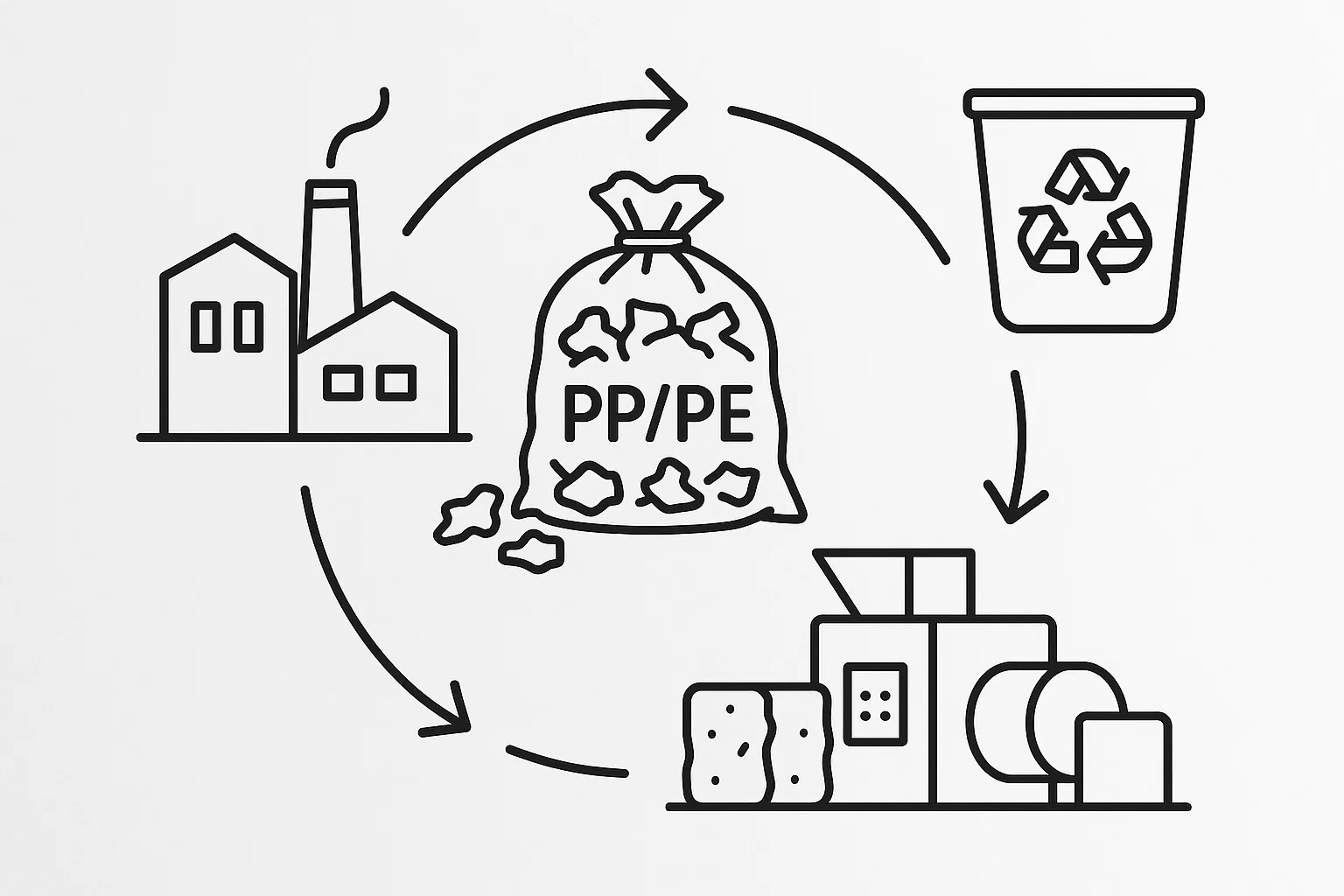
Densifying in PP and PE film recycling means converting washed, low-density film into a drier, heavier, and more uniform intermediate feedstock before pelletizing. It is one of the most important steps in film recycling because washed film is difficult to store, difficult to feed, and expensive to dry if it stays fluffy.
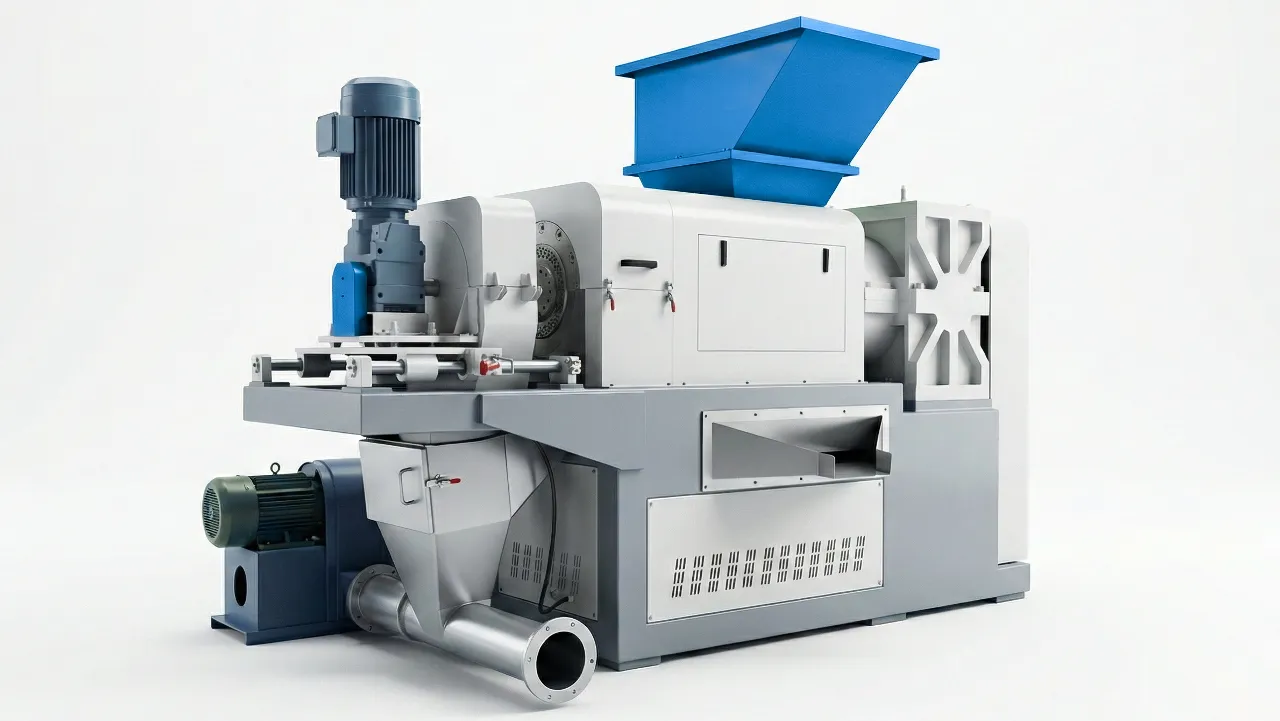
For Rumtoo projects, densifying is not an abstract process concept. It is the bridge between washing and pelletizing. If you are comparing system layouts, start with our drying and densifying units and film densifier and squeezer. For a wider comparison across foam, film, agglomeration, and compaction routes, use the recycling densifier guide.
Why washed film needs densifying
PP and PE film create three practical problems after washing:
- low bulk density
- trapped water
- unstable downstream feeding
That means even clean material can remain hard to process. A plant may finish washing successfully and still lose money in the next section because the extruder cannot feed the material evenly.
What changes after densifying
When film is densified, the material becomes:
- more compact
- easier to convey
- easier to meter into an extruder
- less expensive to dry further if needed
The benefit is not just better handling. Densifying also helps stabilize pellet quality by reducing the amount of moisture and air that reach the melt stage.
Densifying is not the same as simple drying
Drying removes water. Densifying improves both moisture condition and physical form.
That difference matters because pelletizing problems in film recycling are rarely caused by moisture alone. They are often caused by a combination of moisture, fluffiness, poor screw filling, and inconsistent material flow.
That is why many film lines pair a film centrifugal dryer with a film densifier and squeezer, rather than relying on one drying step alone.
Where densifying fits in a film recycling line
A typical process sequence looks like this:
- size reduction
- washing and separation
- mechanical water removal
- densifying
- pelletizing
In Rumtoo’s system architecture, densifying often sits between the plastic film and bag recovery line and the film compacting pelletizing line.
When your line probably needs densifying
Densifying is usually the right move when:
- the feedstock is PE or PP film
- material remains fluffy after washing
- the pelletizing line shows unstable feeding
- shipping or storage cost is high because of low bulk density
- pellet quality is affected by residual moisture
It is especially useful for:
- agricultural film
- stretch film
- shopping bags
- woven bags and raffia
- printed flexible packaging
When densifying may be less critical
If your feedstock is rigid flake, hard-plastic regrind, or already-densified material, densifying may not be the key missing step. In those cases, a hard plastic pelletizing line may be the more direct route.
Equipment choice matters
Not every densifying solution does the same job. When evaluating equipment, ask:
- What moisture range can it handle at the inlet?
- What discharge form does it produce?
- How much does it increase bulk density?
- How well does it tolerate mixed post-consumer film?
- How does it connect to the downstream extruder?
Those answers matter more than the headline capacity alone.
Densifying vs. drying vs. compacting
| Process step | Main purpose | What it improves most |
|---|---|---|
| Drying | Remove moisture | Melt stability and pellet quality |
| Densifying | Raise bulk density and reduce residual moisture | Handling, feeding, and process consistency |
| Compacting before pelletizing | Stabilize feed into the extruder | Continuous output and lower feeding losses |
In real film lines, these functions often overlap. That is why Rumtoo projects often combine drying and densifying units with a downstream film compacting pelletizing line.
Frequently asked questions
What materials benefit most from densifying?
PE and PP film, agricultural film, stretch wrap, woven bags, and raffia all benefit because they are lightweight, difficult to convey, and often leave the washing stage with low bulk density.
Does densifying always replace thermal drying?
No. Densifying helps significantly, but some projects still need a thermal dryer to hit a stricter final moisture target before pelletizing.
Is densifying useful for rigid plastics?
Usually less so. Rigid flakes and dense regrind often move and feed more predictably already, which is why densifying is much more valuable in film-focused lines.
Final takeaway
Densifying matters because washed film is not yet pelletizer-ready material. It is still bulky, wet, and difficult to control. A proper densifying step turns that unstable feedstock into something the extrusion section can run consistently and profitably.
If you want help deciding whether your PP or PE film line needs densifying, contact Rumtoo. We can help compare the right combination of washing, dewatering, densifying, and pelletizing equipment for your material stream.
- densifying
- PP film recycling
- PE film recycling
- film densifier
- pelletizing