
· Rumtoo Engineering Team · Process Engineering · 5 min read
How to Choose the Best Debaler Machine for Plastic Bottle Bales
A comprehensive guide to selecting the right debaler machine (bale opener) for plastic bottle recycling, covering capacity, material compatibility, and key benefits.
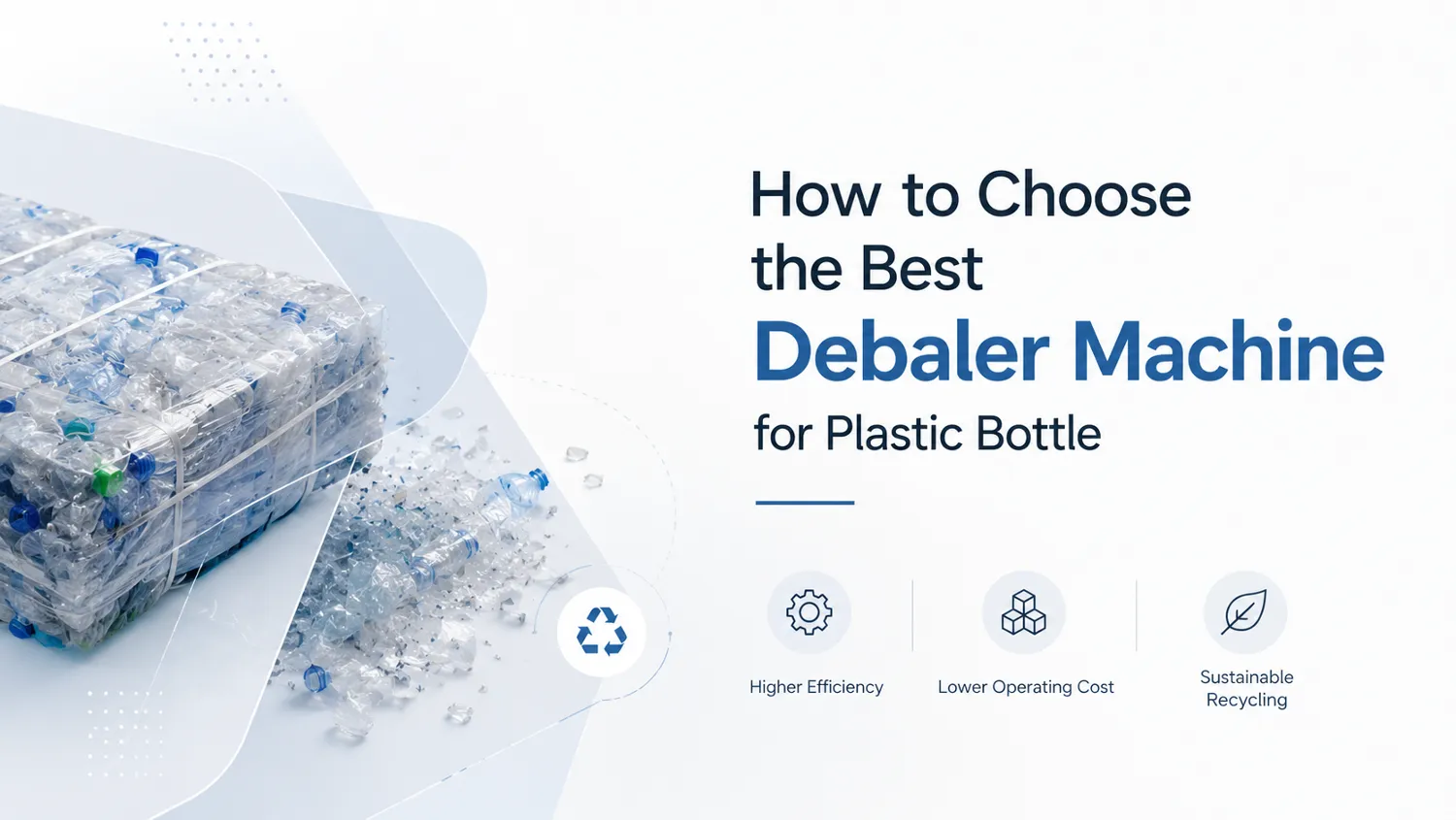
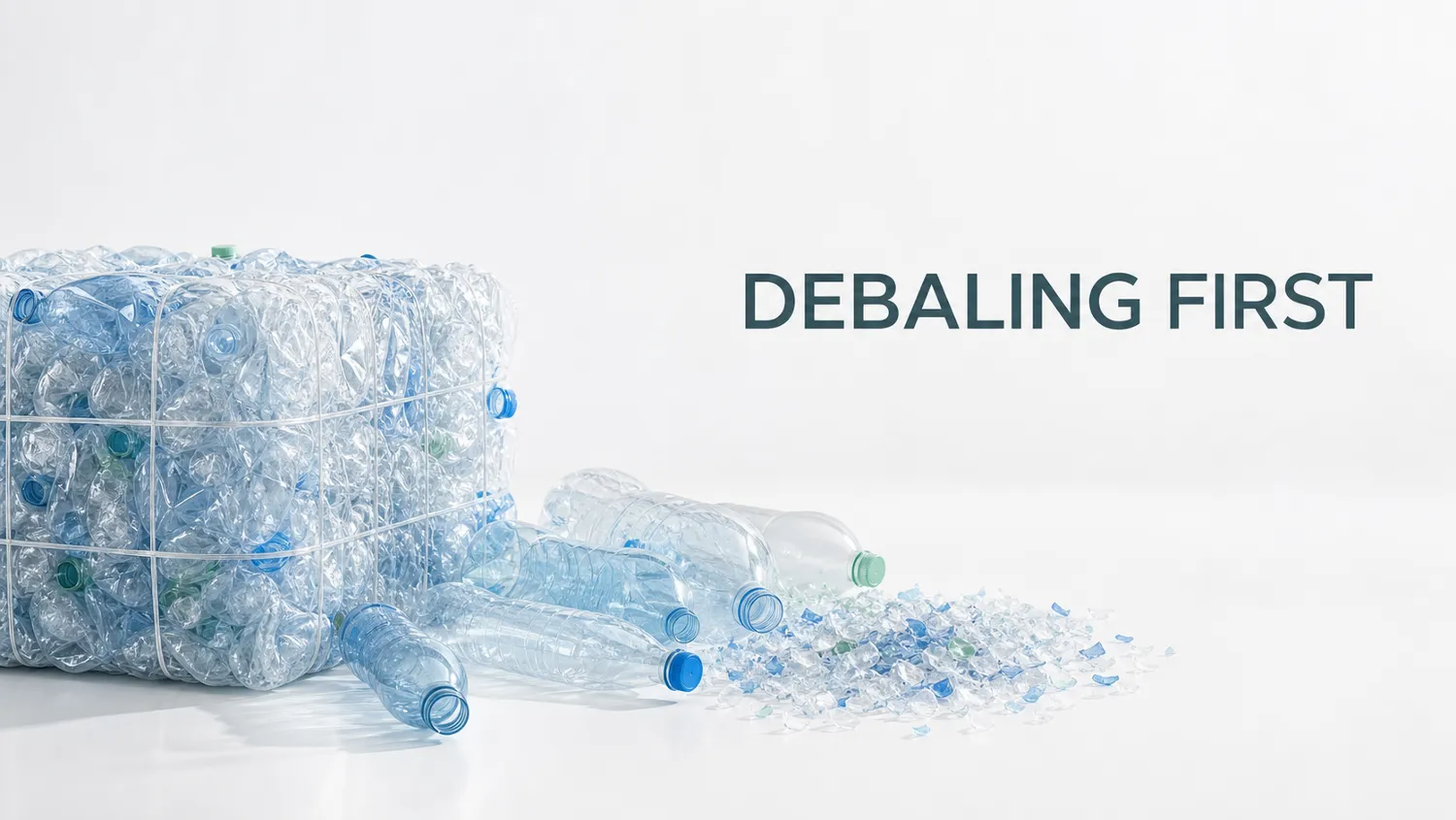
When setting up a plastic recycling line, one of the most critical initial steps is handling compacted bales of material. Baled plastic bottles—whether PET or HDPE—are excellent for transport and storage, but they cannot be processed directly by crushers or washers in their compacted state. This is where a debaler machine comes into play. Selecting the right debaler ensures a steady, controlled feed of material, significantly improving the efficiency and safety of the entire recycling operation.
What is a Debaler?
A debaler, also known as an automatic bale opener machine, is a specialized piece of equipment designed to break apart compressed bales of solid waste, such as plastic bottles or film, into individual loose pieces. In the context of solid waste sorting and recycling, a debaler machine sits at the very beginning of the production line.
Instead of relying on manual labor to cut wires and pull apart tightly packed materials—a process that is both dangerous and inefficient—the debaler uses mechanical force (such as rotating shafts with specialized hooks or teeth) to gently pull the bale apart. The loose material is then uniformly discharged onto a conveyor belt for subsequent sorting, metal detection, and processing. By transforming a dense, solid block into a consistent flow of material, the debaler protects downstream equipment from shock loading and allows sorting systems to operate at peak performance.
Key Technical Specifications to Consider
Choosing the best debaler machine requires careful evaluation of your specific operational needs. Not all bale openers are built the same, and selecting the wrong configuration can create bottlenecks early in your production line. Here are the key technical specifications to focus on:
Processing Capacity
The primary specification for any bale opener machine is its processing capacity, typically measured in tons per hour (t/h). You must match the debaler’s capacity to the maximum throughput of your entire washing or sorting line. If your recycling line is designed to process 3 tons of PET bottles per hour, your debaler must comfortably handle this volume without surging or jamming.
It is always advisable to select a machine with a slightly higher capacity than your normal operational rate (e.g., 20% to 30% overhead) to accommodate variations in bale density and moisture content. A variable speed control on the discharge conveyor will allow you to precisely meter the output, ensuring a stable feed rate that prevents downstream blockages.
Material Compatibility
Different recycling facilities handle different materials, and bale densities vary significantly depending on the plastic type. Ensure that the debaler is explicitly designed for the materials you intend to process:
- PET Bottle Bales: These are generally highly compacted and brittle. A robust debaler for PET requires strong hooks and sufficient torque to pull apart interlocking bottles without excessively crushing or tearing them, which could create fine particles that complicate sorting.
- HDPE Bottle Bales: While similar to PET, HDPE bottles can behave differently under compaction. Ensure the opening mechanism can handle the specific yield strength of HDPE.
- Plastic Film Bales: Film bales (like agricultural film or LLDPE stretch film) are notoriously tough and prone to wrapping around rotating shafts. If you are processing film, you need a specialized rotor design with anti-wrapping features to prevent the material from binding the machine.
Rotor Design and Drive Power
The heart of the debaler machine is its rotor and drive mechanism. The design of the rotor teeth or hooks dictates how efficiently the bale is separated. Look for machines that feature wear-resistant, replaceable teeth to reduce long-term maintenance costs.
Drive power (motor kW) must align with the density of your bales. Heavily compacted bales require high torque to break apart. Ensure the machine uses a heavy-duty gearbox and a motor large enough to sustain continuous operation under load. Additionally, features like an auto-reverse function are crucial; if the rotor encounters an unbreakable object or experiences a sudden torque spike, it should automatically reverse to prevent motor damage or structural failure.
Top Benefits of Integrating a Bale Opener Machine into Your Factory
Investing in an automated bale opener machine offers numerous advantages that quickly offset the initial capital expenditure:
- Enhanced Worker Safety: Manual debaling requires operators to cut high-tension steel wires, exposing them to injury from the sudden release of pressure and sharp wire ends. A debaler automates this dangerous task, keeping workers out of harm’s way.
- Stable Downstream Processing: By delivering a continuous, metered flow of loose bottles, the debaler prevents massive chunks from dropping into the crusher. This eliminates hopper bridging, reduces shock-loading on the crusher’s rotor, and extends the lifespan of cutting blades.
- Improved Sorting Efficiency: Optical sorters and manual sorting teams rely on a single-layer presentation of material. An effective debaler ensures bottles are sufficiently separated, drastically improving the accuracy of contaminant removal.
- Higher Overall Throughput: Automated, continuous feeding allows your entire recycling plant to operate at its maximum designed capacity without being constrained by the speed of manual bale opening.
Learn More About Rumtoo’s Debaler Systems
Efficient debaling is the foundation of a high-performance plastic recycling operation. Whether you are dealing with heavily compacted PET bottles, HDPE containers, or complex plastic film bales, choosing the right debaler machine is essential for safety, efficiency, and equipment longevity.
At Rumtoo, we design and manufacture industrial-grade bale opener machines tailored to meet the demanding needs of modern recycling facilities. Our equipment features robust rotor designs, variable speed discharge controls, and heavy-duty drives that ensure a steady, reliable material flow.
Ready to optimize your recycling line’s front end? Contact our engineering team today to discuss your material specifications and discover how our custom debaling solutions can boost your factory’s productivity.
- debaler machine
- debaler
- bale opener machine
- plastic recycling
- PET bottle recycling