Hard Plastic Pelletizing Line
For HDPE, PP, ABS, PS, and mixed rigid regrind where feeding is denser and filtration, venting, and melt stability drive line selection.

Recycling Pelletizing Hub
Compare plastic pelletizing line routes before requesting a quote: cutter-compactor systems for film, single-screw routes for rigid regrind, PET flake pelletizing, foam densifying, and compounding-driven lines.
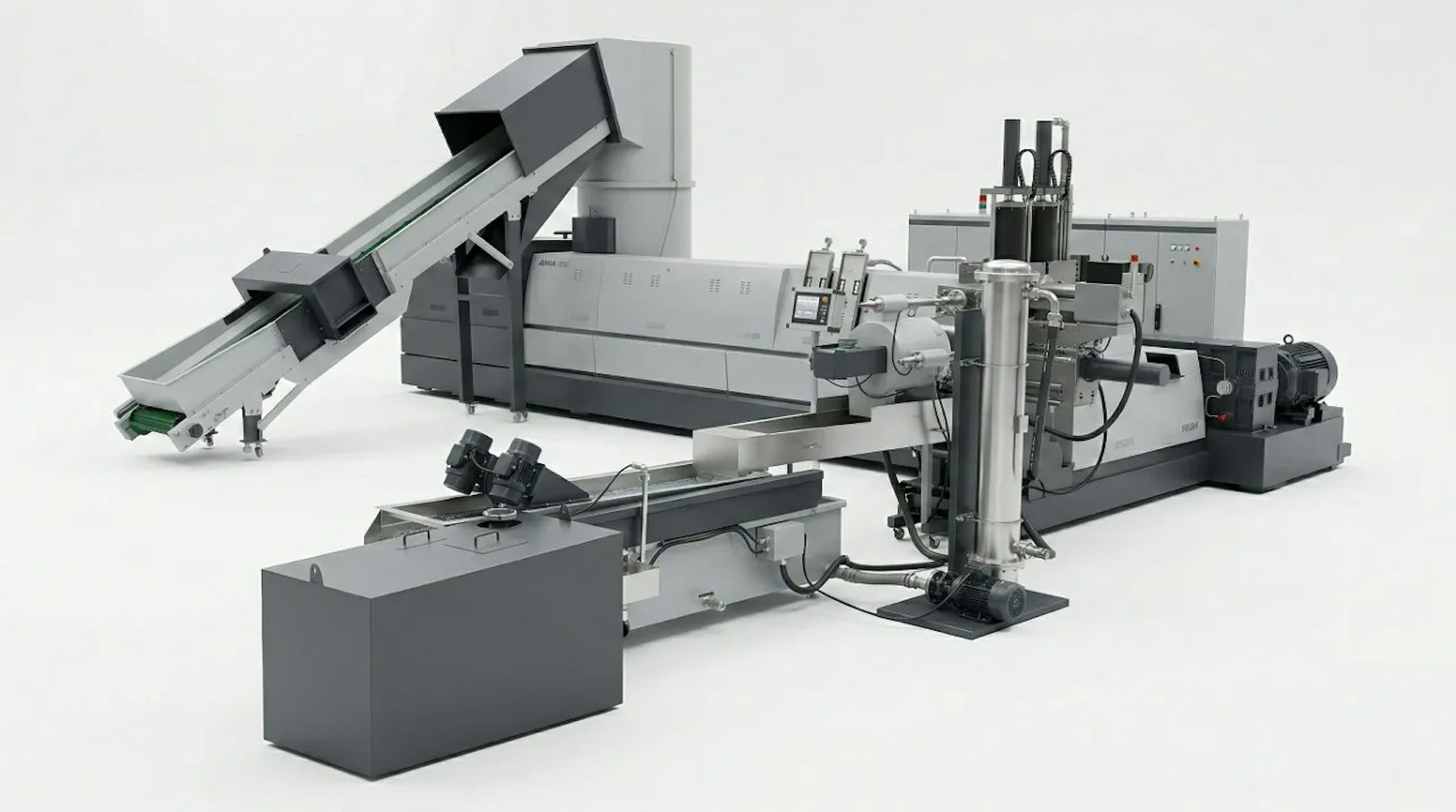
Use these focused pages when you already know whether your project is driven by rigid regrind or washed film and need a more specific route.
For HDPE, PP, ABS, PS, and mixed rigid regrind where feeding is denser and filtration, venting, and melt stability drive line selection.
For washed PE/PP film, woven bags, and raffia where low bulk density requires cutting, densifying, and stable extrusion feeding in one route.
For projects that still need engineering guidance on stage count, degassing, filtration, pelletizing method, and future capacity expansion.
Use this comparison to decide whether a standard machine quote is enough or whether the project needs material testing, layout review, and downstream process matching.
| Decision Point | Generic Equipment Quote | Rumtoo Engineering Route |
|---|---|---|
| Material condition | Assumes a clean and stable feed | Checks moisture, density, contamination, and real feed form |
| Capacity planning | Starts from nominal kg/h | Matches throughput to line duty, discharge size, and downstream process |
| Integration risk | Treats the machine as standalone | Reviews conveyors, controls, safety, access, and retrofit space |
| Output quality | Focuses on the model name | Connects output size, purity, moisture, and pelletizing or washing goals |
Single-stage layouts suit cleaner or denser feedstocks with moderate venting needs. Double-stage routes are usually chosen when washed film, printed scrap, or higher contamination demand extra degassing and melt stabilization.
Water-ring pelletizing is common for PE and PP recycled polyolefins when rounded pellets and continuous cutting matter. Strand pelletizing is often preferred for stiffer materials or jobs where off-die cooling and cut separation are easier to control.
Sometimes, but only within a narrow material window. A shared line usually forces compromises in feeding, screw design, and filtration, so separate film and rigid routes are often more stable at production scale.
PET usually needs stricter drying and venting than polyolefins. Dedicated PET layouts or twin-screw systems become relevant when moisture sensitivity, IV control, or formulation demands are higher than a general-purpose line can comfortably manage.
There is no universal number because resin type, line design, and pellet target change the limit. The correct starting point is to define residual moisture, paper, metal, and fines after washing and then size filtration and vacuum around the real feedstock.
Start by fixing the feedstock family and pellet quality target, then leave room for larger drives, stronger filtration, and downstream cooling or conveying upgrades. Expansion works better when the process logic stays consistent across future stages.
Send material photos, hourly target, contamination level, and desired pellet application. Rumtoo can recommend the system family, stage layout, and pelletizing method that fit the job.