
· Rumtoo Engineering Team · Operations · 4 min read
Plastic Pelletizer Maintenance Checklist for Higher Uptime
A practical plastic pelletizer maintenance checklist covering daily, weekly, and monthly routines. Reduce unplanned downtime, protect pellet quality, and extend equipment life with a preventive approach.
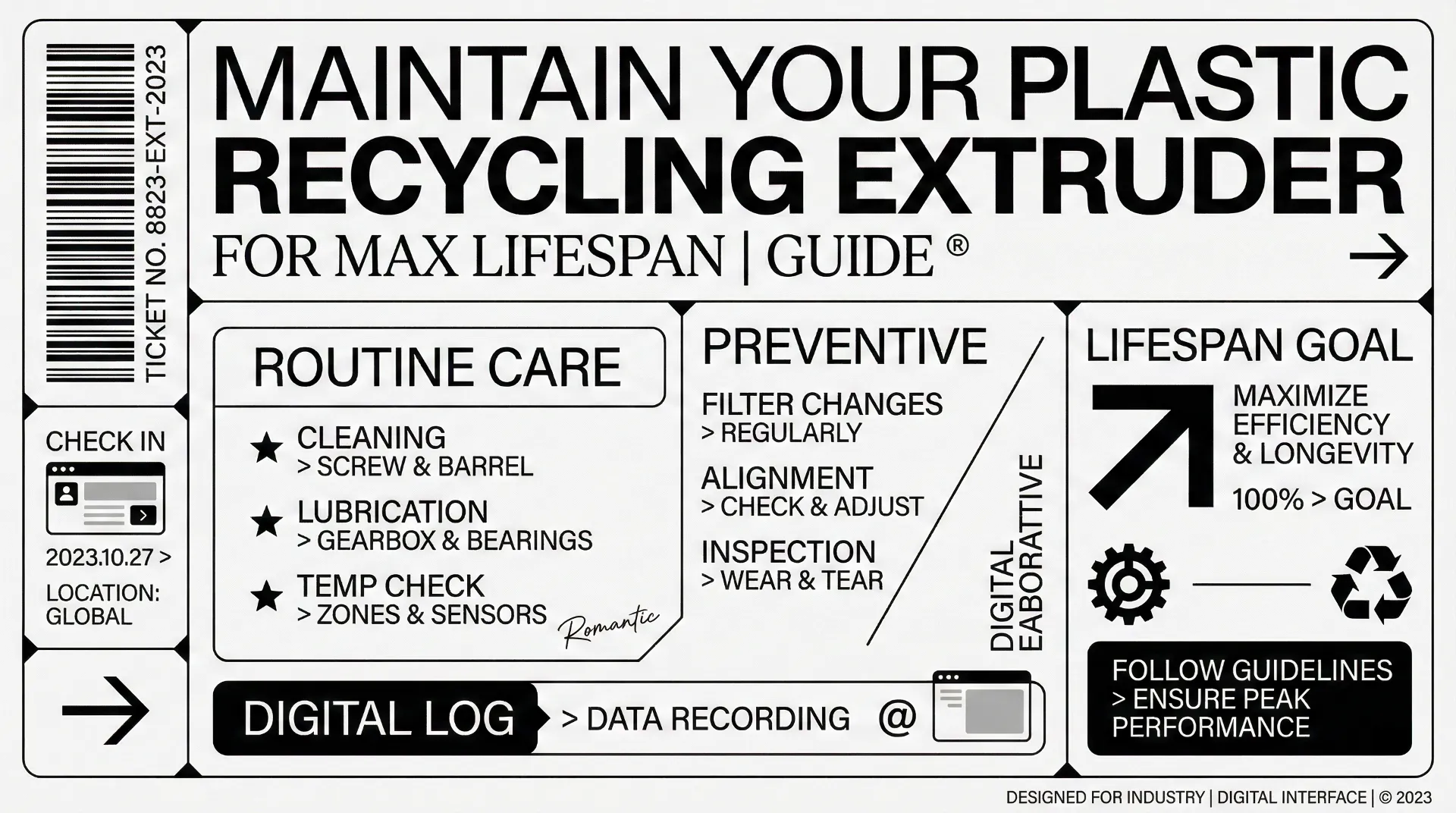
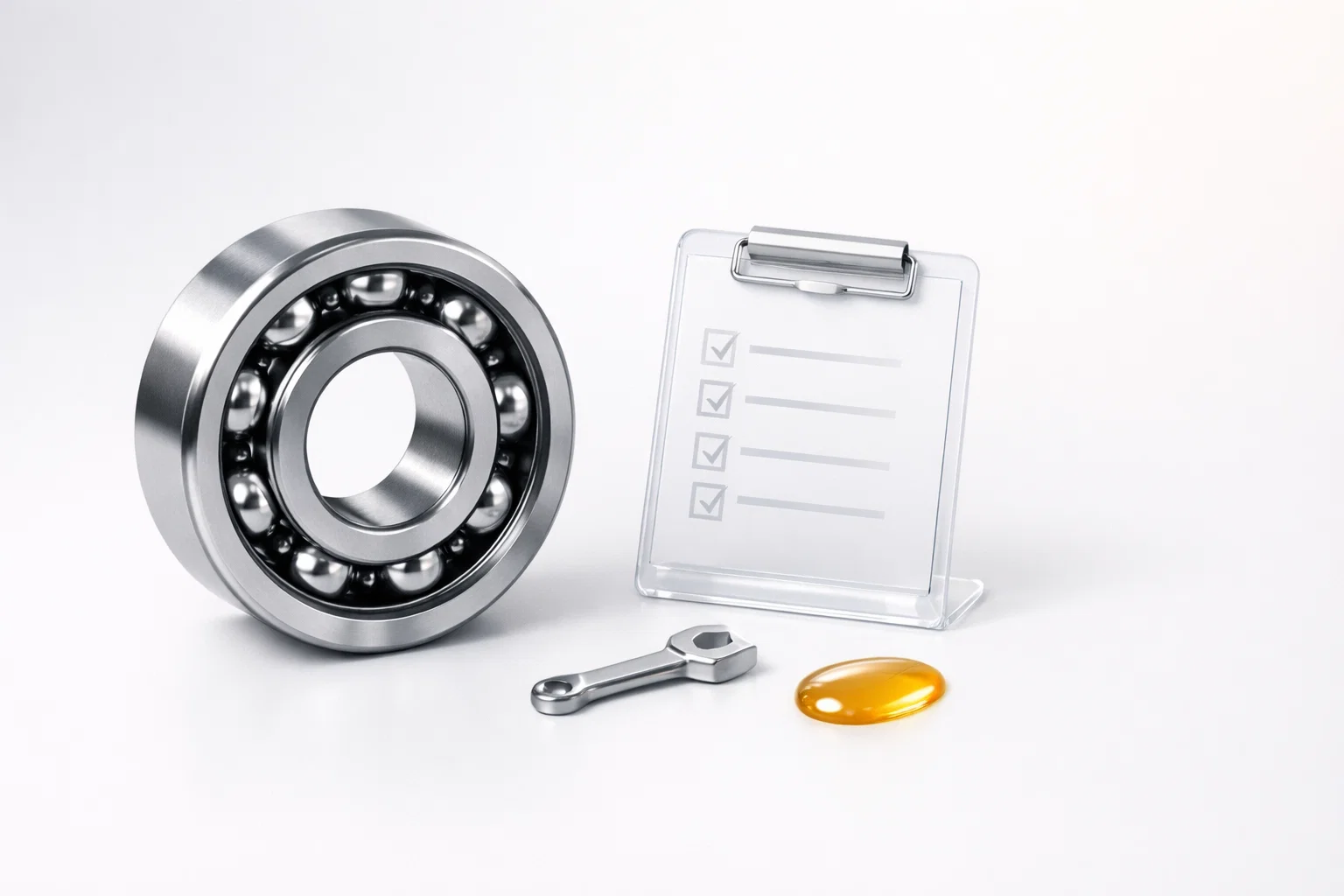
A strong plastic pelletizer maintenance checklist does more than prevent breakdowns. It protects pellet quality, reduces emergency stoppages, and keeps energy consumption from drifting upward over time. In most recycling plants, poor maintenance shows up first as unstable output and quality complaints long before it becomes a full machine failure.
If your plant depends on continuous extrusion and pelletizing, Rumtoo recommends linking preventive maintenance with both spare parts and maintenance support and your broader recycling pelletizing line operating plan.
Daily checklist
Daily checks are short, but they catch the highest-frequency problems.
- Inspect the die face and cutting area for buildup.
- Check for water, oil, or hydraulic leaks around the machine.
- Verify stable barrel-zone temperatures before startup.
- Listen for unusual bearing, gearbox, or knife noise.
- Confirm pellet shape is consistent at normal load.
- Clean material residue after shutdown.
If operators notice more tails, fines, or pellet size drift, treat that as a maintenance signal, not just a process issue.
Weekly checklist
Weekly maintenance should focus on wear items and machine stability.
- Inspect knife sharpness and cutter clearance.
- Check screen packs or filter-change intervals.
- Inspect drive coupling, belts, or gearbox condition.
- Lubricate points specified in the OEM schedule.
- Verify vacuum vent performance and clean vent piping if needed.
- Inspect cooling-water quality and flow stability on water ring systems.
For film applications, knife condition and melt cleanliness often affect pellet quality faster than any other factor.
Monthly checklist
Monthly work should be deeper and more data-driven.
- Check motor load history for abnormal trend changes.
- Inspect heaters, thermocouples, and temperature-control accuracy.
- Review wear on screws, barrels, and high-friction surfaces.
- Check alignment and fastener torque on major assemblies.
- Inspect electrical cabinets for dust buildup or overheated terminals.
- Review spare-parts inventory for knives, heaters, sensors, seals, and screens.
This is also the right time to check whether the plant’s current spare-parts stock still matches actual machine wear patterns.
The four maintenance points that affect pellet quality most
1. Knife condition
Dull knives create tails, deformation, and fines. A line can still “run” with worn knives, but product quality and downstream handling suffer quickly.
2. Melt cleanliness
If filtration is unstable or screen changes are delayed, contamination reaches the die and affects both pellet shape and customer acceptance.
3. Temperature control
Drifting temperature zones often show up as unstable output, black specks, or inconsistent pellet density.
4. Venting and degassing
Poor vent performance increases the risk of bubbles, odor, and surface defects, especially in post-consumer film recycling.
Common maintenance mistakes
Running until failure
This often looks cheaper in the short term, but it raises the cost of every shutdown and usually damages adjacent components.
Ignoring minor pellet defects
A small increase in fines or tails is usually an early warning that the cutter, die face, or process stability needs attention.
Treating support as an emergency-only service
For many plants, it is cheaper to schedule preventive reviews with the supplier than to wait for a critical failure. Rumtoo customers often combine local routines with global on-site support when the plant is scaling up or troubleshooting persistent quality loss.
A simple rule for maintenance planning
If the pelletizer is a revenue bottleneck, the maintenance plan should be scheduled by production risk, not by convenience. In practice that means:
- Track wear trends, not just failures.
- Replace predictable wear parts before peak-load periods.
- Keep critical consumables on site.
- Tie pellet-quality checks to machine-condition checks.
Spare parts worth stocking before you need them
Plants usually lose the most money on the parts that are inexpensive but slow to replace when they are missing. For most pelletizing lines, the minimum critical stock should include:
- knives and cutter hardware
- heaters and temperature sensors
- screen packs or filtration consumables
- seals and gaskets for venting or water sections
- key electrical sensors and relays
If your line runs continuously, it is also worth reviewing your spare parts and maintenance coverage before peak-load periods.
Frequently asked questions
How often should pelletizer knives be checked?
They should be checked as part of weekly maintenance at minimum, and more often when running abrasive, contaminated, or high-throughput material. Pellet defects are usually the first sign that knife condition needs attention.
What maintenance issue affects pellet quality fastest?
Knife wear, melt filtration problems, and temperature drift usually show up first. These issues often appear as fines, tails, unstable pellet shape, or contamination before a major mechanical failure happens.
When should a plant bring in external support?
External support makes sense when the line has recurring quality loss, repeated downtime around the same subsystem, or upcoming production periods where failure risk is unusually expensive. Rumtoo’s global on-site support is built for exactly those situations.
Final takeaway
The best plastic pelletizer maintenance checklist is one your plant will actually follow every day, every week, and every month. Preventive maintenance keeps throughput more stable, protects pellet quality, and reduces the chance that a simple wear item turns into a costly shutdown.
If you want help building a maintenance plan around your Rumtoo line, contact our team. We can help review wear items, service strategy, and spare-parts planning for your operating conditions.
- plastic pelletizer maintenance
- pelletizer checklist
- recycling line uptime
- spare parts
- preventive maintenance