· Rumtoo Service Team · Operations · 8 min read
Preventive Maintenance Checklist for Plastic Recycling Washing Lines
A field-tested preventive maintenance checklist for plastic recycling washing lines — covering daily, weekly, and monthly inspections to cut unplanned downtime by up to 40%.
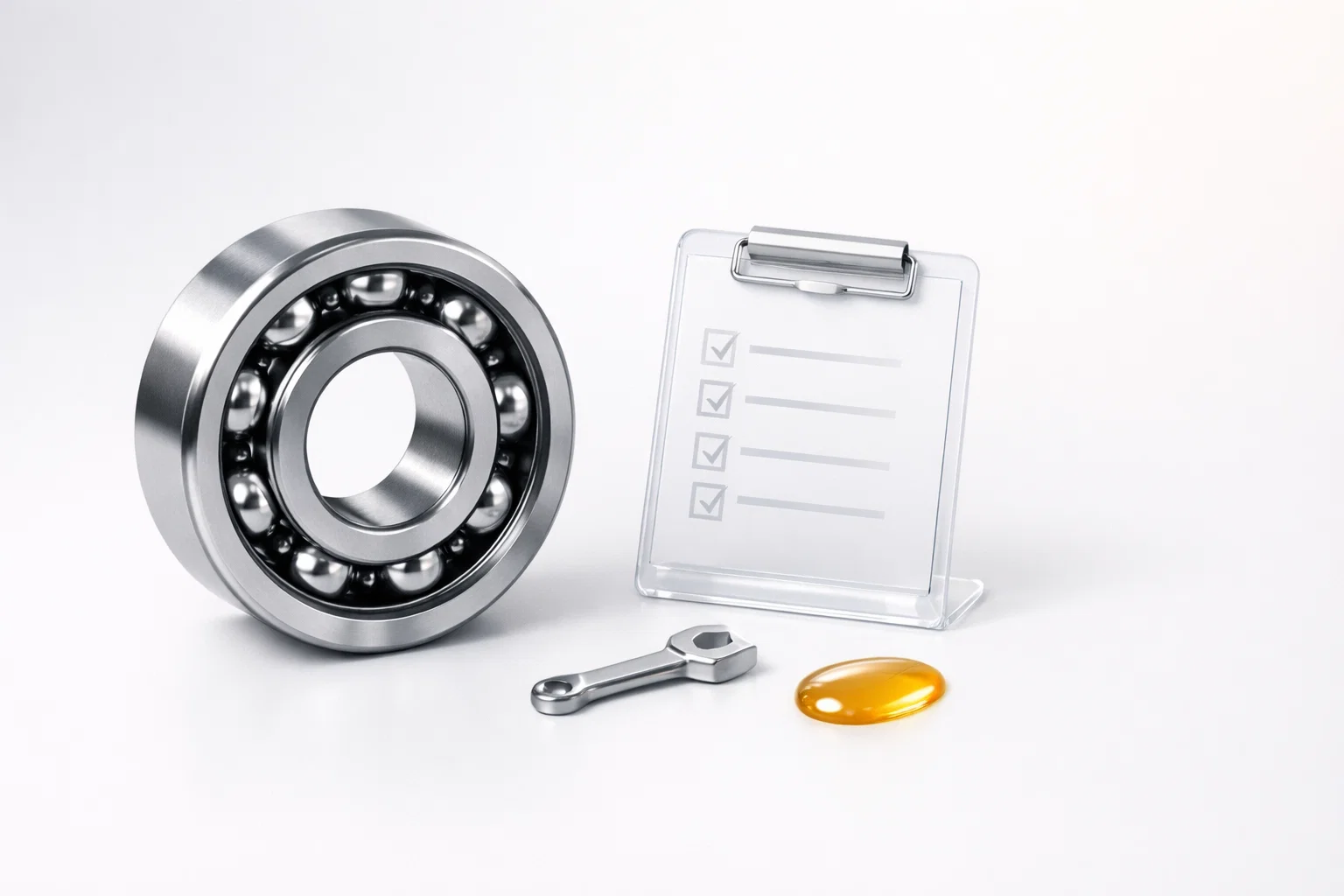
A recycling plant in southern Poland learned the hard way what a missing maintenance schedule looks like on the balance sheet. Their PET bottle washing line was running 22 hours a day, six days a week. Production numbers looked great — until a friction washer bearing seized without warning on a Thursday evening. The bearing failure cascaded: the shaft scored, the seals blew, and contaminated wash water flooded the motor housing. By the time the replacement parts arrived from the OEM (five business days via air freight), the plant had lost an entire week of production — roughly 180 tons of throughput. The total cost, including emergency parts, expedited shipping, overtime labor for the rebuild, and lost revenue from undelivered customer orders, exceeded $45,000. A $12 bearing that should have been replaced during a routine monthly inspection.
That single event convinced the plant manager to implement a structured preventive maintenance (PM) program. Within six months, unplanned downtime dropped by 42%, and the maintenance budget actually decreased because emergency repair costs plummeted.
This article provides a practical, field-tested maintenance checklist built from our experience commissioning and servicing over 300 washing lines worldwide.
Why Preventive Maintenance Pays for Itself
The economics of PM in recycling are stark. Unplanned downtime on a line running 1,500 kg/hr of PET flake at $700/ton means every lost hour costs approximately $1,050 in foregone revenue — before you count repair costs, expedited shipping, and overtime labor. Most facilities that implement a structured PM program report:
- 30–45% reduction in unplanned stops within the first year
- 15–20% longer service life on wear components (blades, screens, seals)
- Stable flake quality because equipment drift is caught before it affects output
The key principle: scheduled downtime is always cheaper than unplanned downtime. A 4-hour planned maintenance window on Sunday morning costs a fraction of a 48-hour emergency breakdown on a Wednesday.
The Daily Checklist (15–20 Minutes Per Shift)
These checks should be performed by the line operator at the start of every shift. They require no tools and no machine stoppage.
Visual and Sensory Inspection
- Listen for unusual bearing noise, vibration, or grinding on all rotating equipment (shredders, friction washers, centrifugal dryers, pumps)
- Check water levels in all wash tanks and the sink-float separation tank
- Inspect conveyor belt tracking — belts drifting more than 20mm off-center will accelerate edge wear
- Verify that all safety guards and emergency stops are in place and functional
- Monitor the control panel for active alarms or warning indicators
Process Quality Spot-Check
- Pull a flake sample from the final dryer output and visually check for contamination, wet clumps, or discoloration
- Confirm wash water temperature is within the set range (±3°C)
- Check the wastewater treatment system — elevated turbidity or foam can indicate a dosing problem or a screen tear upstream
Documentation
Log all observations in the shift maintenance book or CMMS, even if everything looks normal. “Normal” entries establish the baseline that makes deviations visible.
The Weekly Checklist (2–4 Hours, Planned Shutdown)
These tasks require the line to be stopped and locked out per OSHA 29 CFR 1910.147 (Control of Hazardous Energy). Assign a dedicated maintenance technician.
Friction Washer
- Inspect rotor paddles for wear. Replace when paddle thickness is reduced by more than 30% from original dimension.
- Check shaft seals for leakage. Any visible water seepage around the shaft bearing housing requires immediate seal replacement.
- Clean the screen basket and inspect for cracks or holes. A torn friction washer screen is the fastest way to send contamination downstream.
Sink-Float Tank
- Drain and flush the tank. Sediment buildup on the tank floor reduces effective separation volume and degrades sort purity.
- Inspect the paddle mechanism and drive chain for wear and correct tension.
- Verify that the overflow weir is clean and level — uneven weir height causes PE/PP carryover into the PET stream.
Centrifugal Dryer
- Inspect the screen basket for tears, deformation, or blockage. A partially blocked dryer screen causes moisture spikes in the output.
- Check the drive belt tension and condition. Glazed or cracked belts should be replaced.
- Lubricate bearings per the manufacturer’s grease specification and interval.
Conveyors and Screw Feeders
- Check all conveyor belt splices for separation or cracking.
- Inspect screw feeder flights for wear, particularly on the first three flights near the inlet.
- Verify gearbox oil levels and check for leaks at shaft seals.
The Monthly Checklist (Full Shift, Planned Shutdown)
Monthly maintenance is more invasive and typically requires 6–8 hours of downtime. Schedule it to coincide with other planned stops (e.g., Sunday or a public holiday).
Shredder / Crusher System
- Remove and inspect all cutting blades. Measure edge wear with a caliper and compare to the replacement threshold specified in the OEM manual. Rotate or flip reversible blades before replacing.
- Inspect the screen mesh. Holes that are enlarged more than 15% from nominal will produce oversized flakes that reduce washing efficiency.
- Check the hydraulic pusher system (if equipped) for oil level, hose condition, and cylinder seal integrity.
- Inspect the hopper and cutting chamber for accumulated material buildup or metal damage from tramp material.
Pump and Piping System
- Inspect all pump impellers for erosion and buildup. Recycling wash water is abrasive; impeller wear of more than 2mm typically causes measurable flow reduction.
- Check all pipe flanges, valve glands, and hose connections for leaks.
- Clean or replace inline strainers and filters.
- Verify pressure gauges and flow meters against known references. A pressure gauge that reads 10% high will mask a developing blockage.
Electrical and Control Systems
- Thermally scan all motor terminals, VFD connections, and main distribution boards with an infrared camera. Hot spots indicate loose connections that will eventually fail.
- Test all emergency stop circuits by actuating each E-stop button and confirming the correct equipment de-energizes.
- Back up PLC programs and HMI configurations. A controller failure without a recent backup can add days to recovery.
- Inspect all cable trays and conduit for damage, especially in wet areas near washing stages.
Water Treatment System
- Clean or backwash DAF (Dissolved Air Flotation) unit internals.
- Calibrate pH and turbidity sensors.
- Inspect the sludge scraper mechanism and pump.
- Review water consumption data for the month — a rising trend often indicates screen damage or valve leaks that waste fresh water makeup.
The Quarterly Deep-Dive (Full Day, Major Planned Shutdown)
Every 90 days, conduct a comprehensive inspection that goes beyond routine checks:
- Vibration analysis on all major rotating equipment (shredder, friction washers, dryer, pumps). Compare readings to the baseline recorded during commissioning. A 2x increase in vibration amplitude typically signals bearing degradation 4–8 weeks before catastrophic failure.
- Motor insulation resistance testing (megger test) on all motors above 15 kW. Insulation resistance below 5 MΩ at 40°C indicates moisture ingress or winding degradation.
- Alignment verification on all direct-coupled drive systems using a laser alignment tool.
- Full calibration of all inline instruments (flow meters, temperature sensors, level probes).
Spare Parts: What to Keep in Stock
Running out of a critical spare part turns a 2-hour repair into a 5-day outage. At minimum, stock these items on-site:
| Component | Recommended Stock | Typical Lead Time if Not Stocked |
|---|---|---|
| Friction washer shaft seals | 2 sets | 3–5 days |
| Centrifugal dryer screen basket | 1 spare | 5–10 days |
| Crusher blades (full set) | 1 set | 7–14 days |
| Pump mechanical seals | 2 per pump type | 3–5 days |
| VFD replacement (most common size) | 1 unit | 5–15 days |
| Conveyor belt splice kits | 2 kits | 2–3 days |
| Bearing kits for critical assets | 1 per asset | 3–7 days |
Rumtoo provides a recommended spare parts inventory list customized to your specific line configuration, available as part of every commissioning package.
Tracking Maintenance Performance
A checklist is only useful if you measure its impact. Track these KPIs monthly and review trends quarterly:
- MTBF (Mean Time Between Failures): Target >400 hours for the overall line. Read more about building a KPI dashboard for your plant.
- MTTR (Mean Time To Repair): Target <4 hours for any single equipment failure.
- Planned vs. Unplanned Maintenance Ratio: Target ≥80% planned. World-class operations run at 90%+.
- Maintenance Cost per Ton: Track total maintenance spend divided by tons of output. This normalizes for production volume changes.
Frequently Asked Questions
How do I get operators to actually follow the checklist?
The two most effective approaches: (1) make the daily checklist short enough to complete in 15 minutes — if it takes 45 minutes, it won’t happen; (2) tie checklist completion to shift handover. The incoming operator signs off that the outgoing operator completed the checklist. No signature, no shift release.
Should we use a paper-based system or a CMMS?
For plants with fewer than 10 major assets, a well-designed paper checklist with weekly data entry into a spreadsheet works fine. Above that, a simple CMMS (even a cloud-based one for $50–$100/month) pays for itself in better scheduling and spare parts tracking. The important thing is consistency, not software sophistication.
How do we justify the cost of a quarterly vibration analysis program?
One prevented catastrophic bearing failure pays for 2–3 years of quarterly vibration monitoring. Frame it as insurance: the quarterly program costs $2,000–$4,000/year for a typical washing line, while a single unplanned bearing failure with collateral damage costs $15,000–$50,000+.
What about maintenance on the water treatment system?
The water treatment system is often the most neglected part of the line, yet it directly impacts wash quality and operating cost. Include DAF cleaning, chemical dosing calibration, and sludge system inspection in your monthly checklist. A drifting water treatment system gradually degrades flake purity — the damage is invisible day-to-day but obvious when your buyer rejects a shipment.
Where can I get OEM maintenance manuals and support?
Rumtoo provides comprehensive operation and maintenance manuals with every line, plus remote troubleshooting support via video call. For on-site support, our global service network can dispatch engineers to your facility within 48–72 hours.
References
- maintenance
- washing line
- plant operations